Treating homelessness as a crime doesn’t work
Nov 27, 2026 | 7:00 am ET
Description
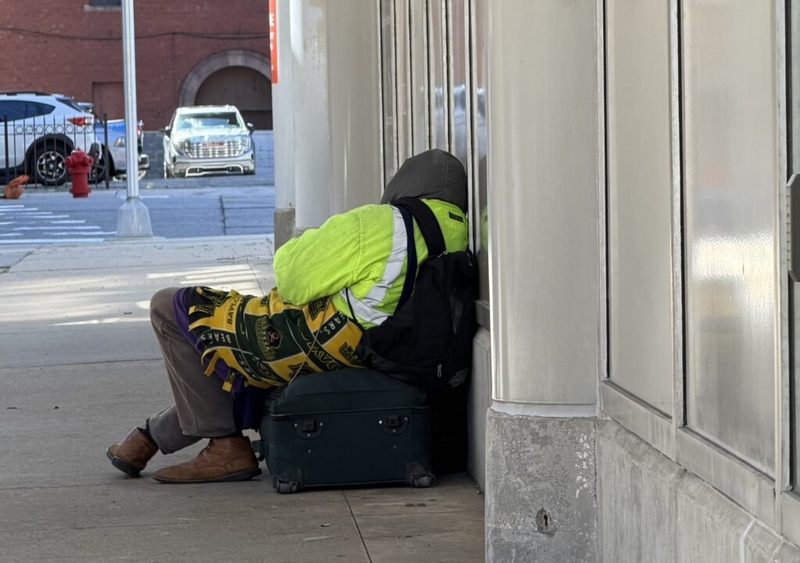
Man sleeping on the street outside the Fort Cass People Mover Station in Detroit, Michigan in June 2026 (Photo by Jon King/Michigan Advance)
Everyone deserves a safe place to live, but for many Michiganders, even full-time work doesn’t pay enough to afford basic needs, including housing.
To address the homelessness resulting from this structural problem in the economy, some communities are misguidedly turning to the criminal legal system. We at the Michigan League for Public Policy urge them to focus on investments in affordable housing and supportive services rather than further punishing people our economy has left behind.
To afford a two-bedroom apartment in Michigan, a full-time worker must earn $25.53 per hour – an increase of 47% over 2020. Meanwhile, the average renter wage remains under $20 per hour. And people earning the minimum wage must work 74 hours a week to cover rent and other basic living expenses.
Being unable to afford a home shouldn’t be a crime, but our country has a long history of treating it that way. This approach has gained even more traction in recent years, even though it’s never proven effective in reducing homelessness.
Owosso vigil honors two people found dead as residents raise concerns over homelessness
In 2024, a U.S. Supreme Court decision gave local communities wide latitude to ticket and jail people who are unhoused, even when there isn’t shelter space for them. Since then, hundreds of cities, including five in Michigan, have passed laws further criminalizing survival activities by people who are homeless.
Then came a presidential executive order conflating mental health disabilities with homelessness, and calling for the weakening of protections against involuntary commitment. The order also directs federal agencies to abandon humane, evidence-based practices and prioritize funding for communities that rely on the arrest and incarceration of people who are unhoused and disabled.
But these crackdowns won’t reduce homelessness or make our communities safer, because they’re based on false stereotypes.
Many people experiencing homelessness work despite facing barriers related to health, transportation and discrimination. Recent research shows that more than half of adults staying in homeless shelters and 40% of those who are unsheltered are formally employed.
For many, job loss is what triggers a fall into homelessness. Forty percent of Michigan households struggle to pay for the basics. The U.S. doesn’t provide the same level of protection for workers and their wages that other well-resourced nations do, so when people get laid off or can’t work due to illness or injury, it can be catastrophic.
Locking up people who are homeless doesn’t improve public safety, either. The overwhelming majority of crime is committed by people who actually have housing. Across the nation, people who are experiencing homelessness are known to account for less than 5% of jail bookings, and they’re far more likely to be the victim of a violent crime rather than the perpetrator.
Here in Lansing, where the League is based, we’re seeing what happens when people are deemed unworthy of safety simply because they’re struggling to survive: five of our unhoused neighbors have died in less than a year. Homicide has been determined in three of these deaths and has not been ruled out for the other two.
Lansing City Council hears calls for emergency homelessness response, delays action
None of us should look away from homelessness or blame people who are unhoused for their plight. Homelessness is just the extreme endpoint of a convergence of broader social forces that is making life increasingly difficult for all but the wealthiest among us.
People who are unhoused are not the reason our groceries, utilities, healthcare and housing are getting more expensive. They aren’t the reason the middle class is shrinking, or that families are falling further into debt and feeling more anxious about how they will live in retirement.
We need to look to the corporate interests and policymakers who have built an economy that leaves so many families just one missed paycheck or unexpected expense away from losing their homes.
While we’re all spending more to put food on the table and fill our gas tanks, corporate profits are soaring. The world’s largest and most profitable corporations are paying workers poverty wages while their CEOs enjoy salaries hundreds of times higher.
It’s time to stop punishing those with the least and focus on real solutions: worker empowerment, a robust social safety net and affordable housing for everyone.
Lansing, MI