State Supreme Court upholds social media ban for man convicted of felony threats, stalking
Nov 25, 2026 | 1:20 pm ET
Description
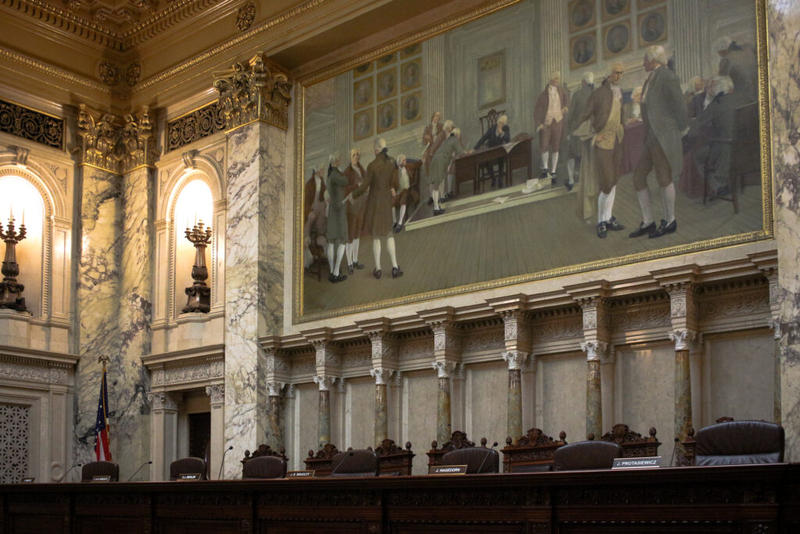
The Wisconsin Supreme Court chambers. (Photo by Henry Redman/Wisconsin Examiner)
A man who threatened to kill convenience store occupants in a June 2022 incident and later pleaded guilty to making violent threats and stalking one of the store’s employees won’t get to use social media once he’s out of prison and placed on extended supervision, the Wisconsin Supreme Court ruled Wednesday.
The social media ban won’t violate Jonathan James Petersen’s free speech rights, Justice Annette K. Ziegler wrote for a unanimous court. The ban is a condition of Petersen’s extended supervision term scheduled to start late next year.
Ziegler rejected Petersen’s argument that with “the ubiquity of social media in modern life,” the ban should be modified to allow him social media access under the supervision of a monitor.
“We conclude that the ‘no social media’ condition here is not overly broad and is reasonably related to Petersen’s rehabilitation and thus does not violate the First Amendment,” Ziegler wrote.
Petersen was sentenced to prison after an incident in June 2022, when the Kenosha County Sheriff’s Department reported he brandished a gun at a Kenosha County Kwik Trip, threatening to kill five employees and four customers in the store and himself.
Sheriff’s deputies arrested Petersen after using a Taser. The gun turned out to be a pellet gun, the sheriff’s department reported.
An employee of the store had a restraining order against Petersen after reporting that he had stalked her for an extended period, according to court records.
In February 2023, Petersen was sentenced in Kenosha County to more than 4 1/2 years in prison, followed by 6 years of extended supervision, after pleading guilty to four felony counts: two for making terrorist threats and one each for stalking and false imprisonment, all with the use of a dangerous weapon, according to court records.
Petersen remains in prison, and the extended supervision term is scheduled to begin in December 2027, according to Department of Corrections records
Ziegler wrote in the decision that Petersen’s trial attorney agreed to the social media ban as a condition of extended supervision.
Petersen later petitioned the court to modify the ban and allow him to use social media with the approval of the agent supervising him. The circuit judge and subsequently the state Court of Appeals rejected Petersen’s petition, and Wednesday’s Supreme Court ruling affirmed the lower courts.
“Petersen relentlessly harassed and stalked the victim even after court intervention. Prohibiting him from using social media is a direct response to the facts underlying his convictions and serves to protect the victim,” Ziegler wrote.
She added: “Prohibiting Petersen from using social media greatly reduces the chances that he can begin other harassment and stalking campaigns against the victim here and other potential victims.”
In a concurrence, Justice Rebecca Dallet endorsed the opinion’s conclusion, writing that the nature of stalking and Petersen’s use of social media to stalk the victim justified the ban during his extended supervision.
She added, however, that such a sweeping ban could be too broad under different facts, circumstances and alleged offenses.
“Considering how universal social media has become and its many legitimate uses, imposing a blanket ‘no social media’ condition of extended supervision should be a last resort for circuit courts when they use their broad discretion to impose conditions on extended supervision,” Dallet wrote.
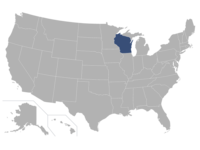
Madison, WI