Dominion-NextEra merger hearings wrap up at the SCC, decision expected by Jan. 11
Nov 25, 2026 | 5:25 am ET
Description
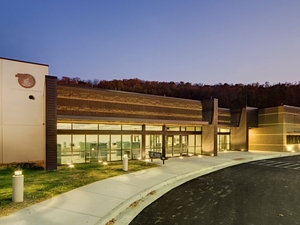
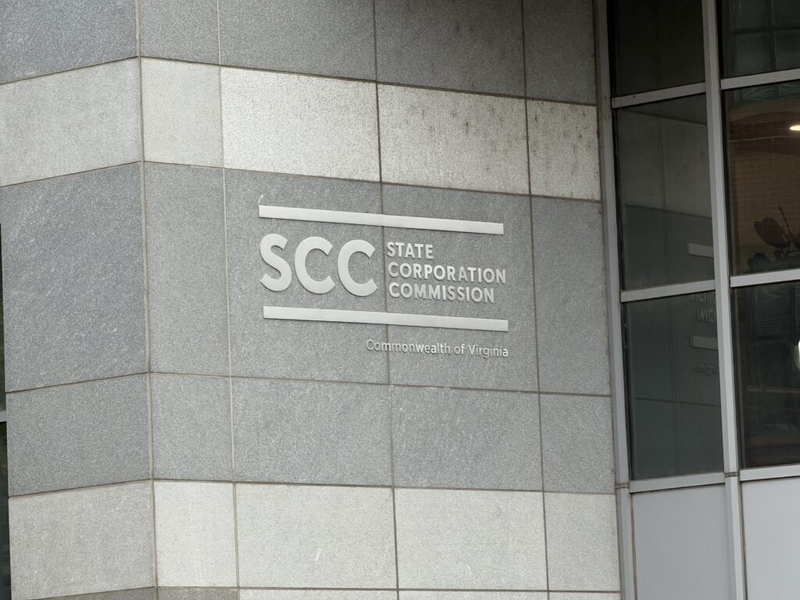
The State Corporation Commission building in downtown Richmond. (Photo by Shannon Heckt/Virginia Mercury)
The evidentiary hearings for the unprecedented Dominion Energy and NextEra Energy proposal concluded Tuesday with a full day of testimony from supporters and opponents of the deal, leaving three commissioners to decide whether it will materialize in the state.
Over the last week, the two companies have faced questions from the over 30 intervening parties and have attempted to defend their proposal against arguments that it does not meet requirements of the Utility Transfers Act.
“Virginia has a big (energy) build need … to accommodate the generation that we see,” NextEra President and CEO John Ketchum testified. “We’ve got to have the right ecosystem and that ecosystem is enveloped in the commitments that we would be making.”
Heading into the case, the State Corporation Commission staff stated that as it was proposed, the merger should not be approved. Staff and Attorney General Jay Jones’ office presented the companies with a list of policy shifts and recommendations to put the deal in a better position.
Dominion and NextEra accepted a majority of those recommendations, but rejected and altered some, mainly concerning financial “ring fencing” protections that would shield the state from fallout given credit shifts or bankruptcy.
The two companies were also pressured to provide calculations proving claims that combining the entities would enhance its ability to bulk-buy energy infrastructure and bring down costs to customers.
But company witnesses said it would be difficult to calculate that metric and were not able to provide numbers. Some intervenors felt that without those calculations, the savings could not be guaranteed.
Dominion and NextEra emphasized that the deal also addresses short-term affordability, with a proposed four-year bill credit for residential customers. The original proposal was only for two years because large load customers, namely data centers, would also receive a credit.
The companies offered to change it so that residential customers were chief beneficiaries, by rerouting the potential credits for large load customers back to the smaller rate classes.
However, intervenors including Gov. Abigail Spanberger’s administration testified that those credits were not enough and did not guarantee that bills wouldn’t increase once the credits ran out.
The Florida-based company’s political past has been a defining feature of public discourse about the merger but on Tuesday was limited by commissioners.
NextEra recently paid a $150 million settlement over whether the company lied about its involvement in political interference schemes in Florida. Details of an internal investigation into the company leadership are contained in confidential evidence in the case called the “Robo Memo”. The commission ruled against an attempt to unseal it Nov. 24.
NextEra Energy Resources, NextEra’s unregulated branch that produces energy infrastructure, has been noted as a more volatile business because it relies on the market price of power.
Dominion’s Attorney Joseph Reid asked Michael Dunn, on behalf of the joint petitioners, whether the unregulated branch was an actual risk. Dunn said the extensive energy infrastructure business, which has major investments in renewable energy sources, have been a successful side of the NextEra entity.
“For NextEra Energy Resources, unregulated means long term, diverse, strong, stable cash flows,” Dunn testified Tuesday. “When I look at 49 states, you have 330 different projects, 400 different power purchase agreement offtakers.”
At the heart of the three commissioners’ considerations is the Utility Transfers Act’s mandate, “that adequate service to the public at just and reasonable rates will not be impaired or jeopardized” by combining the companies.
They must make a decision by Jan. 11. The commission is expected to call post-hearing briefs from the intervening parties in December.
Richmond, VA