Marylanders face nation’s lowest average cost for ACA marketplace premiums, analysis shows
Nov 25, 2026 | 4:30 am ET
Description
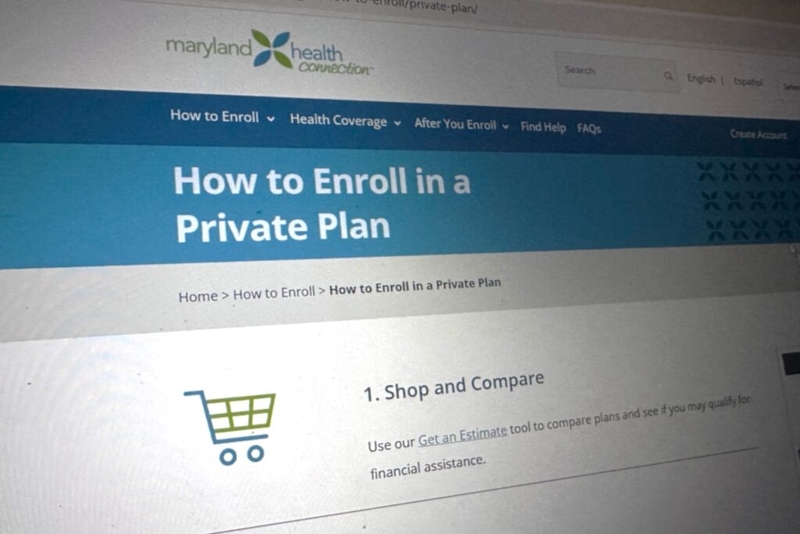
Marylanders looking to buy private insurance have until Dec. 31 to have coverage start in January. Those who miss that deadline have until Jan. 15 to sign up for coverage that starts in February. (Photo by Danielle J. Brown/Maryland Matters)
After two years of double-digit premium increases, Marylanders who purchase healthcare from the state’s insurance marketplace may take some solace from the fact that they will pay the lowest premiums in the nation in 2027, a new report shows.
A state-by-state analysis of plans by KFF, the healthcare research policy group, shows that for all three tiers of coverage — bronze, silver and gold — Marylanders will pay 33% to 45% below the national average for insurance purchased on the Maryland Health Connection, the state’s insurance marketplace part of the Obama-era Affordable Care Act.
State officials and healthcare advocates chalk the low rates up to statewide subsidies and other actions aimed at keeping more people enrolled in healthcare plans, even as prices skyrocketed over the last two years.
“I think we’ve made one of the strongest commitments of any state in the country towards affordability in the individual insurance market,” said Johanna Fabian-Marks, executive director for the Maryland Health Benefit Exchange which operates the state’s insurance marketplace.

“Although I am very proud that we have the lowest cost premiums in the country … I also want to acknowledge that most people don’t feel like their health insurance is as affordable as it could be,” she added.
The KFF data comes as families across the United States are weighing their healthcare options during the annual open enrollment period for insurance coverage offered through the Affordable Care Act.
Marylanders buying health plans on the state’s insurance marketplace face an average 14.6% premium rate increase this year, which follows a 13.4% rate hike last year.
But while the average premium in the U.S. for a bronze plan — the least expensive plans, but also the least comprehensive with high deductibles — is $511 a month, Marylanders will pay an average $293 per month, according to the KFF analysis. Idaho had the second-cheapest bronze plan premiums, at $369 a month.
A step up to silver plans finds the national average premium is $681 per month, while in Maryland it will be $459. New Hampshire was a close second for lowest-cost silver plans at $471 a month.
Gold plans provide greater coverage and lower deductibles, at higher monthly cost. The average gold plan in Maryland is $454 in monthly premiums, compared to a national average of $694. Iowa’s gold plans were second-lowest at $504.
Gov. Wes Moore said in a written statement that it’s “no accident” Maryland has the lowest premiums, as the administration and the Maryland General Assembly pushed legislation to counter recent federal decisions that increased healthcare costs nationwide.
“Where the Trump administration slashed health care and spiked costs on working families, Maryland will always protect our people,” Moore said in the Tuesday statement. “As prices nationwide continue to rise, we’ll keep fighting for affordable health care because no one should have to choose between lifesaving treatment, food for their family, or gas in their tank.”
Healthcare advocates and insurance representatives agree healthcare costs in Maryland would be higher for the individual insurance market if it weren’t for two policies in the state.
Matthew F. Celentano, executive director of the League of Life & Health Insurers of Maryland, points to the state’s long-standing “reinsurance” program that has kept premium costs lower in Maryland for several years.
“Marylanders should take comfort in the fact that the General Assembly has supported and implemented the reinsurance program which has direct correlation to affordability in the individual market – and has done so for many years now, consistently placing us as one of the most affordable states,” Celentano said in a written statement.
Vincent DeMarco, president of the Maryland Healthcare for All coalition, adds that state subsidies under the new Maryland Premium Assistance program have helped keep premiums down for those who would otherwise go without health insurance due to rising costs.
The subsidy was created to keep costs down for those who previously benefited from the federal enhanced premium tax credits that expired in December 2025 after Congress failed to renew them.
“One of the things that causes premiums to go up is when there are more people uninsured. And in other states, more people have become uninsured because of bad federal actions – in particular HR 1, hurting people, making it harder to stay on Medicaid, and the failure of Congress to extend the enhanced tax credits,” DeMarco said.
Healthcare panel endorses tax extension, prescription drug policy change
The Maryland Premium Assistance program is set to expire at the end of 2027, which would lead to increased out of pocket costs for those currently enrolled in the program unless the state can arrange a more sustainable source of funding for the subsidy.
Fabian-Marks note that for certain households, the Premium Assistance program kept monthly premiums stable, or in some cases lower, in the absence of the federal tax credits.
“In the state legislative session, we are expecting a conversation with all of our stakeholders around how we continue to support affordability and fund affordability in the individual market,” Fabian-Marks said.
Even with the lowest premiums in the nation, “it’s undeniable” that Marylanders may struggle to afford the options available on the marketplace and go without healthcare coverage, DeMarco said.
“It’s unfortunate that because of the bad actions of the federal government, Marylanders have seen their premiums go up more than they should have – it would have been a lot worse had not Gov. Wes Moore and the Maryland General Assembly mitigated these problems,” he said.
Marylanders have until Dec. 31 to shop the Maryland Health Connection and select a plan if they want coverage starting in January. For those who miss that deadline, they have until Jan. 15 to select coverage that starts in February.
“In every way possible, the Moore administration and our general assembly is working to protect Marylanders,” DeMarco said. “These numbers show that that work is succeeding.”
Annapolis, MD