Alaska Division of Elections certifies 2026 election results
Nov 24, 2026 | 9:03 pm ET
Description
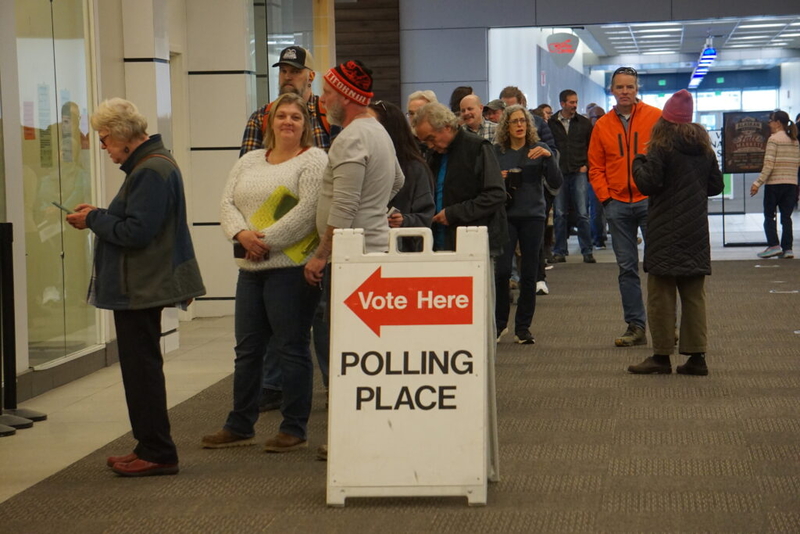
Voters line up to cast their ballots at the Midtown Mall polling site on Oct. 21, 2026. The mall site is among several in the state open for early voting in the general election. (Photo by Yereth Rosen/Alaska Beacon)
The Alaska Division of Elections certified the results of the 2026 general election on Monday. While the results settle Alaska’s closely watched statewide elections, there will be at least one recount to determine the winner of an Alaska House race.
On Tuesday, incumbent Republican Rep. Kevin McCabe had filed for a recount of votes in House District 30 after he lost to Republican Doug Massie after ranked choice tabulation by three votes.
Recounts can be requested by losing candidates or ten eligible voters if the margin is less than 20 votes or .5% of votes cast. Recounts must be requested by a division deadline of Saturday, or by Friday for the governor’s race.
The Alaska Division of Elections announced the general election results were certified on Monday, two days ahead of schedule. Officials with the division did not respond to a request for comment on why it was early.
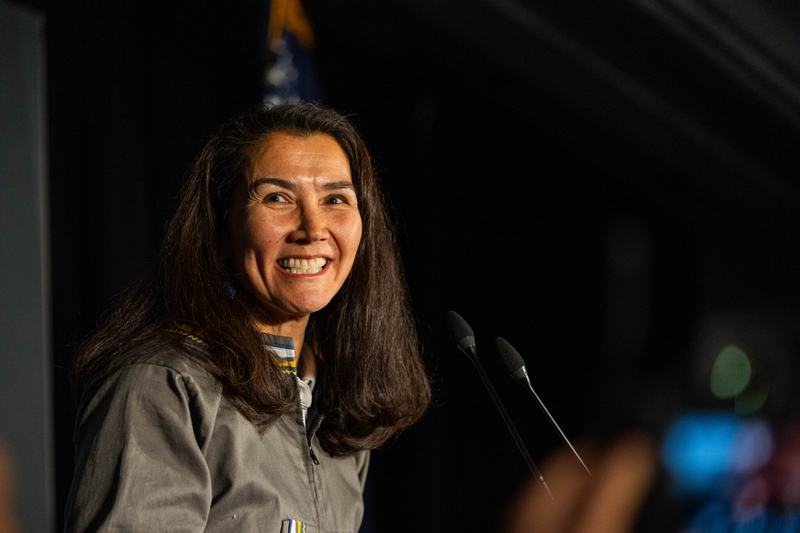

In Alaska’s U.S. Senate race, voters elected Democrat Mary Peltola who will become the first Alaska Native woman elected to the Senate. She defeated Republican incumbent Dan Sullivan, who has held the seat since 2015. She won 50.14% of the vote, 12,500 more votes than Sullivan who had 45.78%.
Outgoing Sen. Sullivan conceded the race on Tuesday. In an emailed statement, he thanked Alaskans and acknowledged the results, but he did not name Peltola directly.
“As I’ve always said I would, and out of respect for the people of Alaska and our democratic process, I accept the results certified by the Division of Elections. Alaskans deserve confidence in the integrity of their elections, and I trust that the ongoing federal and state investigations will provide answers to the questions that remain,” he said.
Outgoing Republican Gov. Mike Dunleavy and President Donald Trump launched state and federal criminal investigations into a report from the New York Times that said the Peltola campaign recruited spoiler candidates to the race, including a candidate with the same name as the incumbent Dan J. Sullivan of Petersburg. The Alaska Beacon has not independently verified the Times’ reporting. Sullivan, Peltola and the Democratic Senatorial Campaign Committee have all denied the allegations.
On Tuesday, a spokesperson for the Alaska Department of Public Safety said by email the state investigation is ongoing.
“The Alaska Bureau of Investigation continues to investigate allegations related to the Alaska US Senate election. To protect the integrity of the ongoing investigation, we are unable to provide additional details at this time,” said Austin McDaniel.
The U.S. Attorney’s Office for the District of Alaska did not respond to a request for information on a federal criminal investigation into groups affiliated with the Peltola campaign. A spokesperson told the Anchorage Daily News the investigation was still active last week.
A lawsuit filed by the U.S. Department of Justice against the Division of Elections seeking to block the certification of the election if Sen. Sullivan lost re-election was dismissed by a U.S. District Court judge, and the federal government dropped its appeal last week.
In the U.S. House race, Republican incumbent U.S. Rep. Nick Begich III won re-election to represent Alaska’s sole seat in the 435-member House. He garnered 47.52% of the vote, ahead of independent challenger Bill Hill who had 41.77%, a margin of 16,503 votes. There was nearly 48% voter turnout in the race. Democrat Eric Hafner — a perennial candidate in federal races, who is serving a federal criminal sentence in New York — got 7.92% or more than 22,700 first-choice votes.
Alaska elected its youngest governor and first Democrat since 1998, Jonathan Kreiss-Tomkins, along with running mate and independent, Zac Johnson. The pair won with 51.09% of the vote, ahead of three Republican challengers, with 48% of voters casting ballots.
Kreiss-Tomkins is set to be sworn in on Dec. 7.
Alaskans keep open primaries and ranked choice voting
Alaskans voted down a ballot measure that would have overhauled the state’s election system by repealing the open primary system, ranked choice votings, and some campaign finance laws.
Voters rejected the measure, opting to keep the current system, enacted in 2020.
‘No’ votes outweighed ‘yes’ votes in the first round of results on election night. By the final count the margins widened to 52.83% of voters voting no, and 46.18% voting yes.
A similar ballot measure was rejected in 2024.
Voters overwhelmingly approved Ballot Measure 3, a small language change for voter eligibility in existing state law to clarify that “only” U.S. citizens are permitted to vote. The measure does not change state law. Voters approved the ballot measure with 68.23% of the vote, with 31.77% voting no.
New and former representatives in the Alaska State Legislature
There were 50 seats up for election this year, including ten in the Alaska Senate and 40 seats in the Alaska House.
Former House Speaker Rep. Bryce Edgmon, an independent from Dillingham, was elected to the Senate representing Western Alaska and the Aleutian Islands in Senate District S, formerly held by Sen. Lyman Hoffman who retired this year.
Republican Rep. Louise Stutes of Kodiak was elected to the Senate District C, replacing Sen. Gary Stevens who also retired this year. Republican Rep. Frank Tomaszewski of Fairbanks was elected to represent Senate District Q, after former Sen. Robb Myers stepped down after three terms.
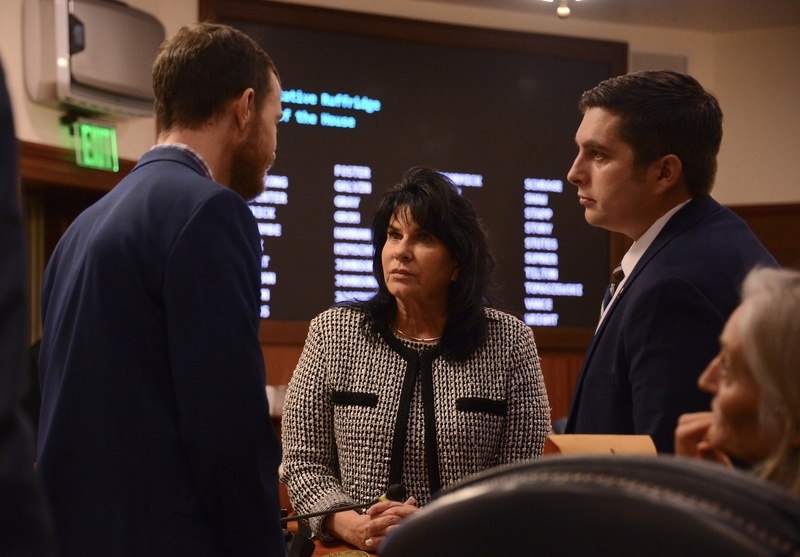
In a shakeup in the Matanuska-Susitna Borough, incumbent Sen. Cathy Tilton, R-Wasilla, lost her re-election bid after ranked choice tabulation to Republican Ryan Berry by 467 votes.
Tilton has served in the Alaska House since 2015 and was appointed to the Senate by Dunleavy in 2025 to replace Mike Shower who resigned to run for lieutenant governor. This year, Tilton was accused by Mat-Su residents of having a predatory relationship with a teenager starting in the 1990s, as reported by the Anchorage Daily News. She has denied any criminal wrongdoing.
The 20-member Senate is expected to govern by a bipartisan majority coalition of 11 members. The nine members of the minority caucus are all Republicans.
In the Alaska House, four Republican seats were flipped to Democrats and independents, widening the margin for the multipartisan House Majority coalition. The coalition is expected to hold 25 seats, with the Republican-led minority caucus making up 15 members.
A handful of races were decided by razor-thin margins, and at least one race will be subject to a recount.
On the Kenai Peninsula, Incumbent Republican Rep. Sarah Vance of Homer lost her re-election to independent Brent Johnson by 59 votes. Vance conceded the election to Johnson last week.
In House District 30, which spans the western part of the Matanuska Susitna Borough and Denali Borough, Republican incumbent Rep. Kevin McCabe lost to Republican Doug Massie after ranked choice tabulations by 3 votes.
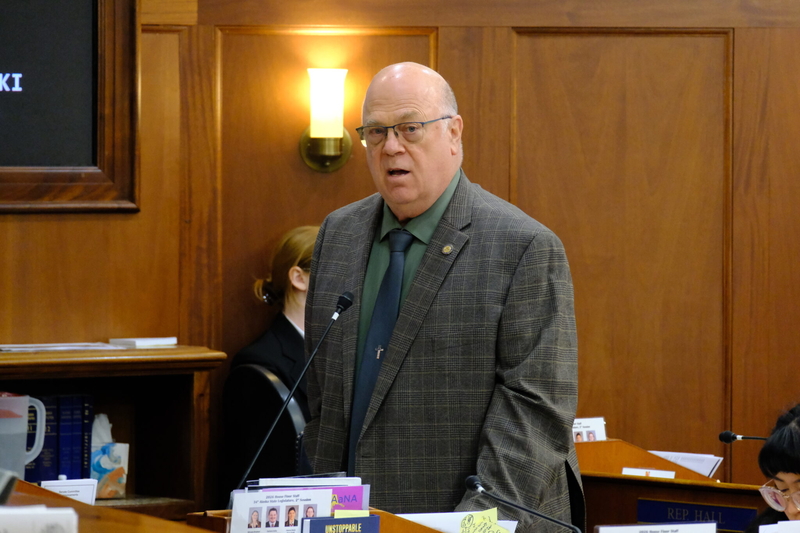
“The cast vote record exports identified 223 House District 30 contest records coded “invalid contest,” including 109 absentee records and 114 questioned records,” he said.
“The exported markings and status code leave unresolved whether any properly cast votes were omitted or whether any rankings were incorrectly recorded or treated in tabulation. So there’s some significant anomalies there,” he said. “And I want to know why.”
McCabe said he expects the recount to be completed early next week.
In nearby House District 29, incumbent Republican Rep. Garret Nelson won re-election by 4 votes, narrowly beating out Republican challenger Steve Menard.
Menard did not respond to a request for comment on whether he planned to file a request for a recount on Tuesday.
Judge’s retention elections
Alaska voters in the Third Judicial District rejected two judges standing for retention elections.
Of 21 judges standing for retention, they were the only two that the non-partisan Alaska Judicial Council recommended not be retained ahead of the election. The council is charged with vetting, nominating and evaluating judges’ performance on the bench.
Voters rejected Kenai Superior Court Judge Kelly Lawson with 58.88% voting ‘no’ on retention, and 41.12% voting ‘yes.’
Voters also rejected District Court Judge Martin Fallon’s retention with 59.92% voting ‘no,’ and 40.08% voting ‘yes.’
Voter turnout in both instances was 48.65%.
Both judges are scheduled to step down in late February, 90 days after the results are certified. Their cases will be transferred to retired judges, called pro tem judges, who will fill in while the seats are vacant. The council will interview and nominate candidates for the two judicial vacancies, at its next meeting in May. The nominees will then advance to Gov.-elect Jonathan Kreiss-Tomkins to make appointments.
Juneau