Two-thirds of Idaho voters turned out for 2026 general election, final results show
Nov 24, 2026 | 6:14 pm ET
Description
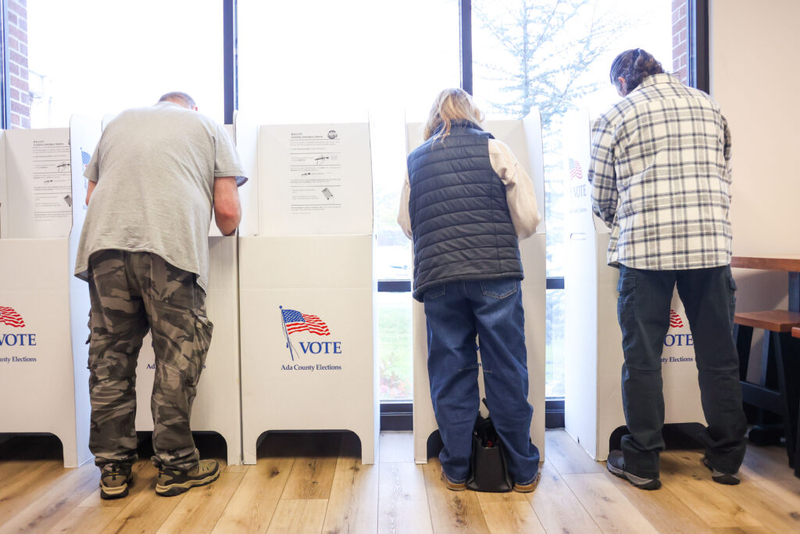
Voters cast their ballots in the general election on Nov. 3, 2026, at the Calvary Baptist Church in Boise. (Photo by Pat Sutphin for the Idaho Capital Sun)
About two-thirds of Idaho’s more than 1 million registered voters cast ballots in the midterm election held earlier this month, according to finalized state election data.
The turnout didn’t eclipse rates from 2018, when the governor seat was open without an incumbent, but this year’s election still turned out to be the state’s largest midterm election, with about 734,000 voters showing up, Idaho Secretary of State Phil McGrane said Tuesday. McGrane, the state’s top election official, attributes that last metric to the state’s years as one of the nation’s fastest growing states.
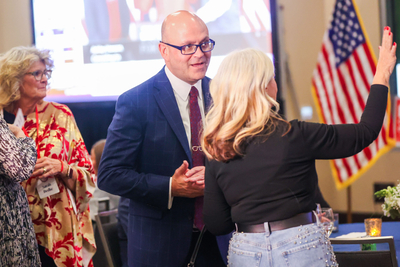
“It really was a successful election,” McGrane said. “When you think about 734,000 people going through and doing the same thing. That’s a huge Herculean effort.”
Weeks after the Nov. 3 general election, the Idaho State Board of Canvassers on Tuesday certified the results of the election as official. At the board’s meeting at the Idaho State Capitol, officials delved into the results of audits of counties’ election results — including in two counties that underreported votes — and reflected on lessons learned from the election.
The final results showed that no races in Idaho were close enough to warrant a free recount, McGrane said. But he said there still might be a recount in a county assessor race in Shoshone County.
Here’s a few snapshots about how voters turned out to vote earlier this month:
- About 40% of voters didn’t cast ballots at the polls on Election Day. About half of those votes were early in person, for a total of roughly 146,000, and the other half were by absentee ballot, for a total of roughly 145,000. Both of those voting types are becoming more popular, McGrane said.
- Overall, the rate of voters who turned out this year was close to matching the 2018 election, which saw the highest turnout of a midterm election in recent years when nearly 67% of registered voters cast ballots. But this year’s turnout still pales in comparison to years when the president is on the ballot, when an average of nearly 76% of voters show up.
- About 56,000 Idahoans registered to vote on Election Day. McGrane said that might’ve contributed to lines at polling places in some areas. Registering to vote typically takes longer than checking in at the polls.
Idaho’s top election official addressed issues in three counties
In North Idaho’s Latah County, where officials announced 2,300 unreported ballots almost a week after the election, McGrane attributed the issue to human error. The ballots had been counted on a machine, he said, but that machine’s memory device was mistakenly not uploaded to a computer that can share votes to the state’s election results.
Idaho voters turned out at high rates to vote in midterm election. Some waited hours to vote.
When his team flew up the day after the unreported ballots were announced to oversee a full recount, he said the room started out packed with observers. By the end of the day, the crowd had winnowed, he said. A week later, when McGrane’s team flew up again to randomly audit batches of votes in the county, he said no one showed up.
“… I think we satisfied the concerns and addressed the questions on the first go around,” McGrane said. “But we will be working with them both in terms of training, and I think there’s a lot of lessons learned from their team from this, to say the least.”
In eastern Idaho’s Bannock County, local election officials found 333 uncounted ballots a week after the election. McGrane said officials discovered it while rounding up election supplies. McGrane called the mistake unusual, and said his office is working to prevent a similar issue from recurring.
“I will say there were safeguards in place, some of which, for lack of better (term), had been ignored on Election Day,” McGrane said. “They’re now aware, and we’re reviewing what we could do, or and even some of our maybe software changes in terms of updates to see if we can’t flag or catch that much sooner in the process.”
Vote tallies ran late into the night for Bannock County on Election Day.
One issue there that delayed vote counting, he said, is that some absentee ballots had been apparently folded by hand, instead of by machine, which caused delays in machine counting votes, he said. Officials spent four hours reproducing those ballots, McGrane said, because a barcode that scans the ballots identity had been folded.
“I think one of the contributing factors for them was fatigue,” he said.
And in southern Idaho’s Canyon County, the state’s second most populated, some voters waited in lines for four hours to cast their ballot. The last voter there cast their ballot into the next day — at 12:20 a.m. the day after Election Day, McGrane said. He said the county needs more polling locations and equipment.
But McGrane said other counties also saw long lines — partly driven by the length of the ballot, which sometimes spanned three or four pages.
What Idaho election auditors found in counties
Idaho Secretary of State’s Office Voting System Specialist Dan Lee overviewed how state election officials came to different counts on handfuls of votes across eight counties they audited.
Several of those came down to how voters expressed their vote.
Instead of filling in the bubbles to the left of candidate names, some voters filled in candidates’ political party affiliation abbreviation, which is marked between parenthetical marks that somewhat resemble a bubble.
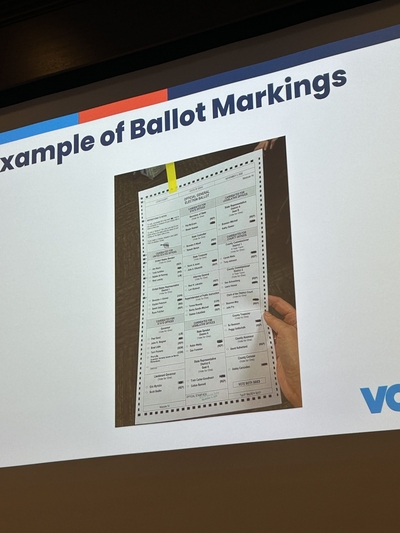
The discrepancy wasn’t enough to swing the races that the secretary of state slated for audits.
In Adams County, for instance, state officials said they would’ve counted 11 votes in the attorney general’s races that local election officials tossed. Four of those would’ve gone to Democrat Lori Hickman, and seven would’ve gone to Republican incumbent Raúl Labrador, who won reelection.
But the audits don’t change the results of the races, McGrane said, so those changes won’t show up in the election results.
Still, he said, the audits highlighted an issue for his office to address.
“Overwhelmingly, every election voters follow the instructions and fill out the … box appropriately, including in these audits,” McGrane said. “… But there’s enough of these, and when you look at the instructions, I think there’s more clarity that we can provide in the instructions to help drive the voters to make the mark where they’re supposed to.”
In Benewah County, a rural county that hand tallies election results and was the last to finish reporting election results the morning after the election, state officials flagged a number of issues related to the handling, tallying and documentation of election results.
In that county, state officials audited the results of a nonbinding statewide vote to endorse a state gun.
McGrane, who chooses which races are audited in each county, pointed out how few voters weighed in on that question.
“More people skipped it than voted for the first choice,” McGrane said, referencing the winning gun, the Winchester Model 1873.
“And it was titled ‘Gun that Won the West,” Lee soon added.
“That also helps,” McGrane said.
Boise, ID