Turkey production bounces back but prices still rise
Nov 24, 2026 | 3:54 pm ET
Description
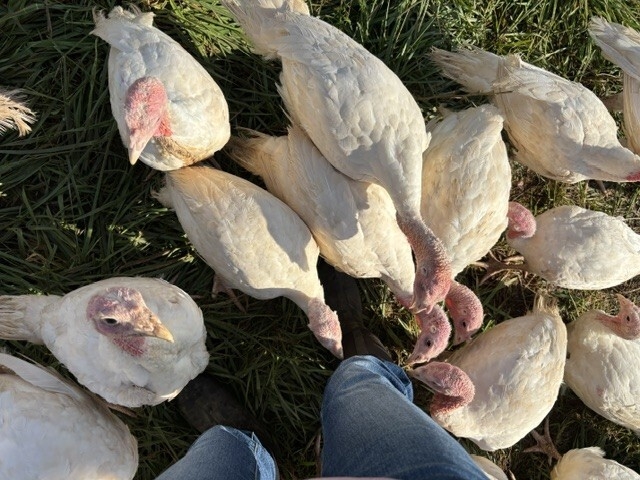
Turkeys gather for feeding at Whiffletree Farm in Virginia in September. Turkey production is up this year after two years of decline but prices rose because of strong demand and a shortage of whole birds. (Photo courtesy of Whiffletree Farm)
Turkey production for Thanksgiving has increased this year for the first time since avian diseases reduced supplies for years, but prices still rose as labor shortages created bottlenecks, according to federal reports.
Turkey farmers, like other livestock producers, say they need more foreign workers as immigration crackdowns and the ending of protected status for many immigrants take a toll on their workforce. Many producers support proposed bipartisan federal legislation to give them more access to visas for temporary workers.
Disruptions to Temporary Protected Status for some immigrants “could create significant operational challenges and further tighten an already constrained labor market,” Leslee Oden, CEO of the National Turkey Federation, wrote in an October op-ed supporting the federal visa legislation.
“This is a good first step to help packers and processors keep the rural economy moving and to ensure American consumers have access to affordable food,” Meat Institute CEO Julie Anna Potts said in a statement earlier this year.
Minnesota, North Carolina and Arkansas last year had the highest turkey production numbers, and millions of turkeys were also produced in Indiana, Iowa, Missouri, Pennsylvania and Virginia, according to a U.S. Department of Agriculture report.
Wholesale prices shot up to a projected $1.76 a pound for whole hen turkeys this year from $1.36 last year and just 94 cents in 2024, according to the USDA, a 30% one-year increase. But a Farm Bureau report found retail prices for turkey up only about 10% from last year as retailers used turkey promotions to draw customers – some reported prices as low as 69 cents per pound.
Production increased this year to 5.1 billion pounds, after dropping two years in a row to as low as 4.8 billion pounds last year, but it’s still well below 2020’s 5.7 billion, according to the USDA report.
“They’ve had a lot of disease pressure over the years, so they’re still building up production numbers. That being said, grocery stores love to offer turkey deals,” said Farm Bureau Deputy Chief Economist Faith Parum in a November podcast.
New bird flu cases appear in dairy herds as state ag, vet officials seek vaccine urgency
Jesse Straight, who sells about 1,000 turkeys a year directly to customers at his Whiffletree Farm in Warrenton, Virginia, said he hasn’t been as affected by labor and disease issues as other, larger operations. His birds live outside on pastures with more fresh air than factory farms, and he pays a small staff fair wages, he said.
“We get people coming to our farm from all over the country because they believe in our mission,” Straight said. “Our mission is to heal the land and give the animals a life that fits their nature, and heal our customers through good food.”
Nationwide, higher prices in most areas do not translate into more money for farmers, Farm Bureau Associate Economist Cameron Castillo told Stateline.
“Significantly higher costs are prohibiting farmers from capturing any economic benefit this year,” he said.
Stateline reporter Tim Henderson can be reached at [email protected].