Alabama lawmakers plan bills regulating license plate readers in coming session
Nov 24, 2026 | 6:01 am ET
Description
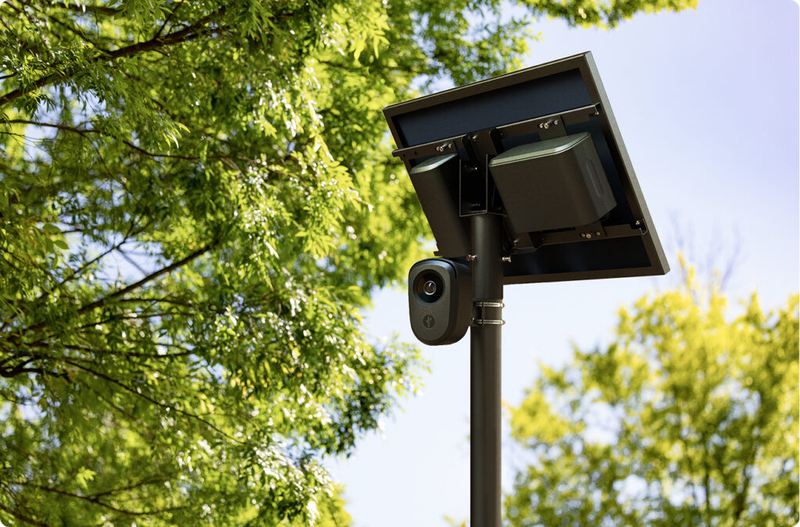
Flock Safety license plate readers are typically mounted on tall poles, with a camera and solar panel on top. Alabama lawmakers plan to file bills in the coming session to address privacy concerns over the cameras while allowing law enforcement to use the technology in an appropriate manner. (Photo courtesy of Flock Safety)
State lawmakers plan to file legislation addressing privacy concerns over license plate readers in the coming legislative session.
Both Rep. Ron Bolton, R-Northport, and Sen. Arthur Orr, R-Decatur, said their bills will place time limits on data collected by plate readers; require audits of the database that tracks vehicle information and establish penalties for officers who abuse their authority when they obtain information.
“We have got to protect people’s rights, but also we are using the tools that are available for law enforcement to solve crimes,” Bolton said in an interview Wednesday. “I have got an ever-increasing list of things that have been solved, very important things.”
Flock, an Atlanta-based company that manufactures license plate readers, said in a statement Wednesday that the technology provides an important tool to address public safety and signaled it would support regulations.
“We support thoughtful legislation and strong privacy, transparency, and accountability guardrails that ensure technology is used responsibly while preserving law enforcement’s ability to use effective tools to keep people safe,” the company said.
License plate readers capture an image of a vehicle’s license plate, then convert it to text. The system can then record the plate number of the vehicle as well as the date and location.
Privacy advocates have become increasingly concerned as the technology’s capabilities expand to allow it to retain vehicles’ location histories. That information can then be used to trace where people have been.
Several law enforcement officers have been charged with using data obtained by license plate readers to surveil current and former romantic partners. The system has also misidentified people. In Wisconsin, a person was pulled over at gunpoint after the camera flagged the vehicle in a homicide case. Milwaukee police said the incident was caused by an employee who failed to remove an alert on the vehicle and was not because of the system.
Bolton and Orr said they proposed the legislation to address some of the concerns.
“It really allows law enforcement to use the technology in a very narrow manner, and it doesn’t inhibit them from doing their job,” Orr said in an interview Wednesday.
The bills are still being finalized, but both legislators said the bills would include sanctions for law enforcement officers who abuse the system.
“There are going to be levels of criminal offenses depending on the severity of the violation,” Bolton said.
Both bills will also require audits of the system periodically, but neither Bolton nor Orr outlined who would perform the audits or the process. Orr said law enforcement officials would need authorization from a court before using the system, unless the situation is urgent.
“You would have to have a judicial warrant,” Orr said. “If you are coming from out of state, let’s say Mississippi, and you want to access our cameras in Alabama, you would need a warrant, domesticated by an Alabama judge.”
Both bills also limit the time the system retains license plate data before automatically deleting it. Bolton said he is still speaking with people to determine the appropriate timeframe. Orr said his bill allows the data to be retained between one to three months.
For their part, law enforcement said they are willing to accept regulations imposed by lawmakers.
“We have no issues with regulation, creating better regulation, creating more rules, or even holding the data,” said Michael Moore, president of the Alabama Association of Chiefs of Police and chief of the Enterprise Police Department, in an interview Wednesday. “We completely understand that. There has got to be a legitimate length that assists us on both sides.”
Moore said he believes that having access to the data for 90 days would be reasonable. The data could then be retained for two years but would require a court order or warrant to be able to access the information.
Many of the elements proposed by Bolton and Orr are part of the recommendations from the Institute for Justice, a nonpartisan, libertarian-leaning public interest law firm. The firm is representing residents in two federal lawsuits who are challenging the use of license plate readers.
The organization advocates time limits for keeping the data, requiring police to obtain a warrant or receive permission from the court for access, and ensure a record is created each time a person reviews information.
“At the end of the day, the Fourth Amendment is the balance,” said Robert Frommer, senior attorney for the Institute for Justice, in an interview Tuesday. “The idea is that we do not want officers in the field to have this roving power. And we want to maintain a degree of privacy and security that people had at the time of the founding.”
Montgomery