Put American democracy on the road to Oz following Kansas’ landmark midterm election
Nov 23, 2026 | 4:33 am ET
Description
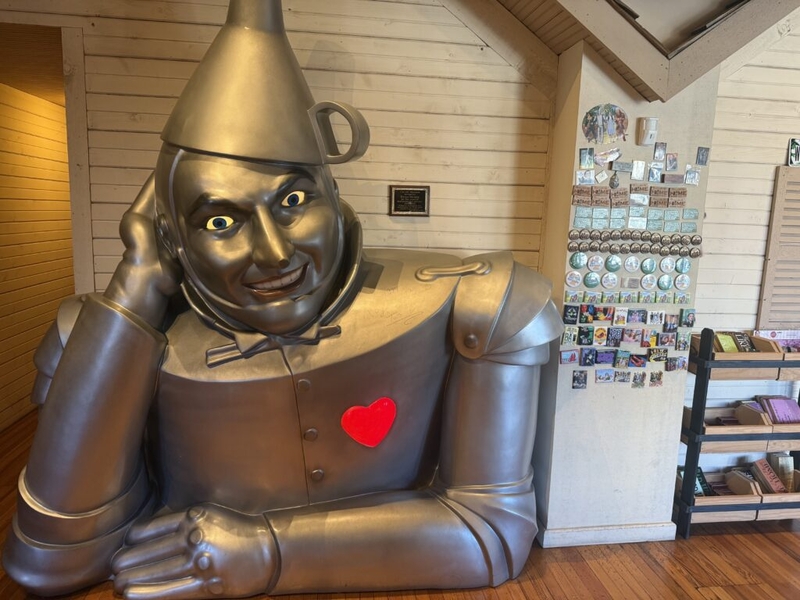
Inside the Wizard of Oz Museum in Wamego, a larger-than-life Tin Man with an illuminated heart greets visitors. (Photo by Clay Wirestone/Kansas Reflector)
I spent some of my journalism career covering politics on the East Coast — Maryland, Pennsylvania and Vermont. When I told the locals that I was from Kansas, I would usually get a perplexed, blank-stare look, as they struggled to find some connection to the state.
A typical response was, “Yes, Dorothy of Oz,” or, “ Yes, Jayhawks basketball,” or, “Good God, yes, that boring, forever drive on Interstate 70 across Kansas to Denver.”
That rather drab image of Kansas as just another flyover politically red state took a major hit during the recent midterm election that saw Kansas Democrats sweep most of the most important offices. The result was unprecedented, most notably Adam Hamilton’s election to the U.S. Senate, the first Kansas Democrat to win the race since 1932.
Indeed, the U.S. Senate race between Hamilton and incumbent Republican U.S. Sen. Roger Marshall was so compelling it made the front pages of several of the world’s foremost newspapers. In the last few weeks of the campaign, the New York Times, Wall Street Journal, Le Monde in Paris and The Times of London all sent reporters to Kansas to cover the contest.
Perhaps Democrats’ Kansas success was not all that surprising, given the state’s political genetics. Hamilton ran as an economic populist and cultural moderate. That resonates with the late 19th century Kansas populists — “Sockless” Jerry Simpson, William Peffer and Mary Elizabeth Lease, who urged Kansas farmers to “raise less corn and more hell.”
Similarly, Hamilton reflects many Kansans’ view on social issues — pro-choice on abortion but opposed to biological men participating in women’s sports and other excesses of the progressive left.
A Methodist pastor, Hamilton has a unique opportunity to confront the most damaging aspect of current American politics: the hatred, the acrimony, the brutal cruelty and character assassinations that characterize so much of the national political dialogue.
Fortunately, in post-election interviews Hamilton stressed he would not lead a highly partisan chorus to demean and insult the political opposition. As many congressional Democrats prepare for an all-out assault on all things Republican and Trumpian, Hamilton and other newly elected moderate Democrats need to lead the party in a different direction.
One of the most notable results from the 2026 midterms is how the vast majority of Americans are disgusted by both parties. Entering the midterms, according to the Real Clear Politics polling average, only 38% of respondents had a favorable view of the Republican Party, while the Democrats barely scored better — with a 39% favorable rating.
A political reporter and commentator for more than 40 years, I always asked office-seekers why they came to their political views. Invariably, they had — for them — a compelling answer: I loved JFK, and so I became a Democrat; or Ronald Reagan understood the communist threat, so I’m a Republican. To me, those and other such responses meant most people take their civic responsibility seriously.
Sadly, agreeing to disagree while respecting one another is perhaps a lost skill in American politics.
In an historical echo of today, late-19th century Kansas populists captured the national imagination. In 1900, a South Dakota newspaperman, L. Frank Baum, published “The Wonderful Wizard of Oz,” which quickly became an icon of popular American culture. According to some literary scholars, the book can serve as an allegory for populism: Dorothy of Kansas is the typical all-American girl; the Scarecrow represents Kansas farmers oppressed by railroads; the Tin Woodman is the factory worker who has been made robotic by industrial capitalism; the Cowardly Lion is William Jennings Bryan, the Populist/Democratic 1896 presidential candidate; the Wizard is the robber baron who manipulates the denizens of Oz (average Americans) with smoke and mirrors.
In his recently published book, “American Odyssey,” Notre Dame University political scientist Patrick J. Deneen wrote that “ ‘The Wizard of Oz’ is for Americans what the ‘Odyssey’ was for the Greeks: a tale that provides a mythic revelation of our deeper inner selves.”
Dorothy, in Deneen’s view, seeks to escape from gray, mundane Kansas. But her fantastic journey — like that of Homer’s ancient hero seeking Ithaca — is actually a quest to return to Kansas. “There’s no place like home” is her prayer to get there.
The combination of “Oz” and “Odyssey” suggests how core Kansas is to American identity. Perhaps stored among the master film reels of “Oz” and other archives in the salt mines in Hutchinson are the traditional American political values of compromise and faith in the good judgment of the American people.
Are Hamilton and the other newly elected Kansas Democrats up to the challenge of reinvigorating American democracy?
David S. Awbrey is a former editorial page editor of The Wichita Eagle. Through its opinion section, Kansas Reflector works to amplify the voices of people who are affected by public policies or excluded from public debate. Find information, including how to submit your own commentary, here.
Topeka, KS