Democrats see missed opportunities after Black turnout surge across the South
Nov 20, 2026 | 3:35 pm ET
Description
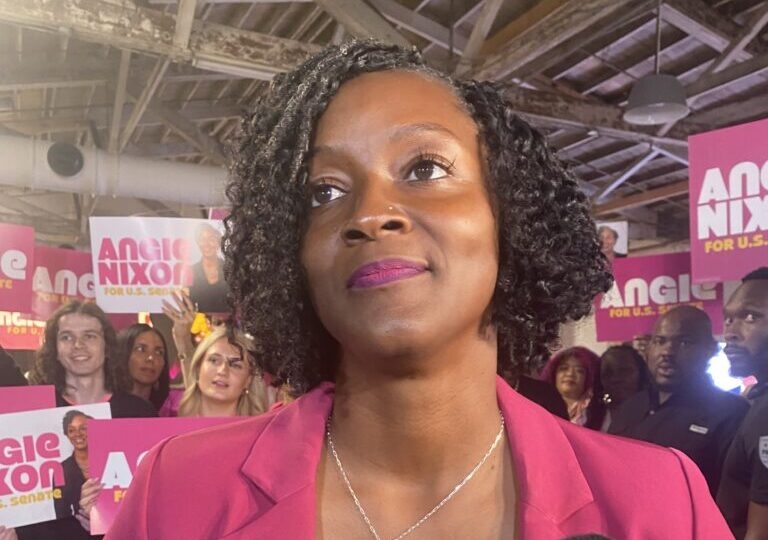
Florida U.S. Senate Democratic candidate Angie Nixon talks to reporters following her concession speech earlier this month. Some experts point to her narrow loss, and another in Louisiana, as evidence that more funding could produce even better Senate results in 2028. (Photo by Christine Sexton/ Florida Phoenix)
As new details emerge about a Black midterm voting surge in Southern states, missed opportunities for Democrats are coming under more scrutiny, such as close U.S. Senate races in Florida and Louisiana that might have added to the party’s advantage in Washington, D.C.
Democrats in both states nominated Black candidates for U.S. Senate and turnout among Black voters was high. Looking back, some political analysts see lessons for Democrats looking ahead to 2028, noting that more money from national party committees could have notched them at least two more wins.
In Mississippi, of Democratic U.S. Sen.-elect Scott Colom saw an unexpected and historic success and will become the state’s first Black senator since Reconstruction. Similar bumps from Black voters in Florida and Louisiana that might have helped Democrats had there been more help, observers say.
Midterm wins, near-misses could signal political change in the Deep South
“Louisiana is definitely the one the Democrats let slip away,” said Robert Collins, a political analyst and professor at Dillard University in New Orleans. In Louisiana, Republican Julia Letlow, an incumbent U.S. House member, won a narrow victory of about 25,000 votes over Democrat Jamie Davis, a farmer in the rural Delta region, for an open U.S. Senate seat.
Democratic strategist Matt McDermott said that in Florida, Democrat Angie Nixon was “underfunded” in a 2.9-point loss to Republican incumbent U.S. Sen. Ashley Moody.
Immediately after the election, Florida Democratic Party Chair Nikki Fried called out her national party for not sending money earlier to her state’s candidates.
“Florida Democrats are looking at the results across the country and can only imagine what kind of a day we would be having if we had sustained national support and the investment this state deserves,” Fried said in a conference call with reporters after Election Day. “It is not about spending in Florida. It is about investing early in Florida the infrastructure that is necessary to win the third-largest state.”
Louisiana was not on McDermott’s list of states most vulnerable to Senate flips in 2028, but he told Stateline it’s “certainly a state where Democrats could play” even though incumbent Republican U.S. Sen. John Kennedy would be a formidable foe.
In Louisiana, Letlow had a huge fundraising advantage, including almost $3 million in super PAC money compared with only a little less than $130,000 in such funds for Davis, Collins said.
Davis also had little statewide name recognition as a municipal official in rural Tensas Parish, unlike Mississippi’s Colom, who was a well-known sitting district attorney with competitive fundraising and super PAC support.
“Despite all those disadvantages, Davis came within 1.8 points,” Collins noted. “If the Democratic National Committee had put a couple million dollars into the race, on television ads and get-out-the-vote efforts, Davis wins this race, and I think he wins easily.”
The DNC referred comment to the Democratic Senatorial Campaign Committee, which sets spending priorities for U.S. Senate races. It did not immediately respond to a request for comment.
Louisiana Democrats’ near-miss on Senate seat gives party hope for governor’s race
Data scientist Lenny Bronner pointed out the Louisiana near miss in an analysis this month of Black turnout in Southern states for states that had released detailed results. The South has most of the nation’s Black population, 59% as of last year, according to U.S. Census Bureau estimates reviewed by Stateline.
“Worth wondering, for Democrats, what could have happened in Louisiana if they had had Mississippi style turnout among Black voters,” Bronner wrote in an X post.
Bronner’s analysis for Arkansas, Georgia, Louisiana, Mississippi, South Carolina and Virginia showed that precincts with large Black populations had higher turnout, compared with 2024, than areas with less Black population. The difference was especially stark for both Louisiana and Mississippi, indicating that Black voters were particularly motivated to vote this year compared to other groups.
However, Louisiana’s most heavily Black precincts only reached about 80% of 2024 turnout, when Donald Trump faced off against then-Vice President Kamala Harris, while similar precincts in Mississippi were near 100% of 2024 turnout.
Democrat Colom’s Senate victory in Mississippi was historic, the first for a popularly elected Black senator from the state (there were previous Black senators after the Civil War when the legislature elected senators) and the first Democrat since 1982.
Keneshia Grant, an associate professor at Howard University who wrote a 2020 book on Black Americans’ effect on the Democratic party in the South, said Black voters have long had power in Mississippi even if they were voting for Republicans willing to seek their vote. This may have been the first time they saw a realistic chance for a Democrat.
“Black voter turnout could have increased because they believed it would truly matter this go-round,” Grant said. “They are very clear about what is and isn’t possible in their state.”
In Florida, NBC exit polling found strong support for Nixon, the Democratic U.S. Senate candidate, among Black voters: 94% of Black women and 77% of Black men voted for Nixon.
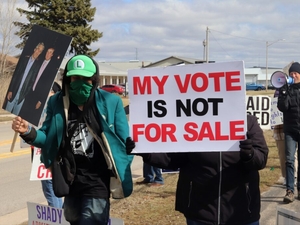
“As a Black woman, I will stand for my vote,” Saretta Weston, a 35-year-old accountant, said after casting her ballot in Leon County, Florida. “There’s been a lot of oppression in (the) past. As of right now we have the opportunity to do that, what many before us could not do.”
North Carolina elected Democrats to 10 of 12 U.S. House seats, including six flips. There was a U.S. Senate flip in South Carolina, and Georgia elected its first Black and first woman governor, Keisha Lane Bottoms.
Even in Arkansas, where Republicans swept statewide races, Democrats flipped 10 state House seats, enough to break a Republican supermajority and give Democrats a voice in budget votes.
The narrow defeat for a Democratic challenger in Louisiana’s U.S. Senate race gave Democrats hope for statewide races next year, with a chance that Davis might run for governor next year. Davis did not return an e-mail requesting comment.
He told The Guardian in an interview published Thursday that it “stings to come close” — he lost by less than 2 percentage points — and said that he did not have enough money to fight damaging attack ads from Republicans.
And in an interview before the election, Democratic consultant James Carville noted the lack of national party funding support and told the Louisiana Illuminator, “If Jamie loses by two points, we are going to get up Wednesday morning, and we are going to wonder where the hell were you (national Democrats)?”
Stateline reporter Nada Hassanein contributed to this report.
Stateline reporter Tim Henderson can be reached at [email protected].