Officials: 1K fewer multilingual learners attend Delaware schools this year
Nov 20, 2026 | 5:00 am ET

Description
Photo courtesy of Spotlight Delaware
Why Should Delaware Care?
Increased federal immigration enforcement is causing many immigrants across Delaware to reorganize how they live their lives. New data from the Delaware Department of Education suggests that the changes include decisions about whether to send kids to public school.
Delaware schools lost about 1,000 multilingual students over the past year, state education officials said this week — the second year in a row of steep declines for a student population that draws from immigrant communities.
The loss comes from a total of more than 19,000 multilingual students across the Delaware’s public schools, according to the Delaware Department of Education.
The new report follows a Spotlight Delaware analysis in February that found that school districts across the state were seeing a decline in multilingual learner students. At the time, Delaware teachers and administrators attributed much of it to immigrant families choosing to self-deport amid increasing immigration enforcement from the Trump administration.
On Monday, Department of Education finance official Brian Ray told members of the Public Education Funding Commission that the state’s annual Sept. 30 student count found that Delaware has lost a total of 1,000 multilingual learner students over the previous two years.
While it occurred amid heightened immigration enforcement, Ray noted the number coincided with a larger student population drop. He said the state’s student body as a whole has seen a slightly higher homeschool enrollment and also enrolled 500 less students in kindergarten this year — declining birth rates have begun to hit school districts nationwide.
Still, during the meeting, Rep. Kim Williams (D-Stanton) noted her suspicions that the decrease could be a direct result of actions taken by the U.S. Immigration and Customs Enforcement.
Williams noted she previously asked the Department of Education to look into last year’s decrease, questioning whether the outcome was that “Hispanic families are not sending their children to school because of what is going on with the federal government and ICE.”
Williams also referenced an incident in her district last month in which a federal immigration agent entered the Stanton Middle School campus, then arrested an individual just off of school grounds.
At the time, a spokesperson for the Red Clay Consolidated School District told Spotlight Delaware the enforcement activity took place after the school’s administration and security personnel approached the agent on campus.
When Williams asked directly about immigration enforcement during the Monday meeting, Ray said he could not conclude that families were pulling their children from school because of deportation fears.
He noted that the multilanguage learner students could theoretically be among those who chose homeschool or private school.
Still, many school officials have said they have seen school-age kids leaving because their families decided to self-deport rather than face the possibility of being separated from their children by federal agents.
During Monday’s meeting, Sarah Celestin, the special education director at the Red Clay Consolidated School District, also said the district has seen “a drop of multilingual learners, not just following that issue at Stanton.”
Celestin also said there had been “several raids in some of the larger shopping centers in our district in the Elsmere community.”
An impact on school funding
Delaware’s public education funding formula is currently based on a unit count system, which distributes money to districts based on the number of students enrolled. The system is also supplemented by the Opportunity Funding program, which provides more dollars to schools with low-income and MLL students.
And some school districts may already be seeing the effects of decreased student enrollment.
Last winter, Gary Henry, a professor at the University of Delaware’s School of Education and Joseph R. Biden Jr. School of Public Policy & Administration, said lower enrollment could impact some school districts in low-income rural areas more dramatically.
Henry said when districts in Kent or Sussex County lose students who typically bring in additional dollars, it “contributes to a downward spiral of effects on the schools that are serving more of [MLL and low-income] students and their families.”
Higher-wealth districts are able to generate more funding despite losing students, Henry said.
Henry also noted there could be a lag in funding if students return to their school district after the unit count, as they will not be added to the count.
“There’s not an opportunity to go back and say, ‘OK, these kids have come into class,’” Henry said. “So, you’re stuck for a full school year without the resources from the Opportunity Funds for those students.”
A national trend
In February, a Spotlight Delaware analysis found that nearly 70% of traditional Delaware school districts — 11 out of 16 — saw a decline in the number of enrolled multilingual learner students in the 2025-2026 school year compared to the previous year.
Spotlight Delaware conducted its data analysis after submitting a Freedom of Information Act request for MLL enrollment numbers from 2021 to 2025 with Delaware’s 19 school districts and two dual-language charter schools in December.
Brandywine School District did not have 2025 data available.
Multilingual learners, or students who are developing proficiency in multiple languages, are oftentimes immigrants who are learning English for the first time. Their citizenship status varies widely.
In some cases, the children are American citizens, having been born here, but whose parents may be undocumented. In other cases, both the parents and children may be undocumented and seeking asylum, or they may be resettled here through refugee or humanitarian programs, such as Temporary Protected Status.
The enrollment drop in Delaware schools could be attributed to a confluence of factors, including self-deportations, alternatives to in-person learning, and students cycling out of multilanguage learner programs with no new arrivals to backfill their spots as a result of the Trump administration’s border policies, said Julie Sugarman, associate director for K-12 education research with the Migration Policy Institute, a nonpartisan immigration think tank.
While the MLL enrollment dropoff was felt across Delaware’s three counties, the state is not alone in experiencing the decline.
In the weeks after federal agents killed Renee Good in Minneapolis, classrooms emptied as even U.S. citizens elected to keep their children home from school. In California, a Stanford University study found a 22% jump in student absences in state school districts facing intensified immigration enforcement between January and February 2025.
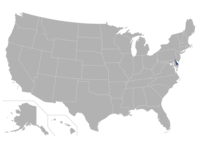
Dover