South Dakota sues TikTok in state court after settlement negotiations in federal lawsuit stall
Nov 19, 2026 | 4:22 pm ET
Description
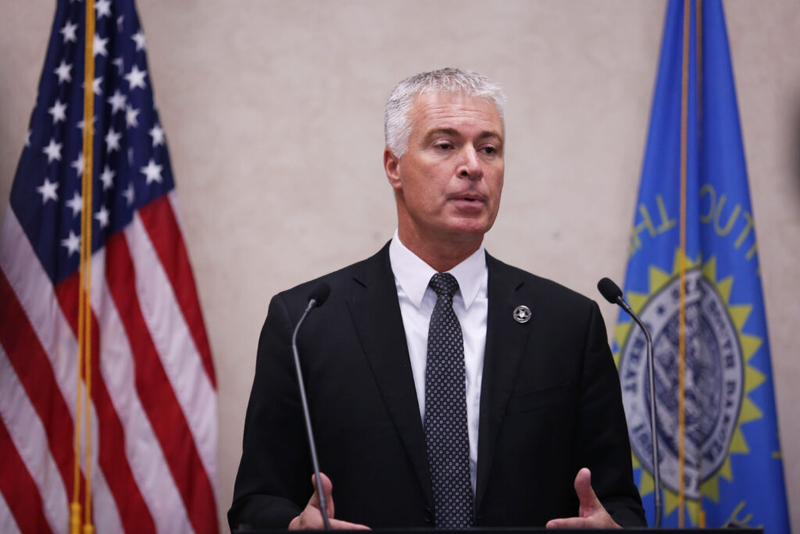
South Dakota Attorney General Marty Jackley speaks during a press conference on Dec. 19, 2025, in Sioux Falls. Jackley filed a lawsuit on behalf of South Dakota this week against TikTok. (Photo by Makenzie Huber/South Dakota Searchlight)
South Dakota’s attorney general is suing TikTok for allegedly breaking state law by lying to parents about safety, bypassing safety controls and failing to protect kids from harm.
The lawsuit, filed Thursday in Hughes County, comes as settlement talks faltered between South Dakota and ByteDance, the Chinese company behind the social media app the state has already targeted in a multi-defendant federal lawsuit.
Meta, the company behind Facebook and Instagram, came to a settlement with South Dakota and a coalition of other states that sued over similar claims in a federal lawsuit in California. ByteDance was among the other defendants in that case, as were YouTube and Snapchat.
Meta’s settlement in that case included pledging steps to protect children from harm on its platforms through age verification, stronger parental controls and “nighttime blocks” on platform access by minors between midnight and 6 a.m. unless a parent allows it.
South Dakota attorney general urges beefed-up consumer protection after $53 million Meta settlement
The $17.1 billion promised payment from Meta in that case guaranteed $53 million over the next 10 years for South Dakota, a figure that could grow to $73.4 million from Meta alone if similar settlements on parental controls are reached with YouTube, Snapchat and TikTok.
The lawsuit filed this week, Jackley said, came because “negotiations have stalled” with ByteDance.
The lawsuit in South Dakota “doesn’t mean settlement conversations can’t continue, but as there’s delays, it’s harming our kids,” Jackley said.
In an emailed statement, a TikTok spokesperson said the lawsuit “relies on misleading and inaccurate claims and ignores the concrete safety measures TikTok has voluntarily implemented to support the well-being of our community.”
The statement pointed to “more than 50 present safety, privacy and security settings,” and to a family pairing feature that can link the TikTok accounts of parents and children so parents can manage who can interact with their kids, set screen time limits and block certain kinds of content.
“We will vigorously defend against the State’s claims,” the spokesperson said.
State set up accounts to track alleged harms
The new lawsuit was filed after investigators with the Attorney General’s Consumer Protection Division set up five TikTok accounts to access and monitor content on the platform, where users watch short-form videos and livestreams from content creators.
The employees set up accounts posing as people between 14 and 35 years old, using fictitious email addresses and birthdays.
The two-week operation “revealed that despite promises to consumers that TikTok is suitable for minors, the reality is different. Using the five accounts turned up evidence that TikTok’s algorithm will feed minors inappropriate material,” the lawsuit says.
The investigators posing as a 14-year-old girl searched for sexually explicit material and found it, the lawsuit says. Those posing as 14- and 17-year-old girls allegedly found videos on how to induce vomiting, sometimes coupled with jokes about life with an eating disorder or inspirational music, as well as content on self-harm, in spite of what the complaint says are pledges from TikTok to better screen content for young users.
“The State’s testing reveals that TikTok overstates the effectiveness of its enforcement efforts,” the lawsuit says.
Viral challenges, sexual predators
The complaint also points to two incidents of stolen property and vandalism in 2021 in Sioux Falls schools linked to what the lawsuit described as a “viral TikTok challenge” that encouraged users to steal or destroy school property and post a video proving they’d done so.
In Rapid City, “bathrooms were vandalized and fire extinguishers were stolen” from schools, behavior the lawsuit says was inspired by the same trend.
The complaint also points to a 29-year-old, now-former Sioux Falls teacher sentenced to 24 years in federal prison last year for posing as a teen to solicit minors for sex, using Snapchat and TikTok.
“The harm is serious,” Jackley said. “It’s sexual in nature, it’s human trafficking and sexual exploitation of children. It’s causing eating disorders in our young women. It causes bullying in our schools, and it’s a factor in suicides.”
Other lawsuits, possible outcomes
Similar lawsuits against TikTok were filed in state courts in North Dakota, West Virginia, Idaho and Wisconsin this week, Jackley said, with each state but Wisconsin led by a Republican attorney general.
The states took action on the local level, Jackley said, because each of those states have consumer protection laws to prohibit the behavior they say TikTok is involved with.
The push for social media company accountability is broadly bipartisan, Jackley said, pointing to the underlying federal case in California that had the backing of 47 states.
Jackley is leaving the attorney general’s post for the U.S. House of Representatives early next year. He hopes to work with others in Congress to pass the Kids Online Protection Act, which he said would address some of the harms touched upon by the lawsuits. That legislation would create a “duty of care” obligation for companies to prevent bullying and other issues linked to underage use of social media.
The South Dakota case has the state seeking “injunctive relief” from a judge or jury to require similar behavior from TikTok. The case also asks for monetary damages based on alleged violations of the state’s consumer protection laws.
If a judge or jury sides with South Dakota in the state-level case, Jackley said, Meta could still be obligated to up its monetary settlement amount in the underlying federal case. That would also be contingent on settlement agreements with YouTube and Snapchat, companies with whom negotiations are “ongoing,” Jackley said.

Pierre, SD