RI attorney general moves to defend law allowing child sex abuse lawsuits
Nov 18, 2026 | 4:30 pm ET
Description
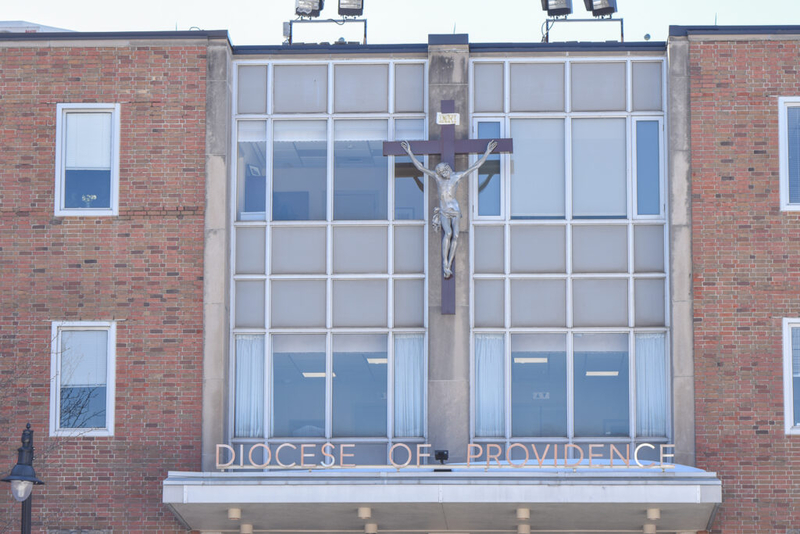
The offices of the Roman Catholic Diocese of Providence are shown on March 4, 2026. (Photo by Christopher Shea/Rhode Island Current.)
Rhode Island Attorney General Peter Neronha is seeking to defend the constitutionality of the 2026 state law that allows survivors of childhood sexual abuse to sue institutions that enabled their abuse, including the Diocese of Providence.
Neronha’s office filed a motion Nov. 13 seeking to intervene in the nearly 200 Superior Court cases, as the Diocese prepares to challenge the law’s constitutionality before the Rhode Island Supreme Court.
The constitutional question has also surfaced in a separate federal lawsuit filed in July against the Diocese of Providence and St. Matthew’s Church in Central Falls. The parties jointly asked a federal judge Nov. 11 to have the Rhode Island Supreme Court decide whether the law can revive claims that had already expired.
Neronha’s position: The law signed by Gov. Dan McKee on June 11 is constitutional.
“The pain that survivors suffer knows no statute of limitations, and they deserve to seek accountability from the people and institutions that enabled these crimes,” Neronha said in a statement Tuesday. “I look forward to continuing to advocate for this important legislative reform in court.”
A spokesperson for the Diocese of Providence did not immediately respond to request for comment Wednesday.
Superior Court rules require anyone challenging a state law’s constitutionality to notify the attorney general, giving the office a chance to join the case.
The General Assembly passed landmark legislation in June amending the state’s statute of limitations after the long-awaited release of a 282-page report by the AG’s office in March that detailed decades of abuse by clergy and a cover up by the Diocese of Providence. A total of 72 deacons and priests faced credible accusations of abuse dating as far back as the 1950s, according to the report.
The law opened a two-year window on July 1, 2026, allowing survivors to file claims that had previously been barred by the statute of limitations. The window closes June 30, 2028. Previously, victims had 35 years after turning 18 to sue individual priests, teachers, coaches and others who molested them, or up until they turned 53.
More than 190 abuse cases were pending in Superior Court as of Nov. 11, according to the joint motion for certification in the federal case.
Neronha’s motion states Superior Court Judge Richard Licht, who is overseeing many of the cases, met with attorneys in September to discuss whether to ask the Rhode Island Supreme Court to take up the law’s constitutionality. Licht indicated he was exploring that option, according to the motion, which cites a September court filing in a separate federal case.
A spokesperson for the Rhode Island Judiciary did not immediately respond to request for comment.
The AG’s office argues that it would be premature for the Superior Court to send the question to the Supreme Court before the defendants have laid out their legal arguments.
“The revival window is entitled to a presumption of constitutionality, and the burden is on the defendants in these cases to prove otherwise,” Neronha said.
Rep. Carol Hagan McEntee, a South Kingstown Democrat who sponsored the House version of the bill, also objected to sending the constitutional question to the Supreme Court before Superior Court judges have heard the underlying cases.
“Let’s finally give some of these cases the opportunity to be heard,” McEntee said in an interview Wednesday.
The question of whether the law could withstand a constitutional challenge was raised even before lawmakers passed it. Sen. Matthew LaMountain, a Warwick Democrat who chairs the Senate Committee on Judiciary, proposed a resolution during the legislative debate that would have referred the matter to the Rhode Island Supreme Court for an advisory opinion.
Neronha and retired federal Judge William E. Smith argued during the resolution’s initial hearing on May 14 that the legislature should set policy and urged the committee to pass the bill without waiting for advice from the court. Neronha said his office was qualified to make the call on whether the bill would pass constitutional muster.
Senate leaders ultimately reached a deal to move the bill forward without seeking an advisory opinion, amending the legislation to preserve prior court judgments, clarify exemptions from prejudgment interest for state and local governments, reaffirm the $100,000 cap on state liability and change how interest is calculated on revived claims.
“These amendments are constitutional and necessary to vindicate the rights of survivors,” Neronha said Tuesday.
Neronha, who is term-limited, leaves office in early January. Attorney General-elect Kim Ahern supports holding the institutions that enabled abuse accountable, spokesperson Josh Block said, adding that she plans to learn more about the cases and legal issues during the transition.

Providence, RI