North Dakota students try on legislative roles, tackle AI
Nov 17, 2026 | 6:05 pm ET
Description
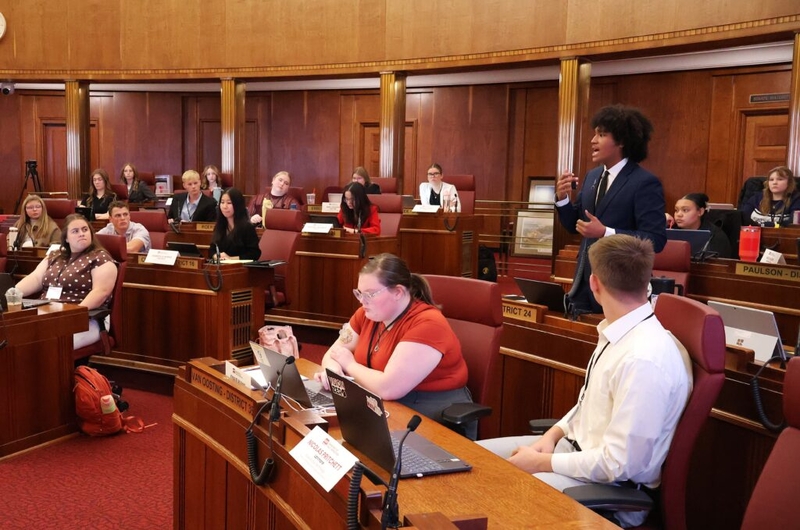
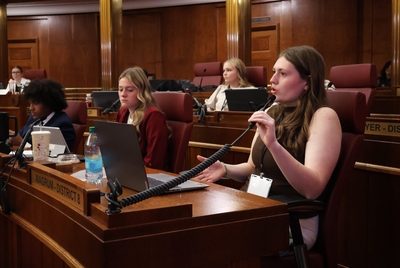
Adam Said, a junior at Sheyenne High School, speaks on the Senate floor during the first Student Legislative Summit at the Capitol on Nov. 17, 2026. (Photo by Michael Achterling/North Dakota Monitor)
North Dakota students brainstormed answers to AI and technology use this week, hoping state lawmakers will take up the baton in January.
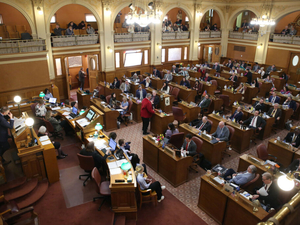
Nearly 50 student senators from across North Dakota debated and advanced bills on artificial intelligence and student technology use during the first Student Legislative Summit at the Capitol.
The students met on Monday and Tuesday to form committees, subcommittees, debate and vote on both topics as bill drafts were created from their work. The bills will be made available to state lawmakers as they begin the 2027 legislative session Jan. 5
“It was a lot of debates. A lot of, not heated discussion, but respectful discussion around topics that truly matter,” Adam Said, a junior at Sheyenne High School in West Fargo.
Said said it was a unique experience and he believes the students did a good job putting their viewpoints into the summit’s bill drafts. He also hopes state lawmakers take their opinions to heart.
“Parents and students do actually have a voice and our voices should matter, especially with AI that changes how education is viewed and how education is operated,” he said.
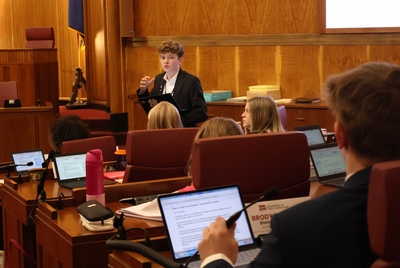
Superintendent of Public Instruction Levi Bachmeier said one of his favorite units as a state government teacher was the mock Congress and thought he could recreate that type of environment at the Capitol with high school students.
“I genuinely have appreciated and learned so much from these students,” Bachmeier said. “Just having the opportunity to hear from such thoughtful and passionate young people has helped develop my thinking and I hope that lawmakers view it the same way.”
He said the goals of the summit were to expose student leaders to the legislative process, but also give the student perspective on issues that state lawmakers may need to grapple with.
“They are smart and they are engaged,” said Sen. Kathy Hogan, D-Fargo, of the students attending the summit.
Hogan said she hopes the students will stay involved and come back to Bismarck to sit with their representatives during the regular legislative session.
Kierstin Hurtt, superintendent of Valley-Edinburgh School District, and parent of one of the students participating, said she was watching the next generation of engaged leaders in North Dakota, in real time.
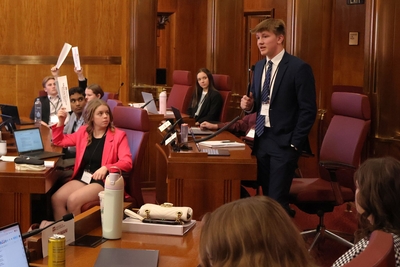
“It’s inspiring. It’s hopeful. It’s massive,” Hurtt said. “You are really learning what it’s like to be a stakeholder and how everything is about building a relationship with other stakeholders to achieve a common goal.”
She said she was impressed that students were asking each other for clarity on their different points of view and opinions.
Hurtt added she hopes student senators will be able to use the voting board and the proceedings will be live-streamed in the future.
Brody Kramer, a senior at Bismarck Legacy High School, said it’s good for students to interact with others from across the state and expressing viewpoints constructively on complicated topics is an important skill to learn.
“I think the bills we’re talking about should be pushed into the legislative session and talked about there,” Kramer said.
He said the committee work and debating with other students inspired him to consider running for public office.
The bill outlining rules for artificial intelligence use in schools passed on a 40-8 vote.
The bill would allow students to use artificial intelligence tools beginning in ninth grade, unless under the direction of a teacher during classroom instruction. However, it would not allow students to use the tools to complete assignments.
The bill would also require teachers to list when AI use is permitted and not permitted as part of course instruction. Teachers would not be able to use AI to input grades into a gradebook or assign final grades, but they can use AI tools to assist with grading assignments and to create lesson plans.
A bill regulating the use of technology during the school day was approved on a 47-0 vote.
The school technology bill outlines that school districts must use technology as a support to learning and not a replacement for essential instruction. It also requires the technology must be used in a “manner reasonably suited to a student’s academic level, age, accessibility needs, and educational circumstances.”
“The seeds are being planted to have good public servants and there’s a whole Senate full of them right now,” Hogan said.
North Dakota Monitor reporter Michael Achterling can be reached at [email protected].
Bismarck, ND