Alaska Board of Game should not close hunting, trapping for a road that doesn’t exit yet
Nov 17, 2026 | 6:00 pm ET
Description
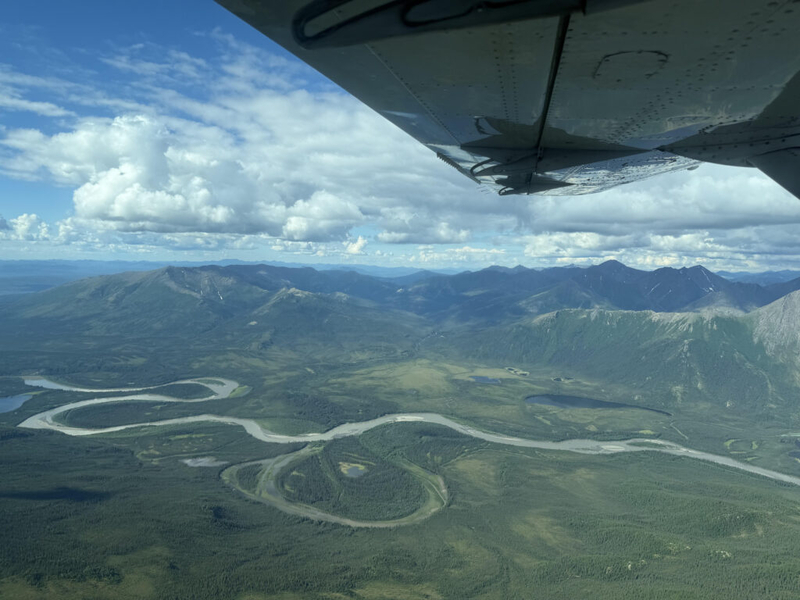
The John River is seen from the sky , along the proposed Ambler Road route in the Southern Brooks Range. (Photo by Mary Glaves)
The state is considering restricting public hunting and trapping opportunities in Northwest and Interior Alaska to accommodate planning for a proposed private road.
While I call Juneau home, I’ve spent a bit of time in the Brooks Range and have long-time friends who live in and have deep ties to the region. I engage with the Alaska Board of Game both personally and through my professional work. I’ve made a point of believing in their public process, even when I disagree with an outcome. That is why the way that this proposal is moving forward concerns me.
On Nov. 20, the Board of Game will meet by web conference to consider closing roughly 420 square miles of hunting and trapping country in Units 23 and 24. The proposed closure would extend one mile on each side of the proposed Ambler Road, a 211-mile private industrial road planned to connect the Dalton Highway to the mining district. Amendments to 5 AAC 92.510 and 92.550 would prohibit hunting and trapping there from July 1, 2029, through Jan. 1, 2036, unless extended. People could still travel through the area, but they could not hunt or trap.
The road hasn’t been built. Geotechnical and permafrost studies took place along the corridor this past season, and exploration continues in the mining district. But survey crews and drill rigs are not a road. There is no roadbed, final alignment or drivable surface. Fish and Game’s own materials acknowledge: “The Ambler Road has not been constructed, and submission of this proposal will assist in the planning process for future construction and use of the road.”
That distinction matters. I understand that a road could raise legitimate questions about safety and access. Those questions may need to be addressed if it is built. But why impose a broad closure before there is a road—or a demonstrated wildlife-management need?
I continue to participate in the Board of Game process because it gives Alaskans a public forum to weigh competing interests and bring local knowledge and experience to the table. The process is not perfect, and people will not always agree with the board’s decisions. But it should be open, consistent and worthy of the public’s confidence.
The board first considered this proposal in July at a special Fairbanks meeting. The Fairbanks Advisory Committee voted 13-0 against it, and many people testified in opposition. The board tabled it for its January meeting in Kotzebue, in the affected region, offering local residents an opportunity to weigh in. Instead, the proposal is back on Nov. 20, at a web conference with no oral testimony. Written comments were due by 8 a.m. on Monday, Nov. 16—just four days before the meeting.
For rural Alaskans who live in or near the corridor, that is a significant limitation. Oral testimony is an important way to participate, particularly in communities where internet access, time and travel can be barriers. A decision affecting this much country deserves a genuine effort to hear from the people most directly connected to it.
The proposal originated from a confidential memorandum among state agencies, Native corporations, a mining company and the federal government. The report describes a “Hunting Buffer” section in which the parties agreed that the Fish and Game commissioner would propose this closure. The Anchorage Press reported on this earlier this year, in February. This raises a fair question: how does that agreement relate to the department’s responsibility to manage fish and wildlife in the public interest? Decisions about hunting and trapping opportunity should be made through the state’s public process, with the rationale and supporting information available for scrutiny.
The proposed road would be private, gated, staffed around the clock and off-limits to the public. Yet the proposal would restrict hunting and trapping on surrounding public land before the road is built, regardless of whether construction moves forward.
A closure of this scale should be grounded in a clear wildlife-management rationale or demonstrated need. As presented, the proposal identifies no biological necessity, such as a declining population or unsustainable harvest, and documents no current safety problem created by an existing road. Instead, it sets a future date: July 1, 2029. If a date tied to a road that has not been built can close roughly 420 square miles to hunting and trapping, what precedent does that set for the next road, pipeline or mine? It also raises another question: Does preemptively closing approximately 420 square miles of public land to hunting and trapping meaningfully advance the Department of Fish & Game’s first guiding principle: “provide for the greatest long-term opportunities for people to use and enjoy Alaska’s fish, wildlife, and habitat resources”?
The Board of Game should not ignore legitimate concerns that may arise if the Ambler Road is built. I am asking that the state honor its own process, its purpose, and the public’s role in it. I want to continue believing that decisions about hunting and trapping are considered openly, on their merits, and with respect for the people who live, work and recreate in the affected areas.
The board can reject the proposal or take no action. At a minimum, it should allow the public process to work as intended and ensure any restrictions are supported by a clear need and considered through a fair, accessible process. I still believe in that process. I want the state and the board to give Alaskans good reason to keep believing in it.
Juneau