Find the tax cheats to fund Oregon’s families
Nov 17, 2026 | 11:56 am ET
Description
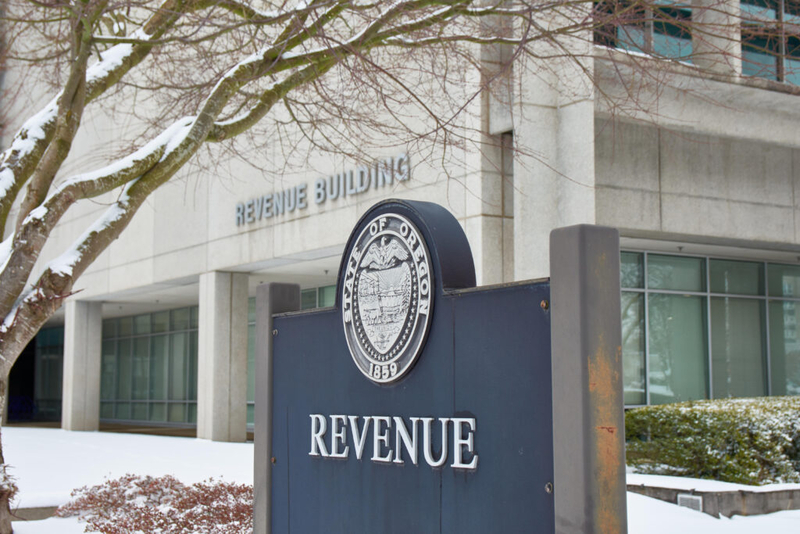
The Oregon Department of Revenue building in Salem on Thursday, Feb. 13, 2025. (Photo by Alan Cohen/Oregon Capital Chronicle)
For years, James “JW” Millegan lived high on the hog. The former securities broker from McMinnville spent lavishly on houses and a fleet of Rolls-Royces and Bentleys. Millegan funded his extravagant lifestyle in part through tax evasion. His luck ran out in 2023, when a federal judge sentenced him to 51 months in prison and ordered him to repay the IRS more than $2.5 million.
Although Millegan was caught, most people like him aren’t. Sadly, the agencies charged with catching them are too thinly staffed.
With Oregon facing a difficult long-term financial picture, it would be smart for lawmakers to put a few extra resources into making sure taxes owed are paid. Oregon can generate a lot of revenue not by raising anyone’s taxes, but simply by better enforcing the existing tax laws.
Investing in tax auditors, enforcement, and collections targeting high-income earners and large corporations can recoup many times the cost, a new report by the Oregon Center for Public Policy shows. We estimated, conservatively, that the state could net about $270 million each year by spending $54 million more annually on tax auditing, enforcement and collections.
Most of the taxes owed that go uncollected are the result of tax filers underreporting their income, meaning that they did not include in their tax return all of the income they made. Besides underreporting, the other drivers of the tax gap are underpayment, when the tax filer fails to pay all of the taxes owed and nonfiling, when someone fails to file a required tax return.
To be clear, not everyone who fails to follow the rules is cheating. The tax system is complex. Noncompliance runs on a spectrum, from honest filers who miss a deadline or don’t know a rule applies to them, to taxpayers whose sloppy recordkeeping causes accidental underreporting, to people who hide income in their “deceased mother’s trust,” like JW Millegan.
While those who don’t comply with the tax rules can be found at all levels of income, it’s clear that the higher up the income ladder you go, the bigger the problem gets. Nearly all of the earnings of low- and middle-income families come in the form of wages. Independent reporting of income, such as your employer directly sending wage information to the IRS, makes cheating difficult and rare.
That’s not the case with other forms of income that mainly flow to the well-off. There is a lot less independent reporting of income derived from businesses and assets. In Connecticut, one of the few other states to study the question, the richest 5% of taxpayers accounted for 46% of the underpayment gap; the bottom half accounted for less than 10%.
The bottom line is that there’s a fair amount of taxes owed that aren’t being paid, and the rich and the large corporations they own account for the largest share of those unpaid taxes.
Beefing up enforcement would seem the obvious move, but strangely, Oregon lawmakers did the opposite recently. They cut positions for auditors, revenue agents, and collections. That is penny-wise and pound-foolish.
Oregon could definitely use more revenue right now. In the past two legislative sessions, lawmakers cut programs that help people stay housed, fed, and able to get medical care. Now, the state faces a grim financial picture due to increased costs to maintain the Oregon Health Plan and the Supplemental Nutrition Assistance Program (SNAP), which provide health insurance and food assistance to struggling Oregonians, following the deep cuts to those services enacted by Congress last year.
Oregon also needs to make it easier for people trying to comply with their tax obligations but who make an error or miss a deadline. The state can provide more resources to the Tax Infrastructure Grant Program, which funds community organizations providing free tax preparation to low-income Oregonians; strengthen the Oregon Department of Revenue’s taxpayer services; and continue building Direct File Oregon, an online portal where Oregonians can file their tax returns for free.
Shrinking the tax gap should be a key priority for lawmakers in the upcoming session, as it would allow the state to better fund key services without raising anyone’s taxes. Oregon needs to do a better job cracking down on cheats like JW Millegan, while also making it easier for those trying to file their taxes properly to do so. It’s both a matter of fairness and common sense.
Salem, OR