SC needs statewide data center regulations
Nov 17, 2026 | 12:38 pm ET
Description
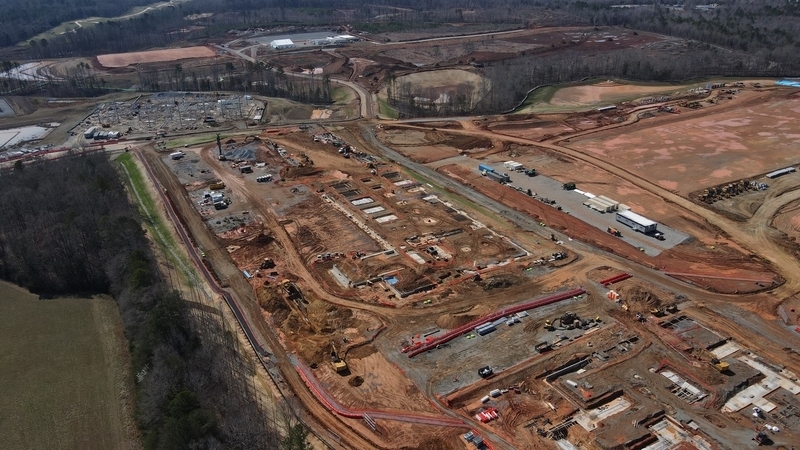
QTS, a company with more than 90 data centers across the country, is constructing a $1 billion center off Hands Mill Highway in unincorporated York County near Lake Wylie, South Carolina, as seen on Sunday, March 1, 2026. (Photo courtesy of Terry Roueche/South Carolina Daily Gazette)
South Carolina has no comprehensive statewide regulations that provide protections for our local communities when it comes to data center design and development.
Yet we already have 13 data centers in operation, an additional 11 under construction plus 21 in the planning process across 17 campuses, according to Cleanview, a company that tracks data center development.
These data centers vary in size and design and will have long-term impacts that could adversely affect local communities around the state.
Spartanburg data center not subject to public power plant rules, SC regulators rule
We should not find ourselves in this position.
This past legislative session, our state legislators failed to pass Senate Bill 867 titled the “Data Center Development Act.”
The bill advanced to the Senate floor in late April but died without floor debate when the regular session ended two weeks later.
Without a statewide moratorium, new data center developers will continue their practice of approaching our local county councils to negotiate terms that are often hidden in nondisclosure agreements.
As a result, local residents affected by these new data centers often don’t even know where they are going to be located nor do they know what terms are being negotiated behind closed doors.
This is unacceptable. We need more transparency and accountability surrounding new data center development.
Data centers require large amounts of water for cooling unless they use a closed-loop cooling system. Data centers also need electric power to run their around-the-clock operations.
If not properly planned and monitored, data centers can cause significant environmental impacts from untreated wastewater, noise pollution, and harmful emissions that result from using diesel-fueled generators as a backup power source.
Data centers require large footprints, but many county governments have no regulations governing data center setback lines, noise limits, water discharge regulations or decommissioning requirements.
Our state’s residents and small businesses deserve better protections from these massive data centers.
County officials should consider conducting an independent review prior to making any final permitting decisions.
New data center developers should be required to disclose in writing their future projected water use and the source of their electricity usage along with their proposed cooling systems, disclosure of any backup diesel generators, their wastewater discharge rates, their site plans and their construction plans.
Our state legislators should assign responsibility for regulatory oversight through our existing state agencies with the assistance of local governments.
The Department of Environmental Services along with the Department of Natural Resources and the Department of Commerce should oversee water quality monitoring and impacts. The Office of Regulatory Staff and the Public Service Commission should be tasked with regulating data center electricity usage by creating a separate “large load rate.”
SC’s state-owned utility enacts higher rates for data centers, large users
Data centers should be required to pay for their connections to our state’s electric grid along with the cost of any transmission lines needed to serve them.
That will prevent the cost of data centers from shifting onto the electricity bills of residential customers, small businesses and other industrial customers. It’s an affordability issue that must be addressed.
Over time, some data centers will likely fail to materialize or survive for various reasons.
We must have a statewide plan in place to cover the costs of decommissioning any closed or abandoned data centers.
Any state legislation should include a requirement that all data centers must purchase a security bond from a reputable company to cover all future decommissioning costs in the event of abandonment.
To the extent possible, new data centers should be located on brownfield sights far away from residential and small business locations.
Local governments should have their building inspectors and land use or zoning authority authorized to monitor data center noise limits, light pollution and compliance with all applicable building codes.
While passing state law is up to the General Assembly, Gov.-elect Alan Wilson can help coordinate planning and coordination with investor-owned utilities, along with economic development and environmental protection agencies with an emphasis on transparent and accountable monitoring across all state agencies.
Columbia