Lansing City Council hears calls for emergency homelessness response, delays action
Nov 17, 2026 | 6:05 am ET

Description
Khadja Erickson, the executive director of the Mid-Michigan Tenant Resource Center speaks about the need for greater support for the unhoused community in Lansing, including a proposed moratorium on encampment sweeps, at a council meeting on Nov. 16, 2026. (Photo by Katherine Dailey/Michigan Advance)
LANSING – In the wake of a sweep of a homeless encampment in Lansing’s Old Town neighborhood, city council members heard hours of public testimony calling for a broader response to homelessness as winter weather approaches.
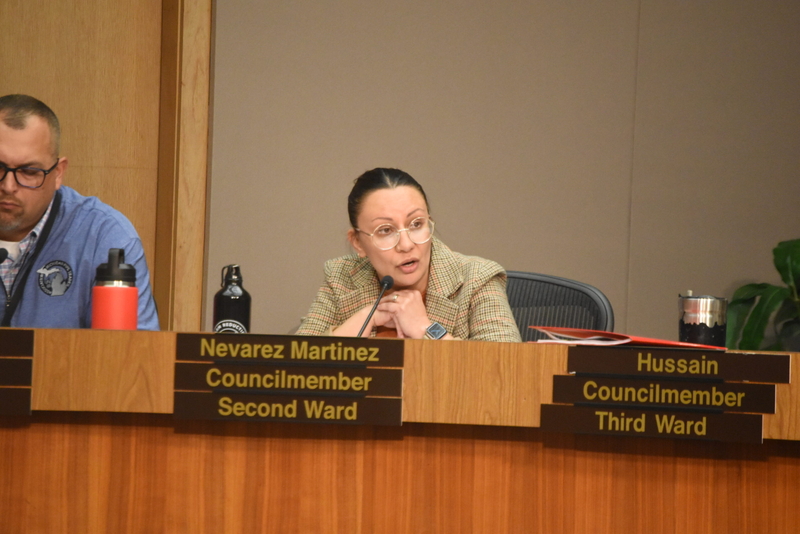
Councilmember Deyanira Nevarez Martinez, who represents the city’s second ward, has proposed an ordinance to enact a 60-day moratorium on sweeps of homeless encampments in certain city parks. It would not apply to sweeps on private property, such as the most recent sweep, which took place on Thursday.
Nevarez Martinez was clear that she does not believe such a moratorium is a permanent or long-term solution to homelessness, but that time is needed to develop a strategy and identify shelter options for those facing homelessness.
“We do not have sufficient options for people, and then we criminalize them for having nowhere else to go. That is unacceptable. I believe we need to address this crisis on multiple fronts: sufficient low-barrier emergency shelter, transitional housing, and permanently affordable housing,” she said. “My goal is not to pit our unhoused neighbors against our housed residents, our schools, or our business community, we all have a stake in making Lansing a safer, healthier, and more compassionate city.”
Meanwhile, Council President Peter Spadafore has introduced a resolution to establish an ad hoc committee on homelessness strategy. The resolution was expected to come before the council Monday, but Spadafore said email issues had delayed its consideration until the next meeting.
Both the moratorium and the establishment of the committee are expected to be considered on Dec. 7, the next meeting of the council.
Nick Cook, the director of public policy at the Michigan Coalition Against Homelessness, was among the many speaking during the public comment period who emphasized the harms that can be done to residents in an encampment when it is swept.
“Let’s be honest about what is happening. People are not sleeping in tents because they want to; they are sleeping in tents because there’s nowhere else to go. Shelters are full. Affordable housing is scarce. Supportive housing is insufficient,” Cook said. “Yet, instead of addressing those realities, our response has too often been to push people from one piece of public property to another and call it progress. It is not progress. An encampment sweep does not house a single person. Does not treat mental illness. Does not help someone find employment. It does not connect people to stability. What it does is scatter vulnerable people, destroy what little property they have left, sever ties with outreach workers, and make survival even harder.”
Many also focused on the long-term solutions necessary to address homelessness in a sustainable fashion — and the fact that the city council has had repeated hearings about the same issues in recent months.
“If you want encampments to go away, the solution is very simple. It’s housing. That’s how you prevent them from returning,” Khadja Erickson, the executive director of the Mid-Michigan Tenant Resource Center, said. “That’s how you prevent from experiencing this: a bunch of people coming to talk to you about homelessness. I promise you, I am just as tired of talking about it as you are of hearing about it.”
Erickson, along with others, also repeatedly noted that a more long-term response was necessary, especially one that allows better access to wraparound services, as well as access to water and safe heating sources.
“You keep lauding these 70 shelter beds. As many people have come up here and said, in 2026 we found over 800 people in our point-in-time count,” Erickson said. “70 beds is not even 10% of that number.”
Multiple members of Lansing’s unhoused community also spoke at the meeting.
One speaker, who identified himself as a disabled combat veteran, argued that people experiencing homelessness are already living throughout the city and should be allowed to remain where they are. He said existing shelters are inadequate and described the Capital City Rescue Mission’s requirements and crowded conditions and said he would rather remain outdoors than stay in those conditions.
Alyssa Clark, who identified herself as a small business owner near the recently-swept encampment, said that she has had clients cancel appointments and “question whether they feel safe coming here.”
“Over the past nine months, we’ve dealt with people sleeping in fire escapes, unattended fires, encampments in the parking lot, discarded needles, trash, human waste, and recurring sewage problems. These aren’t just inconveniences; they’re serious safety and sanitation concerns that are affecting my business,” she said.
However, most speakers emphasized the humanity of those who are facing homelessness and the need for people to have a safe location to go if there are encampment sweeps.
Reverend Elijah Burton, pastor of First Christian Church in Lansing, said that he was present at Thursday’s sweep and was angry about the treatment of unhoused individuals in Lansing.
“What kind of refuge requires someone to pack up their life every morning? What kind of safety exists when people must constantly fear being displaced?” Burton asked. “We have become so concerned with the visibility of homelessness that we are losing sight of the actual crisis. People do not have homes. Moving someone does not house them. Removing a tent does not create a shelter bed somewhere, and making people disappear from our parks does not make homelessness disappear from our city.”
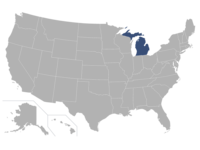
Lansing, MI