A $3 billion dementia fund languishes a year after Texas voters approved it
Nov 17, 2026 | 6:00 am ET
Description
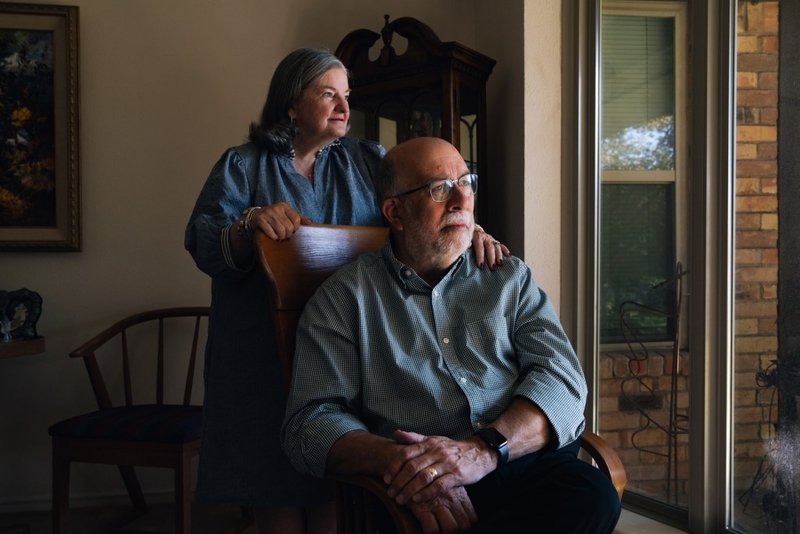
Luke Davis and his wife, Paula, pose for a portrait in their home in Dallas Nov. 13, 2026. Luke is a retired lawyer who was diagnosed with Alzheimer’s disease in 2023. Since then, the couple have become advocates for the Alzheimer’s Association. (Camilo Diaz Jr. for The Texas Tribune)
From the get-go, the idea was a policy head-turner — a $3 billion research fund to solve a pressing healthcare issue in Texas, pitched by one of the state’s leading fiscal conservatives, Republican Lt. Gov. Dan Patrick.
“Dementia, and especially Alzheimer’s … is a heartbreaking and devastating disease,” Patrick said in late 2024 when he launched the idea. “Just as we are leading on cancer research, Texas can be a world leader in combating dementia, finding treatment and, one day, a cure.”
Legislation sailed through both the Texas House and Senate, and last November, 70% of Texas voters approved $3 billion to accelerate research on better treatments and perhaps a cure for Alzheimer’s, Parkinson’s and other brain-related diseases.
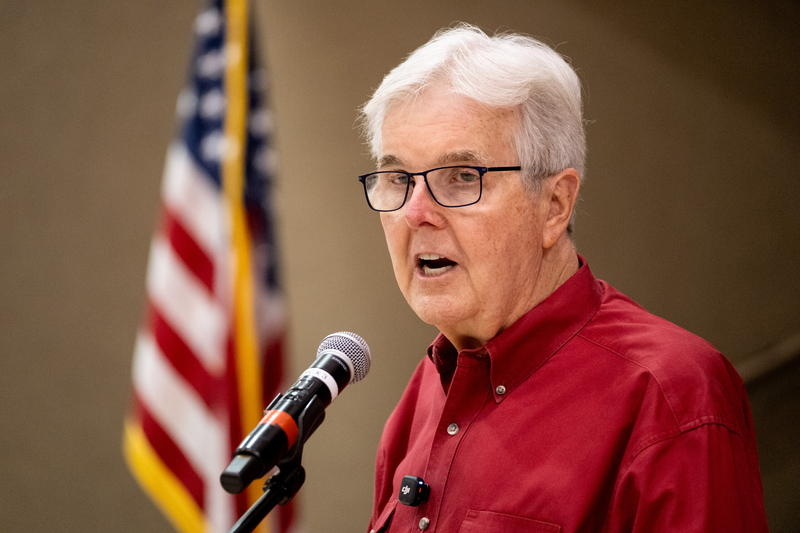
But one year later, the Dementia Prevention and Research Institute of Texas, or DPRIT, is still not up and running, hamstrung by a lawsuit claiming that the machines used to count the results of the measure were not tested for accuracy, invalidating any ballots tabulated on them.
Now with Democrats coming to power and their hands full with bills designed to expand Medicaid, voters’ rights and fencing off data centers, DPRIT faces more uncertainty. Is the new regime too tied up to fight for what voters have already approved, or would they prefer to find other uses for the $3 billion already set aside at the Texas Comptroller’s office awaiting distribution?
“Last week’s results are a reason for confidence, not worry,” said Laura Cilmi, spokesperson for the Alzheimer’s Association, noting that Gov.-elect Gina Hinojosa and Lt. Gov.-elect Vikki Goodwin co-sponsored the original bill and House speaker favorite Rep. Senfronia Thompson was the lead sponsor. “DPRIT’s support was never tied to one office or one party. That bipartisan foundation carries into the next Legislature regardless of who holds which office.”
After a Travis County judge dismissed the lawsuit in February, it was appealed to the state’s newest civil court, the 15th Court of Appeals, where it has sat since. The three Republican judges on the court will give up their seats in January to three newly elected Democrats, giving the GOP jurists a few more weeks to resolve the case or punt it to the incoming Dems.
Adding to that, last week, state Rep. Brian Harrison, R-Midlothian, who opposed DPRIT from the start, filed House Bill 822 that would ask voters to get rid of it and use the money for property tax relief. The Texas Tribune was unable to reach Harrison immediately about his bill.

“I would love to find a cure for dementia … but I don’t know what part of stop growing government and give people back their money this body clearly does not understand,” Harrison said last year from the House floor.
Cilmi said Harrison’s opposition is not surprising. “Rep. Harrison was in the minority that didn’t support DPRIT when it passed the Legislature and again when Texas voters were asked to approve the funding,” she said.
The delay in getting the fund up, running and distributing research grants has been a discouraging hit for patients, their families and researchers, who have seen so many recent new developments in the area of dementia. They had hoped Texas’ infusion of $3 billion over the next decade would ignite an academic research race to find better ways to treat and possibly end dementia.
About 459,000 Texans over the age of 65 are living with Alzheimer’s, the most common cause of dementia, and it’s estimated that more than 1 million Texans serve as unpaid caregivers in the state because of it.
Even before it was passed, Rice University put together brain research departments in anticipation of DPRIT, and the University of Texas at Dallas has provided seed money to help researchers develop projects for DPRIT applications. As they wait for the lawsuit to end, advocacy and research groups have been anxiously and tentatively putting out hopeful information about the coming research funding while avoiding bringing up the delay in the fund’s creation.
Except for a statement made when the voters’ lawsuit was initially filed in late 2025, there’s been nothing but silence from Patrick about his brainchild. Patrick, who was defeated in this month’s election, has turned down repeated requests over the past year by the Tribune to discuss whether he feels DPRIT is effectively dead or will eventually prevail.

In September, the Alzheimer’s Association and the American Heart Association filed a joint friend of the court brief asking appellate jurists to affirm the lower court’s dismissal of the lawsuit to clear the way for the massive research effort to begin.
“At its core, DPRIT seeks to address the growing public health crisis in Texas related to dementia,” the brief states. “Texas created DPRIT at a moment when the need for dementia research is urgent and the opportunities for scientific advancement are significant. Continued delay today postpones scientific progress tomorrow.”
For individuals newly diagnosed with Alzheimer’s like retired attorney Luke Davis, 72, of Dallas, the news of the fund has been exciting and a “no brainer,” especially after Texas set up a similar funding program in 2007 for cancer. “It’s just like the next step,” he said.
Three years ago, he decided to swallow his pride and get tested for the disease after noticing something was a bit off in his communication with his wife. Once he got it, he said he and his wife, Paula, began immersing themselves in the science and medical treatments available.
“I went and learned some things,” he said. He read books, took some classes through the Alzheimer’s Association and quickly became an avid follower of news sites devoted to news about research like Being Patient. “It is so great that there’s so much information out there.”



Davis said he’s benefited directly from recent research strides and has traveled with his wife to Washington to speak with lawmakers and advocate for more research.
His diagnosis in 2023 came just as the U.S. Food and Drug Administration had given accelerated approval for a new drug, Leqembi, the first medication proven to slow underlying progression of Alzheimer’s. It targets brain plaque and is typically used to treat the early stages of Alzheimer’s. While not a cure, it slows the progression of the disease. Within 18 months, he and his family have seen a two-thirds reduction in his brain plaque.
“Our mantra though, from the very beginning, was we’re going to live with this, not die from it,” Davis said. “And we’re going to do what we can while we can.”
In the meantime, Davis, like a lot of families in Texas following the lawsuit, keeps checking on whether there’s a court decision.
“Once a week we’ll pull it (case) up on the appeals website to see, has anything happened?” Davis said.
“It’s probably a good thing Paula does not meet those plaintiffs,” he added. “I think there’s a lot of people who feel that way.”
Both plaintiffs in the case — voters Shannon Huggins of Snook and Jose Silvester of Schertz, who are representing themselves in court — have previously declined to discuss their case. Attempts to reach them for this story were unsuccessful.
For more information, visit the Alzheimer’s Association at www.alz.org. People facing Alzheimer’s and other dementia can call the association at 1-800-272-3900. The association’s 24/7 helpline is available around the clock, 365 days a year.
Disclosure: The University of Texas – Dallas has been a major financial supporter of The Texas Tribune. American Heart Association and Rice University have been financial supporters within the past five years. The Texas Tribune is a nonprofit, nonpartisan news organization that is funded in part by donations from members, foundations and corporate sponsors. Financial supporters play no role in our journalism. Find a complete list of them and more information about our financial and disclosure policies here.
Austin, TX