Could Delaware’s faith leaders become more involved in state policy?
Nov 17, 2026 | 5:00 am ET
Description
Photo courtesy of Spotlight Delaware
Why Should Delaware Care?
For more than a decade, the Interfaith Council has brought together communities across Delaware to identify community needs. A new directive could bring faith leaders into a greater public role in policy-making and advisement to state leaders.
For virtually the entirety of Delaware’s history, the state’s faith leaders have played a role in social change.
The famed Peter Spencer founded the African Union Church in Wilmington, challenging racial exclusion in Methodist congregations of the early 1800s.
Thomas Garrett, a white Quaker abolitionist, helped thousands of escaped slaves make their way to freedom on the Underground Railroad.
And the Rev. Maurice Moyer, a Black Presbyterian minister from Wilmington, led the city’s NAACP chapter during the height of the civil rights movement in the early 1960s.
Today, many churches serve as service providers for Delaware’s homeless population and have advocated against gun violence and police misconduct.
Earlier this year, Gov. Matt Meyer looked to tap that lineage of leadership by elevating the role that the state’s Interfaith Council plays in his administration.
In an executive order – one of only 28 that he’s issued in his first two years in office – he directed that the council “provide policy advice to the Governor and the General Assembly [that] will ensure that the perspectives of Delaware’s faith communities are meaningfully included in the policymaking process.”
More than six months after that order, however, it’s still unclear whether the work of the council will live up to that goal.
What is the Interfaith Council?
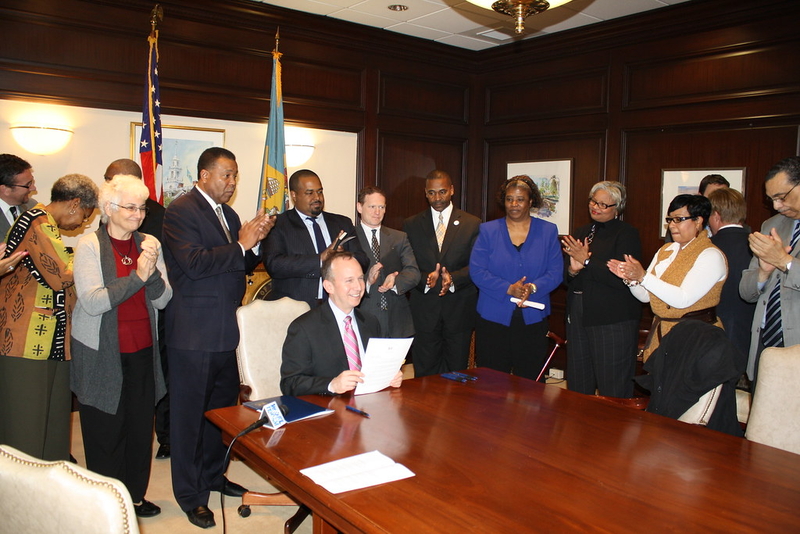
Formed in 2012 by then-Gov. Jack Markell, the Delaware Interfaith Council has served as a bridge between faith-based organizations and the state government.
“Members of faith-based organizations offer up tens of thousands of volunteer hours and countless resources to improve our communities. The Council should serve as a place for those organizations to turn to help harness this potential and this power, Markell said at the signing ceremony for his executive order. “It’s about giving groups a chance – if they wish – to work together to make an even greater difference.”
Each year, the council has organized an interfaith breakfast that brings together members of Delaware’s different faith communities to break bread with state leaders. They have also helped to marshal community resources for emergency preparedness, foster care support and healthy living over the years.
Today, the council includes 11 members representing the Jewish, Muslim, Hindu and Sikh communities along with multiple denominations of the Christian community. Its members, who are volunteer representatives appointed by the governor, must meet at least once each calendar quarter.
New charge for faith leaders
In reauthorizing the council for his administration, Meyer also named many new members to its seats and noted that each would “lead a specific issue area working group, ensuring coordinated action. These priority areas include health, housing, immigration, education, public safety, and economic opportunity.”
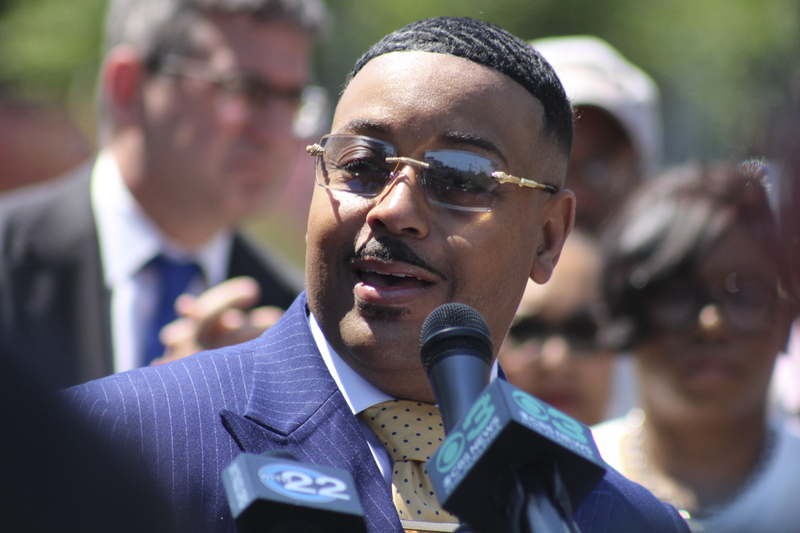
The Rev. Ronald Whitaker II, pastor of the historic Mother African Union Church in Wilmington and new chair of the council, told Spotlight Delaware his goal is to partner with individuals who have already been engaging in civic engagement and work together to make a difference in the state.
He hopes that the Interfaith Council can be a national model for success, serving as an intersection of community listening and policy development.
“We’re in the initial stages in terms of having our meetings, gathering information, and doing think tank sessions. The larger goal for us over the upcoming months is to hold a more public event where we’re kind of sharing a preliminary plan of action and ways in which we can further collaborate,” he said.
One cancelled September subcommittee meeting – the council lacked a quorum to hold the meeting – gave an indication of its initial priorities though: immigration.

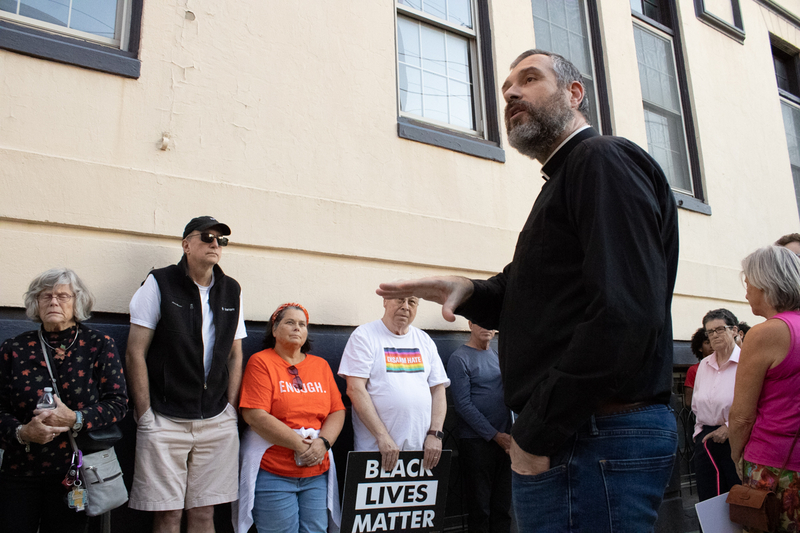
The Rev. Cathy Rion Starr, a Unitarian Universalist pastor, described the council as a work in progress, and the members are still trying to get to know each other. The council has yet to work on figuring out their purpose, how to work together, and how to make something effective for the faith community in the state of Delaware, she said.
Starr, who helped organize protests last year of Avelo Airlines, Delaware’s only commercial airline, over its contract work with U.S. Immigration and Customs Enforcement, said she was “disappointed with the governor’s inaction on that issue.”
“There’s an incredible group of people who are on it, and I think it remains to be seen what, how much we have the governor’s ear, how much power, if any, we have,” she said.
Rabbi Yair Robinson, of Congregation Beth Emeth in Wilmington, said some of the working groups within the council have not been formed due to logistical challenges. He is particularly interested in public safety and making sure that the places of worship have strong security support.
He noted that the council is an advisory rather than legislative body and it may recommend areas requiring attention rather than advocating for specific bills.
“Our job is to be able to put our best selves forward and to, you know, provide the best advice, feedback, thoughtfulness that we can, and so I expect that to continue. I expect that nonpartisanship will continue as part of the work we do,” he added.
‘There’s more to be done’
Rabbi Michael S. Beals, the immediate past council chair who was appointed during the Carney administration, expressed his concerns about the lack of transition between the former and current councils. Beals said he was informed shortly after Meyer’s inauguration that the new governor would be selecting a mostly new council during his term.
Beals highlighted that his council assisted the flow of information and resources from the Carney administration during the COVID pandemic – and serving as trusted information intermediaries is one of the council’s most important roles.
“There’s more to be done. We just need the right leadership, and the governor needs to lead in a different way than he is. And the new chair needs to be empowered to go ahead and not just work with the interfaith council that’s in front of them,” he said.
One of the main issues that Beals believes the Interfaith Council should be working on is the rise of racism in Delaware and the need for community centers and faith buildings to have greater security. Attacks on synagogues, churches and mosques have increased in the last decade, leading many faith leaders to be concerned for their parishioners’ safety.
Muqtedar Khan, a political science and international relations professor at the University of Delaware who founded its Islamic Studies Program, has described the Interfaith Council as “largely inactive,” with meetings occurring infrequently and little public record of outcomes or achievements.
“In moments of crisis, the council can advise the governor on what policies to adopt. But unfortunately, we don’t see them active at all,” he said.
One of his main concerns is the rise of hate toward religious groups, and Khan hopes that the council can address these concerns for Delawareans. Khan believes that they can play a big role in promoting equality and protecting marginalized groups.
He mentioned that the council should be a forum where all religious communities can come together to do public good and advise on policy issues.
But Khan also questioned the absence of Catholic representatives on the current council – the largest Christian denomination in Delaware – and called for broader religious, ethnic, and generational representation with rotating memberships. The council also currently has no geographic representation from western Sussex County, and more than half of the appointees are from New Castle County.
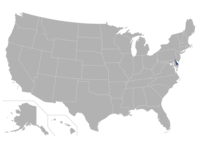
Dover