Andrew Perchlik poised to be next president of the Vermont Senate
Nov 16, 2026 | 1:05 pm ET
Description
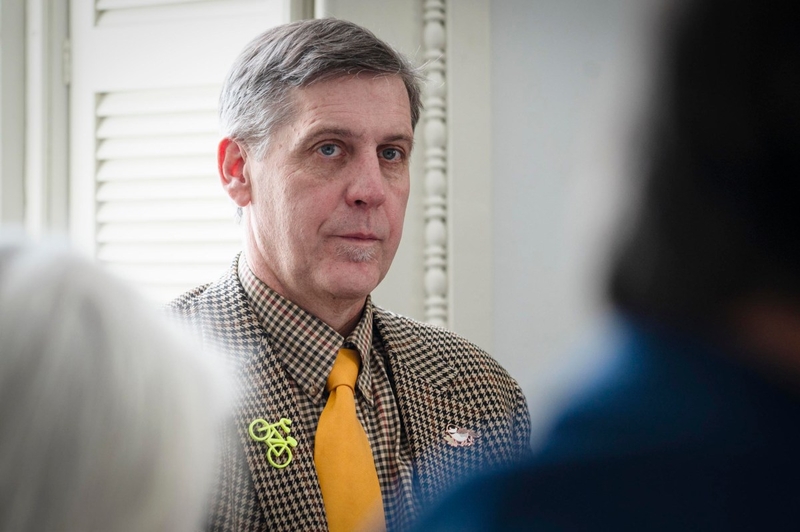
Sen. Andrew Perchlik, D/P-Washington, chair of the Senate Appropriations Committee, listens as Rep. Robin Scheu, D-Middlebury, chair of the House Appropriations Committee, testifies before the committee at the Statehouse in Montpelier on Tuesday, February 3, 2026. Photo by Glenn Russell/VTDigger
This article was updated at 5:57 p.m.
MONTPELIER — The Vermont Senate’s incoming Democratic caucus unanimously chose Andrew Perchlik, a four-term senator from Washington County, as its nominee to be the chamber’s next president pro tempore Monday.
The full Senate will vote in a new president pro tem at the start of the upcoming legislative session in January. But since Democrats won a supermajority of seats in the chamber on Election Day, their choice for the top leadership post is almost certain to get the job, regardless of support or opposition from Republicans.
Perchlik, who is 58, would succeed the chamber’s current pro tem, Sen. Phil Baruth, D/P-Chittenden Central, who did not run for reelection.
In a speech to his fellow Senate caucus members Monday, Perchlik, who like Baruth also serves under the Vermont Progressive Party label, said the majority “must deliver relief to Vermonters” aimed at the high cost of housing, healthcare and energy, and ensure the economic viability of the state’s rural communities.
“Future generations are questioning whether they can afford to build their lives here,” Perchlik said. “We have before us a tower of tasks to take on, and with a caucus of 21, we have renewed strength to get these priorities enacted.”
That number includes 20 Democrats and one senator who identifies primarily with the Progressive Party, but also caucuses with Democrats on many issues. Eight other incoming senators are Republicans and one was elected as an independent. Supermajority control means that even if Republican Gov. Phil Scott — who was reelected to a sixth term earlier this month — vetoes a bill passed along party lines, Democrats will have enough votes to override him and force it into law.
At least one other senator, Democrat Kesha Ram Hinsdale of the Chittenden Southeast district, had been seeking the pro tem job after Baruth announced his retirement. But she ultimately did not put herself up for consideration at Monday’s meeting. That left Perchlik to be chosen unanimously.
The pro tem is the Senate’s political leader, wielding significant power over which bills come up for debate on the floor and how the chamber operates on a daily basis. It is similar to the speaker of the Vermont House.
Democrats will have a supermajority in the House next year too, and are set to choose their nominee for speaker on Dec. 5, according to Conor Kennedy, chief of staff to outgoing Speaker Jill Krowinski, D-Burlington. At least three Democrats were vying for the job as of Monday, he said: Rep. Lori Houghton of Essex Junction, Rep. Charlie Kimbell of Woodstock and Rep. Kate McCann of Montpelier.
Republican Rep. Gina Galfetti of Barre Town is also running for the job.
Sen. Scott Beck, R-Caledonia, the Republican Senate minority leader, said in an interview Monday that it was “an open question” whether his caucus would nominate its own candidate for pro tem. Senate Republicans met to discuss leadership appointments earlier this month, he said.
Senate Democrats on Monday also chose leaders for several other roles. They picked Sen. Becca White, D-Windsor, to be Senate majority leader, effectively the No. 2 to the pro tem. She succeeds Ram Hinsdale in the post. Sen. Rob Plunkett, D-Bennington, was chosen to be assistant majority leader, a position also known as “whip.”
White and Plunkett were chosen unanimously, and unlike Perchlik’s prospective position, neither of their appointments require a vote from the full Senate.
One role did see multiple candidates vying for support at Monday’s Democratic meeting, however: a Senate position known as “third member.” The role has a seat on a powerful three-member panel called the Committee on Committees, which, as its name suggests, doles out Senate committee assignments. The other members of the panel are the president pro tem and the lieutenant governor.
Sen. Ginny Lyons, D-Chittenden Southeast, currently serves as third member and fended off a challenge Monday from Sen. Ruth Hardy, D-Addison. Lyons got 12 votes to Hardy’s nine. The election was held by secret ballot.
Hardy, who is more than two decades younger than Lyons, made the case in a speech before the vote that Senate leadership needed fresh faces and more voices from outside Chittenden County. Lyons said her 25 years of service in the Senate gave her the necessary experience for the role, and she vowed to make the panel’s deliberations more publicly accessible.
Like with Perchlik, Lyons is now almost certain to get the job when the full Senate votes on who its “third member” should be in January. Beck, the Republican leader, said Monday his caucus was still debating whether to run its own third member candidate.
Perchlik currently serves as chair of the Senate Appropriations Committee, which is tasked with writing the state budget. He was first elected to the chamber in 2018. This year, he finished third out of six candidates for a seat in the three-member Washington Senate district.
Outside of the Legislature, Perchlik works as an energy program manager at the Vermont Department of Public Service.
In an interview Monday, Perchlik said that — with the backing of his caucus — he would support legislation advancing at least parts of the universal primary care plan that was a focus of Democrat Amanda Janoo’s campaign against Gov. Scott this fall. Scott defeated Janoo by his narrowest-ever margin of victory in a governor’s race.
Perchlik said he’d consider changes to the state’s income tax structure to generate revenue for a specific purpose, like elements of a universal primary care system, calling it “the kind of thing that, I think, Vermonters would want to see.”
Read the story on VTDigger here: Andrew Perchlik poised to be next president of the Vermont Senate.
Montpelier, VT