WV Supreme Court overturns 2025 law that gave Legislature more power over state Board of Education
Nov 13, 2026 | 4:13 pm ET
Description
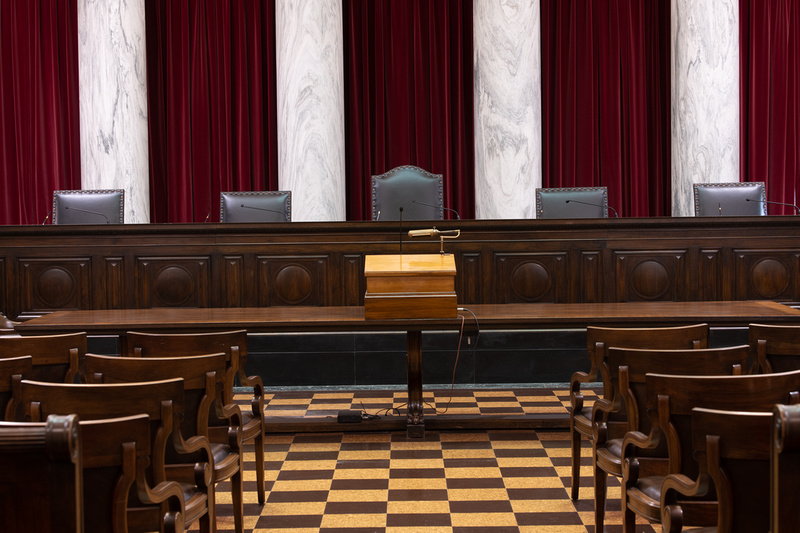
The West Virginia Supreme Court of Appeals. (West Virginia Legislative Photography)
In a 4-1 decision, the West Virginia Supreme Court overturned a 2025 law that attempted to give the Legislature more power over the state Board of Education.
The opinion, delivered by Justice H.L. Kirkpatrick, determined that a long established precedent that gave the state board the ability to act independently and not submit regulations for approval of state lawmakers would remain.
“We conclude that this Court has previously decided the issue presented in this case and held that a statute enacted by the Legislature that required the Board to submit its rules to the Legislature for review constituted an interference with the Board’s rulemaking power and was therefore unconstitutional,” Kirkpatrick wrote.
Only Justice Charles Trump, a former state lawmaker, dissented. His opinion will be released at a later date.
The Board of Education has enjoyed great independence from both the governor and the Legislature, following a Constitutional Amendment approved by voters in 1958. Since then, voters have had two opportunities to reverse this vote — in 1988 and 2022. Both times, voters rejected it.
In 1988, the Legislature passed a law that would require the Board of Education to submit any regulations — which can range from which side of the hallway students should walk to the dimensions of school buses — to the Legislature for approval.
Most agencies, like the Department of Environmental Protection and Department of Natural Resources, must submit their regulations to the Legislature for approval.
The state Supreme Court at the time ruled the law unconstitutional.
That case, referred to as Hechler, has become reigning precedent in West Virginia ever since.
But in 2025, Del. Mike Hornby, R-Berkeley, successfully pushed a bill through the Legislature to once again give lawmakers more control over the Board of Education. At the time, he said the bill would spark a challenge against the Hechler ruling.
Upon hearing the ruling Friday, Hornby said he didn’t agree with it.
“I respect the decision of the court, however when I read the Constitution as a whole I still believe the Legislature has the ultimate rule making authority,” Hornby said. “We were also careful to draft this legislation in a way that created a significant difference to the Hechler case. That said, I thank the court for their time on this matter. I look forward to continuing to improve our education system moving forward.”
Reacting to the ruling, the state Board of Education issued the following statement:
“The West Virginia Board of Education (WVBE) is grateful to the West Virginia Supreme Court for its decision to uphold the will of the voters and the State Constitution, which grants the State Board of Education authority over the rulemaking and oversight of education policy. The WVBE will continue its important work of providing leadership, oversight and support to the education system and children in West Virginia.”
Charleston, WV