Montana students see growth in reading, math proficiency
Nov 13, 2026 | 4:05 pm ET

Description
A classroom at Woodrow Wilson Elementary School in South Salt Lake City, Utah, on March 12, 2024. (Photo by Spenser Heaps/Utah News Dispatch)
Nearly all counties in Montana saw year-over-year increases in the percentage of students grades 3 through 8 who are at or above grace-level proficiency standards in language arts and math.
That’s according to the second year of statewide results from the new standardized assessment protocol implemented during the 2024 school year.
The Office of Public Instruction released the statewide scores of the Montana Aligned to Standards Through-Year Assessment, or MAST, this week and Montana’s average of students who tested at or above proficiency levels for their grade increased from the first-year scores.
In language arts, 45.6% of students tested at or above grade-level proficiency, compared to 43% last year. And in math, proficiency levels increased from 36.8% to 40.8% this year, close to prepandemic scores conducted with a different assessment.
“I think it’s very exciting to see the progress that we’re making,” state superintendent Susie Hedalen told the Daily Montanan. “And I do believe that the assessment and the information that’s being provided is very helpful to educators and parents in being able to understand where their students are, any misunderstandings they’re having, and address them.”
Hedalen, a Republican, oversaw the rollout of statewide MAST testing after a two-year pilot program was conducted under former state Superintendent Elsie Arntzen.
As opposed to previous standardized testing formats, MAST involves “testlets,” smaller math and English Language Arts tests taking place during four testing periods in the school year, creating a “through-year assessment model.”
The goal is to offer more immediate feedback to educators, students, parents and administrators by providing multiple data points to track progress and alter curriculum or teaching strategies throughout the year to benefit students.
Hedalen said her office had worked to address challenges reported by educators during the first year of assessments, including the new testing protocol was time intensive and they hadn’t received adequate professional development on how to implement and utilize the new methods.
“I came in with a solution-focused mindset on this,” Hedalen said. “We have professional development going on in many different forms across the state, and we had a lot of opportunities this summer for educators to get together and learn more about the assessment and the score reports and how to utilize them to improve student learning, so it is a huge advantage to educators.”
Hedalen touted one of the most useful parts of the MAST testing is by having more frequent assessments, educators get a look at how students understand the curriculum throughout the year, rather than receiving a single result usually after as school year ends.
“Having gotten my students’ test scores in the summer after they were already gone and not being able to utilize that information was never very helpful as an educator,” she said. “It’s very exciting that within just a few days, educators have this information.”
Of Montana’s 56 counties, 41 saw increases in English scores from last year’s assessments, and 52 saw increases in Math scores.
Counties that saw decreased average scores for the most part had exceptionally high first year tests, or saw only marginal declines.
The statewide gains in mathematics is the largest year-over-year increase in several years, Hedalen said.
She also highlighted specific demographic breakouts of the assessment data which showed economically disadvantaged students showing a 3.2% increase in math proficiency and 1.8% increase in English proficiency; while Native American students saw a 2.6% jump in math and 1.6% increase in English.
“It’s important just to see and make sure that we’re reaching all students and providing those additional supports,” she said. “I just always go back to it being really critical that all students have access to high-quality core curriculum, and then we take that additional time for any students that need an intervention in reading or math, and make sure that that’s put in place. So we’re supporting our schools across the state in making sure they have those systems in place.”
The Office of Public Instruction is currently piloting MAST testing protocols for science-based instruction, but Hedalen said it’s a more difficult subject to fit to a standard assessment model because various districts teach different science subjects at different grade levels.
While the latest MAST scores are still below pre-COVID-19 levels (under a previous assessment), Montana students have had one of the highest bounce-back rates from COVID-19 era scores, according to the latest National Assessment of Educational Progress. In 2024, the national assessment showed Montana 9th graders ranking 10th in math proficiency and 4th in reading proficiently nationally.
Full datasets from the 2025-2026 MAST testing can be accessed online and broken down by county, grade, district, school, and demographics.
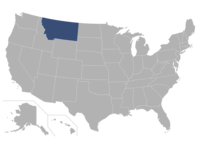
Helena, MT