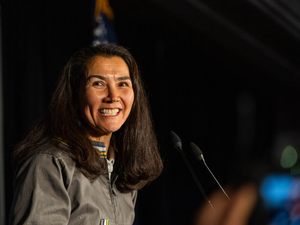
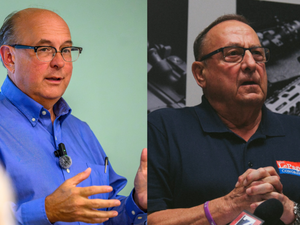
Is ranked choice voting the future of American elections?
Alaska’s contentious U.S. Senate race and Maine’s 2nd Congressional District runoff have put ranked choice voting back in the national spotlight. Under this election system, voters rank their candidates in order of preference, and whoever ultimately gets more than half of the first-preference votes wins.
Ranked choice voting is used statewide in Alaska and Maine, but there’s growing interest in jurisdictions across the country to adopt the practice. However, many states are still cautious about using ranked choice voting.



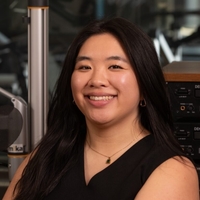
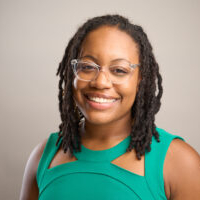

In Episode 54, Meredith Sumpter, president and CEO of the advocacy group FairVote, joins the podcast to talk about what we can learn from Alaska’s elections, about why voters are drawn to ranked choice voting, and whether the system could curb partisanship.
You’ll also get a weekly news wrap-up from Evening Wrap newsletter writer Danielle Gaines and Daybreak newsletter writer Madyson Fitzgerald. They’ve got you covered with the latest on: how states are trying to curb Kalshi, vaccine guidelines for our pets and an archival project that could help investigators search for missing U.S. service members and civilians.
Episode produced and edited by Mallory Cheng. Music for Stories From The States composed by David Singer.
Got questions? An episode idea? Email us at [email protected].
Subscribe to Stories From The States on Apple Podcasts, Spotify or YouTube.
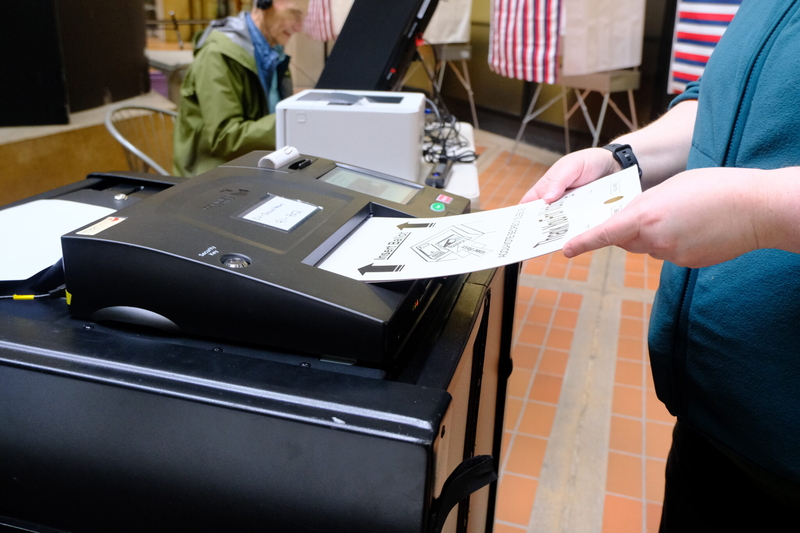
Photo: A voter casts their ballot on the first day of early in person voting in Juneau on Oct. 19, 2026. (Photo by Corinne Smith/Alaska Beacon)
Stories From The States is a production of States Newsroom, the nation’s largest state-focused nonprofit news organization, with reporting from every capital. At this pivotal moment in American democracy, our veteran journalists from all 50 states are reporting the consequences of government decision-making. By zooming in on one story each week, Stories From The States contextualizes and gives a human voice to what is happening now.
Transcript was created using an automated software.
Chris Fitzsimon
This is Stories From The States. I'm Chris Fitzsimon. Thanks for being here. There's a lot to catch up on this week. First, we will check in on the latest midterm election news in Mississippi and maybe what's happening in Alaska. Then we'll talk about how some states are trying to curb gambling and gambling in politics. And as we...
Transcript was created using an automated software.
Chris Fitzsimon
This is Stories From The States. I'm Chris Fitzsimon. Thanks for being here. There's a lot to catch up on this week. First, we will check in on the latest midterm election news in Mississippi and maybe what's happening in Alaska. Then we'll talk about how some states are trying to curb gambling and gambling in politics. And as we get into the colder months of the year, how vaccines are being talked about for our four-legged friends. But Alaska's U.S. Senate race has put ranked-choice voting back in the national spotlight. It's a system used statewide in Alaska and Maine, and there's growing interest in jurisdictions around the country to adopt the practice. Could ranked-choice voting be the future of American elections, and what is it? How does it work? Later in the show, we'll chat with Meredith Sumpter about if that's the case. She's the president and CEO of the advocacy group FairVote. But first, as always, let's check in on the news with our States Newsroom newsletter authors, Danielle Gaines and Madyson Fitzgerald. Hello, Danielle and Mady. It's been a while since we've all been together. How are you guys?
Danielle Gaines
It has good to see you.
Madyson Fitzgerald
Doing good.
Chris Fitzsimon
Feels like it gets dark now as soon as I walk out the door of the office. But that's a whole other topic: whether or not we should have daylight savings time and where.
Danielle Gaines
Well, a big debate, of course.
Madyson Fitzgerald
Yeah, I say we get rid of it.
Chris Fitzsimon
But what'd you say, Mady?
Madyson Fitzgerald
I say, or I guess I would say get rid of it, but I don't know what the original time would be for everyone. But either way, I don't like it getting dark as early as it is. It makes me want to go to sleep.
Chris Fitzsimon
Right. Well, since we have all chatted, the midterms have happened, and I was going to say happened, but I guess they're actually still happening. We all know about the blue wave. We all know about a lot of the individual states and how things went, the big gains by Democrats in state legislatures, and and and so on. But the big news this week, I guess, was Mississippi's decided now in the U.S. Senate race.
Madyson Fitzgerald
Yeah, and I think that we were all waiting on Mississippi because it was one of the very close races that I feel like everyone's had their eye on, but as we're recording this on Thursday, a Democrat Scott Colom won a hard-fought U.S. Senate race in Mississippi, and he actually broke Republicans' dominance of statewide offices, ousted one of the state's sitting senators for the first time since the 1940s, and became the state's first Black senator since Reconstruction. So a lot of historic firsts.
Chris Fitzsimon
Yeah, interesting that he not only the first Black, as you mentioned, senator since Reconstruction. The last Democrat there was a segregationist,
Danielle Gaines
Right!
Chris Fitzsimon
So it has been a long time since John Stennis.
Danielle Gaines
I also saw in Kansas the Democrats are leading the governor's race, and that would be the first. The lieutenant governor would be the first Black man elected statewide since Reconstruction, there as well.
Chris Fitzsimon
Yeah, really interesting. There still is a race that we don't know about in the U.S. Senate, however, Alaska.
Madyson Fitzgerald
Yeah, Alaska has is honestly, it's been a very wild ride in Alaska, but we are still waiting on the results. So we'll we'll keep an eye on that, and we'll be reporting on that for whenever they're finished counting all those ballots.
Chris Fitzsimon
Danielle, what did what do you and now that you've had a little while to marinate in this, what what sticks with you about the midterms? I know we talked about it before, but
Danielle Gaines
oh yeah, I mean I think this kind of the scale of the way the electorate has been remade is it's hard to underestimate. So we have on the federal and state levels. So you know there are so many firsts in both the chambers of Congress, and we have a bunch of stories today about Gen Z and LGBTQ plus candidates winning in unexpected places at the state level, and so it will really remake and recast a lot of conversations on all policy levels. I think.
Chris Fitzsimon
Yeah, this it's a I guess in some people's minds the biggest election win for Democrats since Watergate, which was you know my gosh 1974. I barely remember it. I know you guys don't.
Danielle Gaines
Read about it, you know.
Chris Fitzsimon
Yeah, read about it. Let's talk about another theme. I know it's been in the news: gambling, including gambling on politics.
Danielle Gaines
Yeah. So Arkansas is one of the latest states to launch a couple of new lawsuits. So they filed a lawsuit against Kalshi. We've talked about that here on the pod about how Kalshi is kind of circumventing state gambling rules by calling itself a prediction market. He accused Kalshi of being a pocket-sized bookie, and is going after the company under the under the state's Deceptive Trade Practices Act. So that was kind of interesting. The thing that caught my eye is at the same time that he filed that, he also filed a case against this Australian gaming company that operates an online sweepstakes casino, VGW. So I hadn't actually heard of them, but I do see kind of the ads for like win free money while you play Tetris or whatever online. Tetris, but you know, a knockoff. And he also went after that company and is seeking civil penalties against that company. And actually, New York regular New York regulators were able to go after them with a cease and desist and received a big payout earlier this year. So that was something that was kind of under the radar for me.
Chris Fitzsimon
It was interesting on election night. Now seems like it was eons ago, but just recently, watching on social media, a lot of the pundits and other people were quoting the prediction markets as to who was likely to win. Mady, that seems like a it's so ingrained in our culture somehow already.
Madyson Fitzgerald
Yeah, I was actually. I feel like I was watching. I can't remember which news outlet it was, but it was on television, and they would like occasionally bring up the poly market thing, and it would it would show like how close how many people believe which candidate is going to win, and I was just in disbelief because I think one of the things that I struggle with is that polling is already kind of um you know, it can be a little bit hard. It can be a little bit challenging to capture like an accurate picture of how people are actually going to vote. But I guess when you get money involved, I don't know if it becomes more accurate or less accurate. But I think that that's something that I would like to see more studies on in the future.
Chris Fitzsimon
Yeah really interesting. All right, let's let's quickly move to it. I think is a fascinating theme. We're we have vaccine debates breaking out all over the place, and an unusual one in New Hampshire.
Danielle Gaines
Yeah, you know, I thought maybe I was behind the times and not knowing about this debate, but everyone I tell this story to also hasn't known about this debate. So in New Hampshire, they are debating a new effort to expand vaccine exemptions for animals for our household pets. So we've gone straight past humans. We're talking about the rabies vaccine. So there's a group of pet owners who want to get exemptions from the rabies vaccine. This is like a huge surprise to a lot of people because there's like broad consensus among veterinarians, public health officials that the vaccine is life saving and
Chris Fitzsimon
And common sense. But that's just me.
Danielle Gaines
Common sense, you know, rabies. I think you know a lot of the things we're seeing with these vaccine discussions is that people have just kind of forgotten what these diseases are like. Rabies is incurable once you have symptoms. It's a slow, painful, awful death, and it's still something that we are debating. and And in the U.S., we have very low levels of rabies because we have such robust public policy around it. But there are about 70,000 people human deaths from rabies worldwide each year.
Chris Fitzsimon
And so what's the what is the point? I mean, what are the advocates of these exemptions? What what what? I'm I'm confused about that.
Danielle Gaines
Yeah, concerns about adverse reactions, which are very rare but not non-existent.
Chris Fitzsimon
Well, I guess yeah, I know that my dog, for example, does not follow the advice of the CDC when she reads that. So yeah. All right. Well, let's move to one last thing. This is very cool. Tell us what's going on about veteran. We just we just celebrated veteran or commemorated Veterans Day this week.
Madyson Fitzgerald
Yeah, I saw this really really cool story out of North Dakota, actually. And so there were these two students from the University of North Dakota, and they recently found a new way to serve veterans as part of this like archiving project. So the two students basically took all of these records, thousands of records, and they they digitized them so that investigators could could have more resources and have more things to look through for searching for missing U.S. service members and civilians in Southeast Asia, and so they helped to scan around 6400 pages from the James Wald papers, which are preserved at the University of North Dakota's Chester Fritz Library. And the records were requested by Tours of Duty, which is a nonprofit that works with veterans and families to seek answers about their missing loved ones, and so I just thought it was a really cool project to work on. And if I was in college, I would have loved to work on something like that because I think it's it's really important. So kudos to them. And there's tons of more stories of how different people in different states are remembering Veterans Day on on News From The States.
Chris Fitzsimon
Yeah, it's yeah. Check it out. newsfromthestates.com. It's always a great source. It's interesting that I'm always amazed at what this is fascinating. I'm always amazed when I'm looking things up at what's available online and what's not, and how those decisions are made. There's so much information in the world and AI scraping everything every day, but there's such a body of knowledge that is still not available on your computer.
Madyson Fitzgerald
And there's something to be said about like the power of transcribing. Because I I do remember this one project I was on in college. It was part of like a community service thing where we literally just went to the library and would help them put documents like into a digital archive because there are just so many of them that haven't been like moved over yet. Yes, we have AI, but there's I don't know. There's something nice about being able to have a hand in that as a person.
Chris Fitzsimon
Well, it's fascinating. Thank you, guys. As always, great to see you. Thanks for all your time.
Madyson Fitzgerald
Yeah, thank you.
Danielle Gaines
Thank you.
Chris Fitzsimon
To stay up to date on the latest news happening in all the states, subscribe to Daybreak and Evening Wrap. You can subscribe at newsfromthestates.com/subscribe. Alaska's contentious U.S. Senate race and Maine's second congressional district runoff have put ranked choice voting back in the national spotlight. Ranked choice voting is used statewide already in Alaska and Maine, and there's growing interest in jurisdictions around the country to adopt the practice, but many states are still cautious about using ranked choice voting. Coming up, FairVote's president and CEO Meredith Sumpter joins us to talk about why voters are drawn to ranked choice voting and whether the system could curb partisanship. FairVote is an advocacy group working on elections reform. We'll be right back.
Dr. Kristin Lyerly
At a time when so many communities are losing their local news outlets, States Newsroom is filling a gap. We are now the nation's largest state-focused nonprofit news organization, with reporters based in every state capital and Washington D.C. But we can't do it without your support. Your contributions allow us to produce award-winning journalism and deliver it to you for free. No pop-ups, no paywalls. This is a crucial time to support local journalism, and every bit helps. To give, go to statesnewsroom.com/donate.
Chris Fitzsimon
Daily news, especially these days, can get overwhelming. At times, it's hard to keep up with how it all could impact you, your family, and your community. Hi, I'm Chris Fitzsimon. I host a podcast called Stories From The States to help make the top stories a bit more digestible. It's a weekly news podcast that explores one issue happening in the states that could shape the entire country with the help of local journalists.
Sherman Smith
There's no evidence that anybody can find really where somebody was really bothered by who was in the bathroom with them.
Chris Fitzsimon
Experts
Dr. Kristin Lyerly
They had an ultrasound picture of what they were told was their pregnancy, but what it actually was was a full bladder.
Chris Fitzsimon
And community members.
Max Moran
Money isn't everything, and the real value when it comes to the land is being able to pass it down. We've got you covered. Subscribe now to Stories From The States, a podcast from States Newsroom.
Sherman Smith
Hi, it's Moses Esheit, Product Associate at States Newsroom. At States Newsroom, we believe journalism should be fair, fearless, and free. With reporters working on the ground in all 50 states and Washington D.C., we provide nonpartisan coverage of all the state issues that matter most to you. You can subscribe to our work by going to statesnewsroom.com/subscribe.
Chris Fitzsimon
Well, Meredith, thank you very much for being with us. We appreciate your time.
Meredith Sumpter
I appreciate being here, Chris. Thanks.
Chris Fitzsimon
A lot of questions about ranked choice voting that I think a lot of people are maybe didn't know as much about, and now with with Alaska, and I guess we thought maybe potentially Maine. But when people ask you and find out what you do and don't understand it, how do you explain ranked choice voting?
Meredith Sumpter
So ranked choice voting is a simple, proven way for our democracy to work for the American people. Voters can rank their preferred candidates, first, second, third, and so on. And a candidate needs a majority of voter support to win their election. So for voters, ranked choice voting really just means having greater choice and greater say in who represents them. And for candidates, it means campaigning for a broad majority of voter support and actually getting things done.
Chris Fitzsimon
So, if a candidate in a race with ranked choice voting receives more than 50% of the vote initially, then that's sort of decided the way people are familiar with. Is that right?
Meredith Sumpter
Yeah, that's that's absolutely right. So, if a candidate receives more than half of those first choices, Chris, the candidate wins just like in any other election, but if not, there is a simple process of elimination to get to a winner with a majority of voter support. So the candidate with the fewest votes is eliminated, and voters who rank that candidate first will have their vote count for their second choice. And this process repeats until a candidate wins with more than 50% of the vote.
Chris Fitzsimon
Yeah, I think I've heard it described a long time ago with election or democracy advocates that I knew. As in some ways, it's a it's an instant second primary without all the cost and confusion and low turnout. Do you think that's maybe a fair assessment?
Meredith Sumpter
Absolutely. Faster, better, cheaper is is what some of our. Our conservative supporters like to say, but yes, and I just wanted to share that. Like everywhere that voters use these reforms, they understand ranked choice voting. They like it, and they they want more of it. So it's been really fun for me as the the CEO of FairVote to get to work to advance ranked choice voting in part because, and Chris, I don't know if you know this or not, but I'm actually born and raised Alaskan, so I can see.
Chris Fitzsimon
I did not know that.
Meredith Sumpter
Yeah, I can see firsthand how that reform both it's a nonpartisan tool, but it's one that truly reflects the will and the political diversity of voters.
Chris Fitzsimon
One thing I've never quite understood about it, and I want to ask you specifically about Alaska and maybe in this election, is even people who I feel like should know better or should understand it sometimes will say, "Oh well, in Alaska they have ranked choice voting. I don't understand that, or I don't know how it works, or that's all complicated." It really doesn't feel that complicated. But why do some people sort of brush it aside as being too complicated? Is it because it's new to people?
Meredith Sumpter
I think that's a that's a fair assumption to make. But Chris, typically folks who say ranked choice voting is complicated have never actually used it. It's super simple. We rank things every day. I'm a mother of four, and I can tell you that I have four kids who are ranking what ice cream I'm going to pick up for them at the grocery store. It saves us a lot of squabbles around the the family dinner table. But look, wherever it's used, voters say that ranked choice voting is is simple, and that's 84% of Alaskans, 82% of Maine voters say it's simple, 96% of New York City voters, and that ballot comes out in five different languages. They say, "Look, this is simple. We get it. We know our preferences, and we like having the power to you know you pick your top candidate, and you have the option of ranking your backup choices should you have them."
Chris Fitzsimon
Given the all the attention into the still as we record this undecided Alaska Senate race, does this give you the opportunity to explain this? I know it also comes with sometimes unfair attacks on the system, but it feels like a defining moment.
Meredith Sumpter
You know, having the attention on the Alaska system with this election has really provided us a great opportunity to show how ranked choice voting actually works. So, Chris, I'm assuming that you're referring to the the two Dan Sullivans phenomenon.
Chris Fitzsimon
Well, I was referring just to the race in general, people wondering about the results. But that's a whole nother. Let's let's let's get into that. I was going to ask you about the two Dan Sullivan. So go ahead.
Meredith Sumpter
Yes. So there have there's been a great deal of of discussion around partisan gamesmanship that we've seen. It's not just in the Alaska Senate race where you have two candidates with very similar names that showed up on the ballot. You know, really, political gamesmanship happens in races clear across the country, and this is really nothing new. It's just partisan gamesmanship happens in all sorts of elections. In this last cycle alone, Texas, South Carolina, North Carolina, Minnesota, Mississippi, all had races this year where third-party candidates played a spoiler. So actually, what's so great about ranked-choice voting is ranked-choice voting has nothing to do with why there are two Dan Sullivans on the ballot in Alaska, but it has everything to do with mitigating the impact of partisan gamemanship. So it helps to actually solve that problem, and for the two states that use ranked choice voting, that's Alaska and Maine. These are the worst states to try to play a spoiler, in part because voters can simply pick their top choice, rank their backup choices, and you know that the most competitive candidate will emerge from that race.
Chris Fitzsimon
The people of Alaska had a chance to give up ranked choice voting and chose not to. Tell us about that.
Meredith Sumpter
Yeah, so you know Alaskans have now voted three times in six years for ranked choice voting. So they they first voted it in in 2020, had a 2022 implementation where you saw the same Alaskan electorate, and again, like these are like all Americans, Alaskans are independent-minded people. They like to support candidates who they think are going to be working in their interests on their behalf. So you really saw the power of ranked choice voting that 2022 cycle, along with open primaries, elect a very conservative governor with Mike Dunleavy, a moderate Republican with Senator Lisa Murkowski and a moderate Democrat with then sort of Representative Mary Peltola, who two years later in 2024 lost her ranked choice voting election to Nick Begich, who is currently representing Alaska. There was a repeal effort in 2024 that was narrowly defeated, and while the the final tally is still in the offen, we are we're we're looking at the RCV tally, and what we're seeing is with the 2026 repeal effort, Alaskans are voting to keep their system because it's working for Alaskans. You can see it in who they get to elect to represent them, but you also see it in how the state has a you know since they've used ranked choice voting to open primaries, they have a cross partisan ruling coalition in the state legislature, both the Senate and the House. So these are Republicans and Democrats and Independents, who don't agree on everything, but they do come together on the issues that their voters most care about, and they focus on those issues and they get things done because they have to earn majority of support. They have to keep a majority of their voters happy. What they're they're incentivized to reach across the aisle to get things done for their voters, and that's the kind of more functional, representative, and productive politics that I think Chris, the American people, are more than ready for.
Chris Fitzsimon
Why was there an effort to repeal this? Where does that opposition come from? Do you think?
Meredith Sumpter
Well, you know, I think when you have election reforms that put power in the hands of voters, it's natural for establishment interests who know how to run and win under the existing election systems to resist that kind of reform and change. But Chris, what I would say to establishment interest is that, especially for those that are coming from the the both major parties, is that the pathway towards a healthy, dynamic, vibrant political party is one in which the elected leaders are tied closely to what voters most want and need, and incentivized to to work and deliver for them. So I think when we've we've and as you know, FairVote, we're a nonpartisan national nonprofit. We talk with and we work with everyone: Republicans, Democrats, Independents, third parties, because these nonpartisan reforms they're in the interest of voters, but they're also in the interests of parties who win because they are out there engaging with voters, not just their narrow base, but they're out there knocking on every door, listening to voters, understanding what voters need them to do as an elected leader, and then working to deliver on those needs once they're in office.
Chris Fitzsimon
One of the criticisms that we hear from a lot of folks, and this isn't about ranked choice voting, and I'm wondering how ranked choice voting affects it or not. Is that it takes too long to know who wins. I mean, we are still sitting here in a lot of places, a lot of races, even though it was clearly a blue wave election, not knowing the results. I know we're waiting for ballots to come in in Alaska, and then if no one gets 50%, we'll go to ranked choice voting. But can ranked choice voting speed things up at some point? Can that be part of people knowing sooner who they've elected?
Meredith Sumpter
Yes, actually, any vote counting delay has nothing to do with RCV, Chris. And in the case of of Alaska, you know, Alaska accepts absentee ballots for up to 15 days after Election Day, and this is due to just the the size of of the state, as well as the need to transport ballots from rural areas. In my home state, 80% of the communities are off the off the road system. So you know, in close races, you may not know the winner for 15 days. And we saw this in Senate races in Alaska in 2010 and 2008, over a decade before the state adopted RCV, here's here's the real thing, Chris. An RCV tabulation takes a minute, and in Alaska, it's a minute per race, and so any of the result delays have nothing to do with RCV, and they have to do with the other considerations that an election official might have to ensure that absentee ballots are received and that every vote is is received before they before they run an RCV tally. But the actual tabulation really just takes a minute. I do want to note, like in the case of Alaska, though, the Alaska Division of Elections they released a cast vote record on election night. So this is a digital record that allows us to run unofficial preliminary RCV tallies, and so we already have preliminary RCV results.
Chris Fitzsimon
And in some cases, in primaries, for example, I guess it it makes people know who's going to win earlier because there's no runoff election six weeks later where candidates have to do it again and people have to go to the polls again.
Meredith Sumpter
That's right. You know, so voters don't have to to go out to the polls again. You save money, but also I think you have a significant drop off in voter participation when you go to a runoff. And so, from the perspective of FairVote, when we're all about better elections and better government that reflect the interests and the needs of of the voter, if you don't have an instant runoff like ranked choice voting, you have to go to a runoff. It's not only you know more time and money, but you also have far lower voter participation rates, which make for a less representative outcome.
Chris Fitzsimon
And what about the RCV's use in other jurisdictions or other countries?
Meredith Sumpter
Yes, so you know RCV has been used in national elections in Australia and Ireland for over 100 years, but it's relatively new to the United States. So in the modern era, it came back into use toward the beginning of this century. So around 2004, you had a couple of cities in California as well as Ferndale, Michigan, adopt ranked choice voting. But I would just say, just in the last 10 years, you know, RCV has grown from in 2016. You had about 10 cities that used it. In just the last 10 years alone, Chris, we've seen that reform grow to over 51 cities, counties, and states. You know, of course, including statewide in Alaska and Maine. In just this last election day, Irvine, California, and Longmont, Colorado, also adopted ranked-choice voting. In Washington, D.C., we saw its first-time implementation in primaries earlier this year, but also in the general.
Chris Fitzsimon
And and as I let you go, what are what efforts are underway to expand the use of RCV?
Meredith Sumpter
I invite you to go to fairvote.org, and on the get involved page, you will find links to the websites of state partners. So we have partners across the country. These are state and local leaders who are working to advance voter awareness, voter education, and voter support for nonpartisan election reforms like ranked choice voting and proportional representation. I would say that you know, Chris, as the American people have gotten tired of polarized politics and the unproductive nature of our Congress, which is about 11% as productive as when FairVote was first founded over 30 years ago, we're seeing a real push of energy of Democratic renewal at the local level, so within states and cities. In our job as a nonpartisan national organization, is to support these state and local leaders with what they need to make the case to their neighbors, to fellow citizens and constituents on the democratic renewal that is happening at the local level and then bubbling up to states as well.
Chris Fitzsimon
Well, very interesting. We really appreciate you being with us. Thank you, Meredith.
Meredith Sumpter
Thank you so much, Chris. It's great to be here.
Chris Fitzsimon
And that's our show for this week. Thanks for listening to Stories From The States. I'm Chris Fitzsimon. Mallory Cheng produces and edits the podcast. David Singer produced our theme music. To stay up to date on all the latest episodes, subscribe now to Stories From The States, a podcast from States Newsroom. It's available wherever you listen to podcasts. Thanks for listening, and we'll talk to you next week.