Gen Z is in the House — following election Oregon’s Legislature gets younger
Nov 12, 2026 | 9:00 am ET
Description
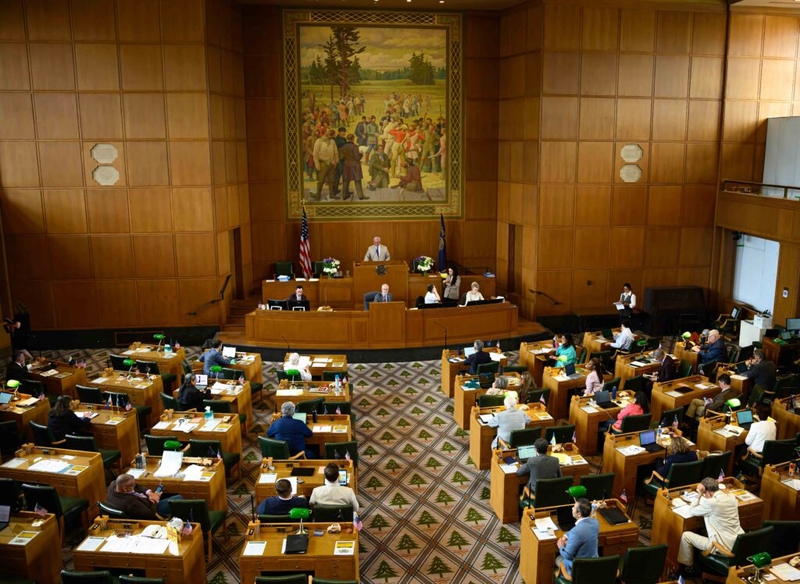
The Oregon House chamber on June 26, 2025. (Photo by Laura Tesler/Oregon Capital Chronicle)
Like many members of Generation Z, Representative-elect Hank Sanders, a Democrat living in Hood River, recently turned 26 and aged out of his family’s health insurance plan.
“That’s my weekend plan,” he said in a phone interview. “Nobody punch me. Nobody hurt me for the next couple weeks while I figure out my healthcare.”
The former journalist and legislative aide to his mother, state Sen. Lisa Reynolds, a Portland area Democrat, was elected to represent Oregon’s 52nd House District a week after his 26th birthday. He’s one of a couple 20 year olds who ran for the first time for state political office in the November election, and who will, after being sworn in at the beginning of January, be among the youngest lawmakers in Oregon’s Legislature, where the average age is closer to 55.
The racial makeup of the state Legislature will remain largely the same when the six-month session begins in January, but nearly a quarter of the 60 members of the Oregon House will be millennials and Gen Zers. Baby boomers will make up another quarter of house membership and the other half will be Generation Xers.
Baby boomers are defined by the U.S. Census Bureau as people born between 1946 and 1964, while Gen X spans anyone born between 1965 and 1980, and millennials are those born between 1981 and 1996. Gen Z constitutes those born between 1997 and 2012, with Generation Alpha beginning in 2013.
There will still be no Gen Z representation on the senate side. Generation X makes up slightly more than half the members of the senate, and more than a third of Oregon’s senators are baby boomers. Millennials make up 10% of state senators.
How is Gen Z running for office?
Sanders, who ran against Republican and 16-year Wasco County Commissioner Scott Hege for the Columbia-Gorege-based seat, is one of the youngest people ever elected to the Oregon House.
He is two years older than state Sen. Wlnsvey Campos, D-Aloha, was in 2020 when she became the youngest woman ever elected to the Oregon House at age 24, and two years later became the youngest person ever elected to the Oregon Senate, at age 26. Former U.S. Congressman Earl Blumenauer, a Democrat representing Portland in the U.S. House of Representatives, was first elected to the Oregon House at 24, too.

Sanders, who will be the youngest sitting member of the Oregon Legislature when he’s confirmed in January, said he was only able to run for office at his age because he doesn’t have a mortgage or kids, and he’s in a period of his life where he can live off his savings to take a career risk.
“As a journalist, you are trained by nature to live pretty frugally,” Sanders said. “It’s a lot of ramen and chicken thighs. You know how it is, right? Everything goes in the air fryer.”
Sanders said he recognizes his privilege as the son of a state senator, but understands the struggles that many people his age are facing.
“Being a renter, I understand the rent check that’s due and thinking about one day wanting to own a home and trying to put money away for that and also one day wanting to have a family,” he said.
Claire Lynn, a 27-year-old Florence Republican, is another Gen Zer elected last week. She’ll be among the youngest ever Republican women to serve in the Oregon House of Representatives, where she’ll hold the seat for the state’s 9th House District spanning Yachats to Coos Bay.
Lynn said she was able to run for office with the support of her husband.
“We’ve figured out how to make this work, which honestly at times has meant living off of one income,” she said. “He has been incredibly supportive because we believe it’s important for me to serve our state in this way, right now at this time, because I really do believe we are at a pivotal moment.”
Lynn said she’s excited to be a younger voice pushing back against what she called the status quo in Salem.
“There’s a whole generation of people, who are my peers, who live in rural Oregon, who want responsible forest management brought back, who want our law enforcement to be supported, and who don’t want more taxes and they want our women’s sports and spaces protected,” Lynn said.
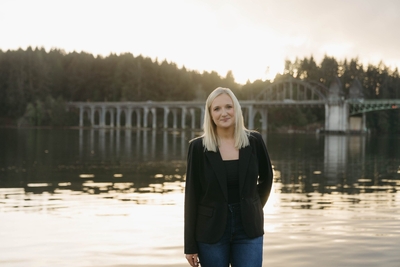
(Photo Courtesy of the campaign for Claire Lynn)
Five-less baby boomers in the Oregon House
Lynn’s predecessor, Rep. Boomer Wright, R-Reedsport, endorsed her after choosing to retire rather than seek reelection.
Like Wright, three other House lawmakers chose to retire, including Republican Rep. Rick Lewis, R-Silverton. Oregonians living in the state’s 18th House District across the Santiam Canyon elected 40-year-old Republican Amanda Staehely, R-Canby, in his place.
In the Beaverton and Cedar Hills-based 27th House District, Democrat and 56-year-old Tammy Carpenter will replace retiring Democratic Rep. Ken Helm, 60.
In Oregon’s 7th House District based in Springfield, voters chose 59-year-old Kori Rodley to replace retiring 79-year-old Democratic Rep. John Lively. Rodley’s election also adds to the LGBTQ+ representation in the Oregon Legislature.
And in Oregon’s Salem-based 21st House District, voters elected 41-year-old Democrat Michael Welsh over longtime lawmaker and incumbent Republican Rep. Kevin Mannix, 76. Mannix wasn’t seeking retirement. He lost his bid for reelection against Welsh by nearly 10 percentage points.
BIPOC Caucus to remain largely the same
The Legislature’s Black, Indigenous, People of Color (BIPOC) Caucus won’t change much, aside from losing Rep. Annessa Hartman, D-Gladstone, according to Rep. Ricki Ruiz, D-Portland, and co-chair of the caucus.
Hartman, a member of the Haudenosaunee, Cayuga Nation and Snipe Clan, chose not to seek reelection following a cervical cancer diagnosis in late 2025. She was the third Indigenous person ever elected to the Oregon House.
Following her departure, there will only be two Indigenous women in the state Legislature — Rep. Tawna Sanchez, D-Portland, of Shoshone-Bannock, Ute and Carizo descent and Rep. Emily McIntire, R-Eagle Point, a member of the Muscogee Creek Nation.
But on the Senate side, voters in the 15th Senate District voted to replace incumbent Sen. Janeen Sollman, a Democrat, with another Hillsboro Democrat — Myrna Muñoz. Muñoz has already started participating in the BIPOC caucus’ meetings, Ruiz said.
Muñoz joins Sen. Mark Meek, D-Gladstone, and Campos, as the few Latinos in the Oregon Senate. Four Latinos will remain in the House, including Ruiz and Reps. Andrea Valderrama, Nathan Sosa and Lesly Muñoz — Muñoz’s sister.
“It’s not that much of a difference, but we’re eager and excited to get to work for the good people of Oregon,” Ruiz said.
Salem, OR