Kansas Guardsman worries about father’s immigration status, possible deportation
Nov 11, 2026 | 9:00 am ET
Description
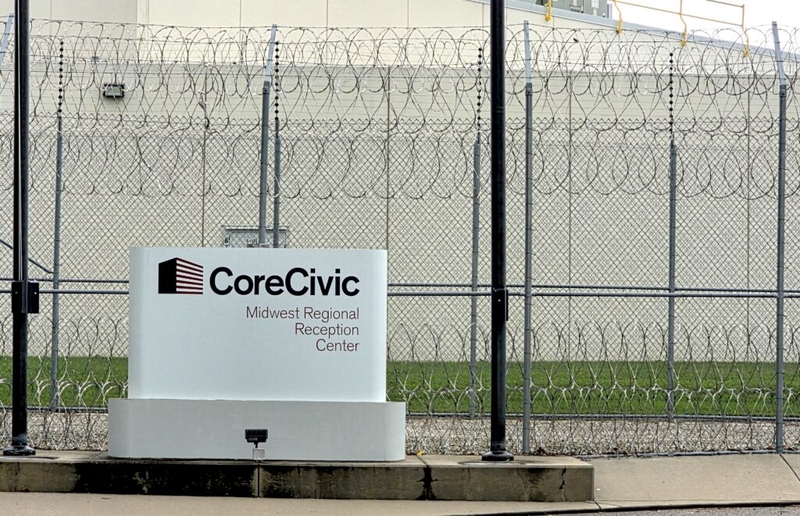
Immigrant William Martinez, who has lived in the United States since he was 17 years old, was held for a few weeks in the Midwest Regional Reception Center in Leavenworth, after being detained in August. While he has bonded out, his family is worried that he will be deported even though his application for a visa is in the works. (Photo by Morgan Chilson/Kansas Reflector)
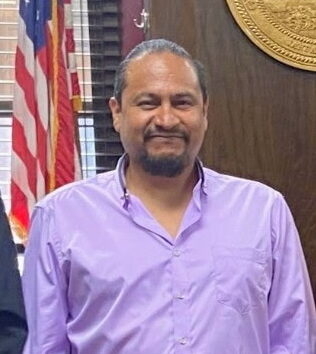
TOPEKA — Kansas Army National Guardsman Luis Martinez was called to active duty in August to help with Wyandotte County storm cleanup.
His father, William Martinez, offered to drop him off at his unit so he would be well-rested and ready to help with the natural disaster, Luis Martinez said.
“He told me he was proud of me and that he’s proud that I’m serving the nation, I’m serving the state, and I’m making an impact,” Luis Martinez recalled weeks later.
On the way home, an Anderson County sheriff’s officer stopped Martinez’s father.
“One of the lights was out for the display (license) plate, but the other one was still on, and (my wife) said she even checked it out,” Luis Martinez said. “You could still read the license plate.”
Reports from the sheriff’s office obtained by the Kansas Reflector confirmed the reason for the stop.
The situation escalated when the officer found that William Martinez had failed to renew his driver’s license, Luis Martinez said. The officer then asked for visas and questioned his immigration status.
“My father responded truthfully that they’re in process,” Luis Martinez said. “The sheriff asked my father to please step out, and for like 30 minutes there, he was just questioning him. My father gave all the information about his lawyers, paperwork, and whatnot. He even mentioned that he just went to drop me off with my unit and mentioned that his son’s in the National Guard, but I guess the sheriff didn’t care.”
The officer didn’t run his mother or wife’s paperwork and let them go, Luis Martinez said.
William Martinez was held two days at the Anderson County Jail and then transferred to CoreCivic’s Leavenworth prison, the Midwest Regional Reception Center, Luis Martinez said. He was released on bond in mid-October, but faces further hearings and the threat of deportation.
He also wears an ankle monitor with a 150-mile radius, Luis Martinez said.
The experience in CoreCivic had a long-term impact on William Martinez, his son said.
When Luis Martinez spoke to his father while he was in detention, he found his mood varied.
“Honestly, there’s some days where he’s just depressed,” Luis Martinez said. “There’s some days where he’s just frustrated, and some days where he’s just joyful and optimistic. It just goes up and down, up and down.”
When William Martinez was released, he struggled for the first few weeks. He met people in the CoreCivic facility who were in the country legally, who had unexpired visas and shouldn’t have been imprisoned, Luis Martinez said.
“He came out kind of traumatized. He seen a lot of things in there that really disturbed him,” Luis Martinez said. “He overheard a lady cut her wrists twice, in the nighttime. People were frustrated, angry, screaming in the night. He said he didn’t sleep at night because of all the noise.”
CoreCivic didn’t respond to questions about conditions at the facility.
William Martinez has lived in the United States since he was 17 years old. He raised his family here and worked as a mason, Luis Martinez said.
He has applied to be here legally and is in the process of getting a military parole in place, which is an immigration benefit for the spouses, children, parents and other relatives of a U.S. military member, Luis Martinez said.
“My mother and father are doing everything legally. They’re doing everything step by step,” Luis Martinez, who is a U.S. citizen, said. “They went through immigration. They did this. They did that. We have immigration attorneys. We’re literally doing everything by the book.”
The Anderson County Sheriff’s Office signed a 287(g) agreement with the U.S. Department of Homeland Security, which means the agency will hold people who are suspected of being in the country illegally for U.S. Immigration and Customs Enforcement agents.
The program offers money to law enforcement agencies that participate, including initial stipends of $100,000 for transportation and $7,500 per credentialed task force officer for equipment, according to the U.S. Immigration and Customs Enforcement. Additional stipends are available on a quarterly basis.
Anderson County Sheriff Wesley McClain said he made the decision to participate in the 287(g) program and that the county has not received any stipends for participation.
“I made this decision based on my responsibility to evaluate available law enforcement resources, strengthen investigative capabilities, and establish partnerships that can assist our agency in serving and protecting our community,” he said in an email to Kansas Reflector.
McClain said that cooperation between local, state and federal agencies is an important part of addressing criminal activity across jurisdictional boundaries.
“This decision was made as a law enforcement operational decision, not a political statement,” McClain said. “My responsibility is to make decisions that I believe best serve the public safety interests of Anderson County that I stand by.”
McClain said the partnership isn’t only about immigration status.
‘It’s about improving communication between local and federal law enforcement, enhancing public safety, and ensuring that our deputies have the training, oversight, and resources necessary to carry out their duties professionally and constitutionally,” he said.
The American Civil Liberties Union of Kansas has spoken out against the 287(g) agreements, and launched a program called Opportunity Forward to limit focus on limiting their use in the state.
“When our local police are weaponized by the federal government against their own townspeople, it erodes the opportunity for everyone to feel safe and have trust in our local government and law enforcement,” the organization said online.
Topeka, KS