Nebraska Department of Economic Development staff count continues its unprecedented drop
Nov 11, 2026 | 6:45 am ET
Description
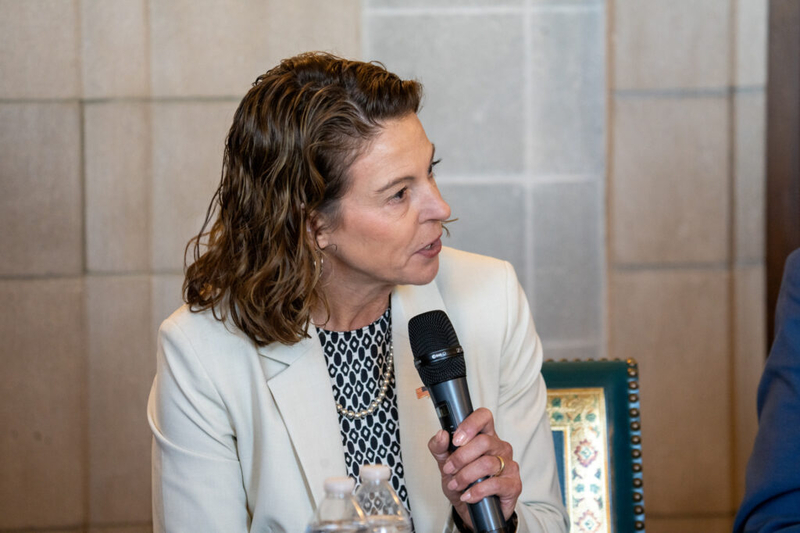
Maureen Larsen, director of the Nebraska Department of Economic Development and former general counsel to the governor, at an inaugural public roundtable of Nebraska Gov. Jim Pillen's cabinet. April 20, 2026. (Photo by Zach Wendling/Nebraska Examiner)
LINCOLN — The number of full-time employees of the Nebraska Department of Economic Development continues to drop, reaching a level this month not seen since the summer of 2020.
DED has lost an unprecedented number of staff members over the last year and a half under its latest director, Maureen Larsen, who was appointed by Gov. Jim Pillen in July 2025. Before her appointment, Larsen served as Pillen’s general counsel.
According to the department’s interim spokesperson Brennan Hallock, DED had 61.75 full-time employees as of Nov. 10, down from the peak of 115.25 it reached in May 2025. The decimal points represent part-time employees in how the department measures its full-time equivalents.
Last year, DED’s then-spokesperson Justin Pinkerman — who left the department this October — said the downsizing was part of an intentional winding down of pandemic-era programs. Data Pinkerman previously shared with the Examiner showed that DED had 63 full-time staff as of June 30, 2020.
“Governor Pillen’s administration made it a priority to shrink state government, including DED to its pre-COVID size,” Pillen spokeswoman Laura Strimple said in an email. “We have made strong progress toward that goal, while maintaining dedicated public servants in necessary positions.”
Hallock noted that in addition to the 61.75 permanent full-time employees, DED has filled three temporary full-time positions and two temporary part-time positions. The department currently has five active job postings and anticipates more to come.
“When considering the total number of permanent and temporary positions, the total exceeds 63 filled positions,” Hallock said in an email.
Several former DED employees have expressed doubt that the department’s initial reasoning for the downsizing was accurate. Sheryl Hiatt, who worked at DED for 26 years before she retired in June, said the truth could be seen in which employees were leaving.
While some DED divisions that managed pandemic-era projects have retained staff, such as the economic recovery division, Hiatt noted other divisions have been hit harder. She said DED’s housing staff has been hit particularly hard, as well as the data and technology division, which did not have any staff listed on DED’s website as of Nov. 10.
Hallock said the filled temporary positions at DED include data and technology staff.
Hiatt said DED has brought on temporary staff before, but they were rare occurrences to her recollection, and usually were hired in response to an immediate need. She gave the example that DED could bring on a temporary worker to serve as a receptionist, back when DED’s main office had a receptionist.
Hiatt said she believes the current permanent full-time staff level is not enough to offer manageable workloads for DED’s active employees. The last time she said the department was consistently operating at that level was under the leadership of Richard Baier, who served as DED’s director from 2003-2011.
Hiatt said the federal and state programs that DED employees oversee often require long-term commitment, as some come with compliance periods that can last decades. If an employee in charge of one of those programs leaves, that increases the workload of the staff designated to take over, not least because they may have years of work to catch up on, she said.
Speaking from her perspective as DED’s former director of field operations, Hiatt said many of these programs have a major impact on rural communities, both in spurring community development efforts and aiding businesses looking to locate across greater Nebraska.
“You’re basically hurting rural Nebraska with this workload,” Hiatt said.
In a recent survey of DED staff, several employees expressed concerns about growing workloads brought on by the downsizing. Multiple comments noted that most current staff are operating at burnout level.
“There is no way my workload is manageable for anyone. I feel like I am drowning every day,” one respondent wrote.
In a September interview with the Examiner, Larsen said DED was looking to fill some positions, but noted that as some pandemic-era programs have completed, leadership found that some of the workloads remaining from vacant positions did not warrant a replacement.
When an employee leaves DED, Larsen said, leadership talks with the position’s program manager to figure out how to divide the work the employee left behind. She said there are multiple options if an employee feels overworked, noting they can come to her, HR or their division head.
“If you want leaner government, if you want to cut waste and abuse, there’s a way to do it,” said Hiatt, who said she keeps in touch with people still working at DED. “And that’s by analyzing each program and each workflow across the agency, and that’s never been done. They’ll probably claim that they’re doing it behind the scenes, but you can’t do that without walking through that with every program manager.”
Strimple said Pillen has been “a strong champion of Nebraska’s economic development,” and pointed to several examples, including the 6 Regions, One Nebraska initiative, and the governor’s steps to strengthen the Business Innovation Act, opportunity zones and several other efforts.
“Economic opportunity in Nebraska does not depend on bloated bureaucracies,” Strimple said.
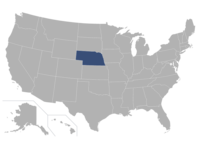
Lincoln, NE