In Democratic sweep, Oregon progressives grew power, pluck heading into 2027 session
Nov 11, 2026 | 9:00 am ET
Description
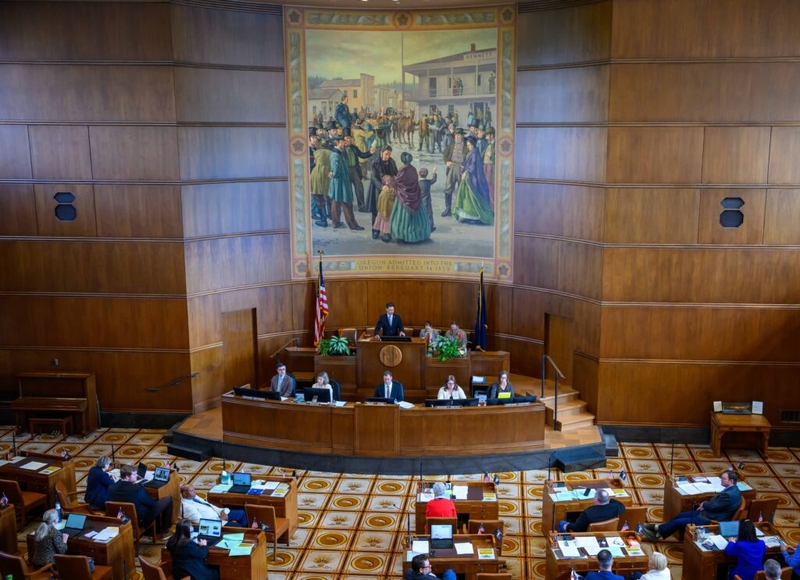
The Oregon Senate floor on Thursday, June 26, 2025. (Laura Tesler/Oregon Capital Chronicle)
Oregon’s progressives roughly doubled their numbers in the House and Senate in last week’s election when the Democratic party won an even larger share of state Legislative seats.
More than a dozen members of the unofficial progressive caucus, among Oregon’s 90 legislative members, are preparing to put forward ambitious proposals in the six-month legislative session that begins in January, leaders said, and to have the numbers to push back on Gov. Tina Kotek and the unofficial moderate or “mod” caucus if they strongly diverge on policy.
Not all self-identified progressives are part of the unofficial progressive caucus, nor do all members of the perceived “mod” caucus identify as moderate. Democrats will hold 39 of 60 seats in the state House and 19 of 30 in the Senate next year.
Among progressives, forthcoming proposals would end tax incentive programs for data centers, redirect to schools some of Oregon’s “kicker” rebate that’s triggered when state tax revenues exceed projections by more than 2% instead of returning the full amount to taxpayers, impose a wealth tax on the assets of multi-millionaires to help fund universal preschool and healthcare and increase the speed and scale of clean energy transmission and siting.
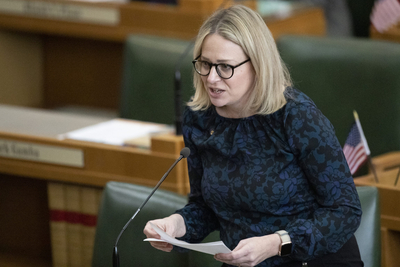
“The big takeaway from this election that I hope the Oregon Legislature and the party more broadly recognizes is that progressives are here to solve actual problems for actual people and not propose Band-Aids or little bills that make for nice headlines but don’t do anything,” said progressive Rep. Mark Gamba, D-Milwaukie. “I’d look at the style of leadership (New York City Mayor Zohran) Mamdani has demonstrated: You can do very progressive things and get them done and get them done now.”
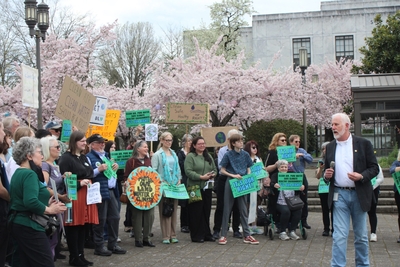
The rise of the progressive caucus and its new members, backed largely by the Working Families Party, began last year, according to Annie Naranjo-Rivera, the minor party’s state director.
During the 2025 and 2026 legislative sessions, progressives and moderates split on the best way to handle the impact of federal tax law changes that are automatically replicated in Oregon’s state tax code. The state Senate failed to vote on a bill passed by the House to disconnect the state tax code from the federal one in 2025, before Congress passed and President Donald Trump signed a law that would have cost Oregon nearly $900 million in estimated revenue.
While progressives favored a full disconnect, this spring the Legislature voted to partially divorce from the federal tax code, preserving nearly $300 million for the current two-year budget cycle.
“It was just so glaringly obvious that if we replicated Trump’s tax handouts to the ultra wealthy that that’s not in the spirit of what we would expect in terms of Democrat values,” Naranjo-Rivera said. “It was counterproductive to the lives of working people across the state.”
Working Families in the primary and general elections backed progressive candidates that ousted moderate incumbents from both parties, including Democratic Sen. Janeen Sollman in Hillsboro and Republican Rep. Kevin Mannix of Salem, and ultimately backed 31 House and Senate Democrats who won election or reelection.
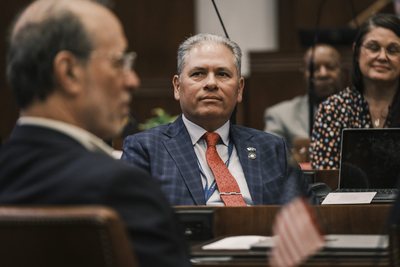
Sen. Mark Meek, D-Gladstone, and mod squad colleague Rep. Emerson Levy, D-Bend, said even with growing ranks, progressives still don’t have the numbers to go it alone on revenue or regulatory policy that the party more broadly can’t get behind. But both said they and all Democrats understand voters cast their ballots angry about affordability and inequality in Oregon and beyond.
“I don’t see the scales tipping one way or the other. There will be places we will find agreement. Those are focusing on costs and affordability, healthcare — there’s full alignment there, and full alignment with colleagues across the aisle,” Levy said. “Where you’ll see differences is any policy that increases taxes on everyday Oregonians. I think at this point, until we do a thorough analysis of all of our costs, revenues and overhead, it’s hard to imagine getting behind any proposal to raise taxes.”
Sen. Courtney Neron Misslin, D-Wilsonville, said across parties and party factions the 2027 session will require “compassionate leadership and courageous policy work” and that she would be among lawmakers pushing back on “bigotry and out-of-balance corporate profits.”
“Across the nation and locally, we know that voters are very concerned about the cost of living and its intersection with access to healthcare, childcare, housing and good jobs,” she said via text.
Revenue
So far, progressive Democrats’ proposals to raise taxes are mainly targeting data centers and Oregonians with $30 million or more in assets.
For instance, Gamba plans to introduce legislation to end enterprise zone and strategic investment program tax abatements for data centers, which this year saved tech companies more than $450 million on property taxes.
The proposed wealth tax backed by the left-leaning Fight For Our Future coalition that includes the Working Families Party, would apply to Oregonians with a net worth of $30 million or more and fund universal preschool and healthcare programs, though programs for both have yet to be fully fleshed out.
Kotek’s Universal Health Plan Governance Board is slated to provide recommendations for how the state can transition to a single-payer system by Dec. 1. Kotek has said she will get statewide universal preschool installed somehow by the end of her term, and has backed off of criticisms of Portland’s Preschool for All program following a late endorsement from Working Families.
“I’m going to have a very pragmatic and as progressive a budget as I can put together,” Kotek said at a recent news conference, while also suggesting that she would not support creating new revenue streams such as the gas tax and license and permitting fees previously proposed by Democrats to fund the Oregon Department of Transportation.
The progressive wealth tax push follows similar actions in other states, such as Washington’s voter approved millionaire tax and Colorado’s recently passed graduated income tax on the state’s wealthiest 3%, and California’s recently failed “billionaires tax.”
But progressive Democrats also signaled they’re open to broader reforms to Oregon’s property tax system, backed by the League of Oregon Cities, including potential changes to two voter-approved measures from the 1990s that limited the growth of property taxes across the state and based property values on a rate-limited assessment rather than market worth. Measures 5 and 50 limited the ability of cities, counties and and school districts to raise the money they need to meet increasing costs to provide public services.
And Gamba said he’ll resurface proposals to redirect some of the state’s budget surplus, typically sent back to Oregon taxpayers, to Oregon schools. While not a direct tax hike, reducing the kicker rebate would mean Oregonians would pay more in state income taxes or receive smaller refunds because the current kicker functions as a refundable tax credit.
Meek is among lawmakers hoping to revive a bill that failed last session that would increase the threshold for the state’s estate tax, allowing $1.5 million to $2.5 million instead of the current $1 million in assets to be passed on tax free from the deceased to their descendants. Meek said he would stay open to any proposals from all colleagues that will lower Oregonians’ cost of living.
He and Levy said kicker reform would be politically difficult because its popular for Oregonians across parties, and both suggested it would be better to allow Oregon’s newish state economist to improve revenue projections that could reduce the size of the kicker, rather than to pass a policy ending it.
“At the end of day, we are all trying to serve the same Oregonians,” he said. “As long as we can agree on what we’re trying to accomplish, we’ll have more successful communications and a session working together, especially as a blue majority state. We need to work together rolling in the same direction instead of fringe groups rowing against the current.”
Gamba said that progressive legislation seen as too bold by House and Senate leadership in the past often turned into a proposal to study the costs and benefits of the proposal. That approach is “just not gonna fly with this group” going forward, he said.
“We have enough members now we can pretty much stop any legislation that they’d want to put down,” he said.
Salem, OR