The story of Maj. James Capers, SC’s most recent Medal of Honor recipient
Nov 11, 2026 | 8:30 am ET
Description
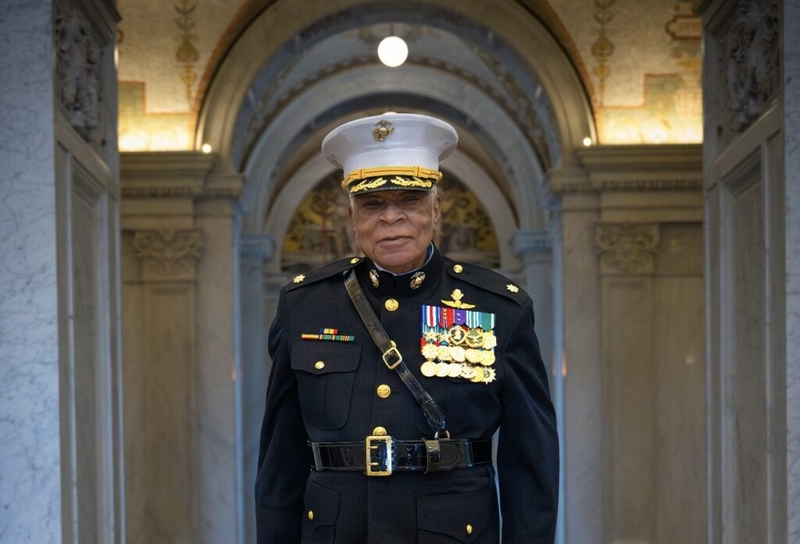
Maj. James Capers, born in Bishopville, became the 34th South Carolina-born Medal of Honor recipient in June 2026. (Photo courtesy of Maj. James Capers)
U.S. Marine Corps Maj. James Capers led his nine-man reconnaissance team to safety following an ambush during the Vietnam War, even stepping off the overweight helicopter several times as it struggled to evacuate as his squad pulled him back on board.
Those actions led to Capers, in June of this year, becoming the 34th South Carolina-born military member to receive the Congressional Medal of Honor. It came more than 59 years after he was severely injured in the firefight and took nearly two decades of supporters fighting on his behalf for the recognition.
Capers, born in Bishopville, was the first Black man to command a Marine recon company and the first enlisted Black Marine officer to earn a battlefield commission. And in the fall of 1967, still recovering from his combat injuries, he was the first Black Marine to appear on a national recruiting poster, only six years after the corps became fully integrated.
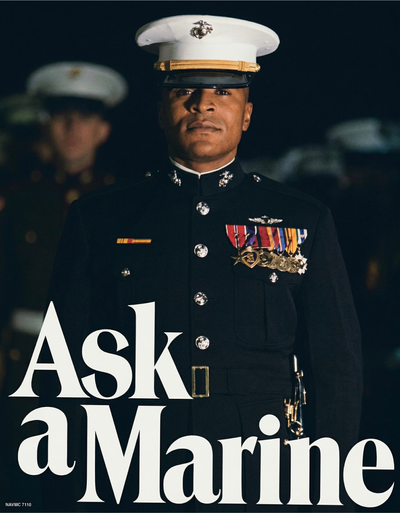
He’s heavily decorated: a Silver Star, two Bronze Stars with combat “V” device (for valor), three Purple Hearts, Vietnam Cross of Gallantry and numerous other ribbons and medals. He’s written a memoir, held speaking tours and was the subject of a documentary.
A medal ‘long-overdue’
But it wasn’t until June 18, when President Donald Trump fastened the Medal of Honor around Capers’ neck, that the 88-year-old officially received the country’s highest military honor that hundreds felt he deserved.
That’s not to say there weren’t naysayers who thought he and his supporters should just give up after several denials. But that wasn’t in Capers’ DNA, and the Marine veterans who championed him weren’t giving up either, said retired Sgt. Maj. Bryan Battaglia, second senior enlisted adviser to the chairman of the joint chiefs.
Bishopville celebrated with a parade in Capers’ honor and a museum exhibit telling his story. The town in the Pee Dee region is raising money for a bronze monument to Capers and Army Cpl. James Davidson Heriot, another Medal of Honor recipient from Bishopville killed in World War I.
U.S. Rep. Ralph Norman, R-S.C., who sponsored the legislation urging Capers’ award, in June called the moment “long-overdue for an American hero.”
“When I first learned Major Capers’ story, I was struck by the magnitude of his sacrifice and the extraordinary valor he displayed in service to our country. It became clear to me that his actions deserved the highest recognition our nation can bestow,” the 5th District congressman said in a statement. “Major Capers’ courage, devotion to his fellow Marines, and unwavering commitment to duty serve as an enduring example for future generations.”
On Veterans Day, there is “no better example of the warrior ethos” than Capers, retired Marine Sgt. Maj. Scott Frye, another Capers supporter, told the SC Daily Gazette.
Capers’ heroism
Capers, who lives in Jacksonville, N.C., near Marine Corps Base Camp Lejeune where he served, has stepped back from giving interviews and public appearances. But his memoir still tells his story.
His squad in Vietnam, Team Broadminded, was weeks away from returning home when it was sent on a mission to scout potential attack routes into a North Vietnamese base camp. April 3, 1967, marked the fourth and final day of their patrol.
Under an ill-advised order, they were sent to backtrack through trails they had already cleared and covered. North Vietnamese forces were lying in wait.
As the team headed down the fourth and final path of the day, a claymore mine went off, killing the lead scout instantly.
“The next thing I knew, I was on the ground, my back up against a tree trunk,” wrote in his memoir.
Shrapnel ripped through his stomach. The blast flung another of Capers’ men on top of him, the man’s back, torso and legs also torn. A third limped over with his foot nearly blown off and the others were equally injured. But the team returned fire immediately.
Capers said they were in “survival mode,” heavily outnumbered 3-to-1 and trying to prevent being overrun and captured.
Running out of ammo, Capers called in air support almost right on top of the team.
He ordered the men to carry out the fallen Marine as he hobbled along under fire, using his rifle as a crutch and leading them to the extraction site.
The helicopter, designed to carry seven or eight people, failed multiple times to take off with nine of them. Capers, then 29 years old, tried to step off and remain behind, despite having a wife and young son at home.
His team wouldn’t let him. They’d become close and respected his leadership on dangerous missions that had included a prisoner of war rescue ordered by President Lyndon Johnson, beach landings under fire in the enemy-heavy Demilitarized Zone and recovery of a B-57 bomber rumored to have a nuclear bomb.
“His story is one of a kind,” retired Lt. Col. Brooks Tucker, who lives in Beaufort, told the SC Daily Gazette. “It’s an American story, because only in America can a guy like this come from very little in life and then become really larger than life with his reputation, his charisma, his promotions, and just his strength as a person.”
Capers’ younger years
Capers was not yet 4 years old when his family left South Carolina under the cover of darkness for Baltimore, fleeing persecution in the Jim Crow South.
The son of sharecroppers, Capers wrote in his memoir: “Blacks were no longer sold on the auction block, but they had no choice but to break their backs laboring in the cotton fields for the white farmers while they dreamed of a better future for themselves and their children.”
After Capers’ father got into an altercation with a family his mother washed laundry for, the sheriff in Lee County put out a warrant for his arrest.
“To this day, I am not sure if the crime was serious enough for him to be hung, but my father believed it was serious enough for him to leave South Carolina in order to survive,” Capers wrote.
But Capers fell seriously ill around that time, so his mom stayed behind with him and two older siblings. A white family in Bishopville took him in while his mother worked, scraping together enough money so they could join his father in Maryland. It’s unclear from his memoir how long they were separated.
While it wasn’t South Carolina, Baltimore was still largely segregated.
“All the people in the neighborhood had one thing in common. They had come from the South, looking for the ‘Promised Land,'” Capers wrote. “They were running from poverty, disease and discrimination.”
SC military-connected arts group helps veterans handle trauma through storytelling
He grew up and attended Carver High School, a Black vocational trade school, where the Marines recruited him and his best friend.
Capers’ career
Following graduation in 1956, Capers found himself on a train headed back to South Carolina to attend basic training in the swamps of Parris Island.
He made it through the brutal training and “for the first time in my life I felt like I really understood what brotherhood was all about.”
After training, Capers went on tours in the Mediterranean and saw fighting in Lebanon. And by 1963, he’d risen through the ranks and was under consideration as a drill instructor.
But his young son, Gary, was partially blind, and Parris Island didn’t have the special school he needed.
“Even if there had been, Gary would probably not have been welcome in it, as a Black child,” Capers wrote.
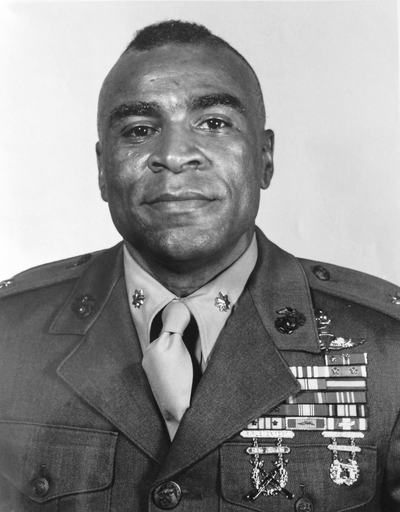
So instead, Capers took a posting at Fort Meade in Maryland.
Then, about a year later, he heard the Marines were looking for experienced officers to lead troops in Vietnam. After talking it over with his wife, Dottie, he chose to give up his Maryland position, far from the horrors of war, and volunteered to deploy.
Following months of training, he boarded an aircraft carrier, the USS Boxer, in early 1966 to cross the Atlantic Ocean with the young Marines he had led. They landed in Nha Trang Harbor in mid-May, joining some 250,000 military members deployed in the war.
Even after his injuries in Vietnam, Capers continued his service, including in Cold War covert operations in Eastern Europe and Africa.
But it wasn’t until decades after his service that the military fully recognized Capers, despite the intentions of Capers’ commanding general in Vietnam to nominate him for the Medal of Honor, Battaglia said. The major general had died in a helicopter crash before fulfilling that pledge, and Capers instead received a Bronze Star.
In 2006, retired Maj. Gen. James Williams, the assistant division commander at Camp Lejeune, began the effort to have Capers’ medal upgraded. He had served under Capers in the 1970s, and in 2010, saw Capers awarded the Silver Star. He then continued the push through regulatory hurdles standing between Capers and the highest honor.
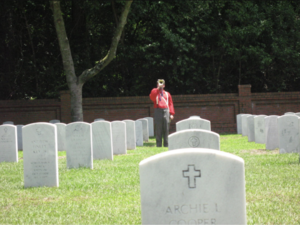
Capers’ wife and son, both of whom died in 2003 and are buried in Arlington National Cemetery, also advocated for him.
The work of the family, politicians and a small group of veterans who call themselves Team Capers paid off this year. It also inspired the group to look into other deserving soldiers who were passed over.
“There are others,” Frye said. “And there are a number of them, sadly, that laid it all on the line, that jumped on grenades, that did a number of things that heretofore we might have thought was the gold standard for receiving the Medal of Honor, but they haven’t. We’ve been digging into those to make sure we exhaust all efforts to make those things right, too.”
Columbia