New outbreak of mpox in Anchorage prompts advisory from state health officials
Nov 06, 2026 | 8:00 pm ET
Description
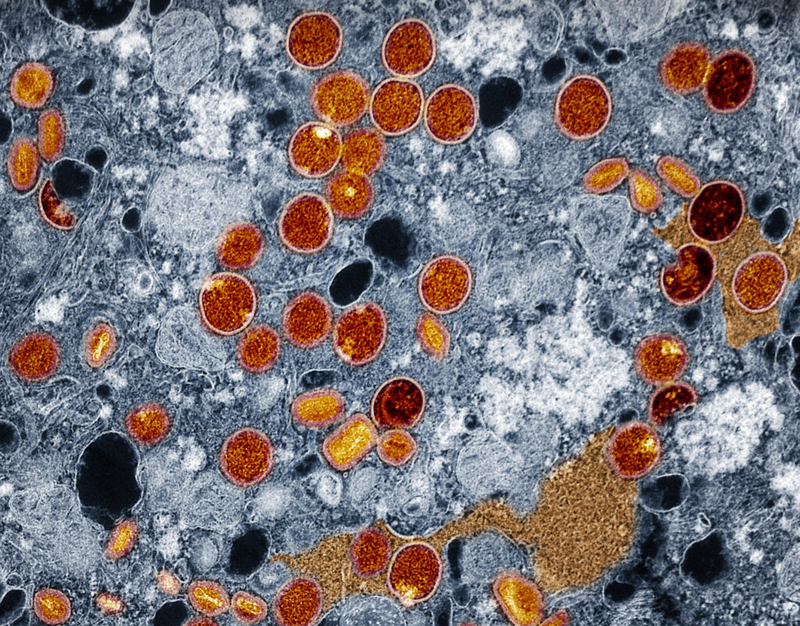
A colorized electron micrograph image shows mpox virus particles, in red and yellow, found within infected cells, colored blue. The virus particles are in various stages of maturity, which accounts for differences in shape. The image also features virus factories, shown in brown, where viruses replicate, mature and assemble. (Image provided by the National Institute of Allergy and Infectious Diseases/National Institutes of Health)
A rare viral disease has emerged in an outbreak in Alaska’s largest city that appears to be expanding, state health officials report.
There are now four new cases in Anchorage of mpox, a viral disease formerly called monkeypox that is spread through close contact and can be fatal.
None of the patients reported traveling outside the state in month-long period before becoming infected.
It is the highest number of annual mpox cases in Alaska since 2022, when five cases were diagnosed in the state amid a global outbreak. Between 2023 and 2025, there were only two Alaska cases.
Three of the Anchorage cases emerged in October and were reported last week through a state Department of Health alert intended to raise awareness in the public and among healthcare providers. The fourth case was reported to state officials on Thursday, said Dr. Joe McLaughlin, Alaska’s state epidemiologist.
The four Anchorage cases are among men who reported no travel outside of Alaska in the past 30 days, Mclaughlin said. That is a contrast with the previous Alaska cases, all of which were among people who had recent travel experiences. Up to now, travel had been implicated in the spread of mpox in Alaska.
Officials are currently trying to track the source of infection, said McLaughlin and Dr. Randi Rollins, a U.S. Centers for Disease Control epidemiologist working with the Alaska Department of Health.
The lack of reported out-of-state travel “does not necessarily establish that the monkeypox virus is circulating here in Alaska,” Rollins said. “They may have had exposure to somebody who traveled to Alaska, and they may be the end of that transmission line at this point. We don’t know.”
Mpox is characterized by lesions that appear on various parts of the body.
It usually takes three to 17 days after infection for symptoms to emerge, Rollins said, and in the first phase, the symptoms are flu-like: “fever, chills, fatigue, headache, sore muscles, and even swollen lymph nodes.” The lesions develop in the second phase, with bumps that are firm to the touch or sometimes tender, she said.
Some people skip the early symptoms and do not have any signs of infection until the rash phase develops, she said.
The sickness lasts a few weeks, and patients are considered to have recovered when all the lesions are gone. Until that last lesion is completely healed, “the person is still infectious and can transmit monkeypox, and that can typically take two to four weeks,” she said.
McLaughlin said the Alaska patients are isolating and recovering. Two of the reported cases were among men who are partners, but it is unknown whether there are any additional links between any of the patients, he said.
Increase in cases nationally
The new outbreak of mpox in Anchorage fits a national pattern. After a lull that followed the 2022-23 global outbreak, cases are on the rise again in the United States. An uptick in infections started in March, the CDC reported.
The virus circulating now is genetically different from the variety behind the global outbreak in 2022, which is called clade II.
The currently circulating virus is called clade I. In Central Africa, the clade I variation had been more deadly than the clade II variation. But the current variation of the clade I virus appears to be not particularly deadly, according to health officials.
Spread of the virus happens through close contact, including but not limited to sexual contact.
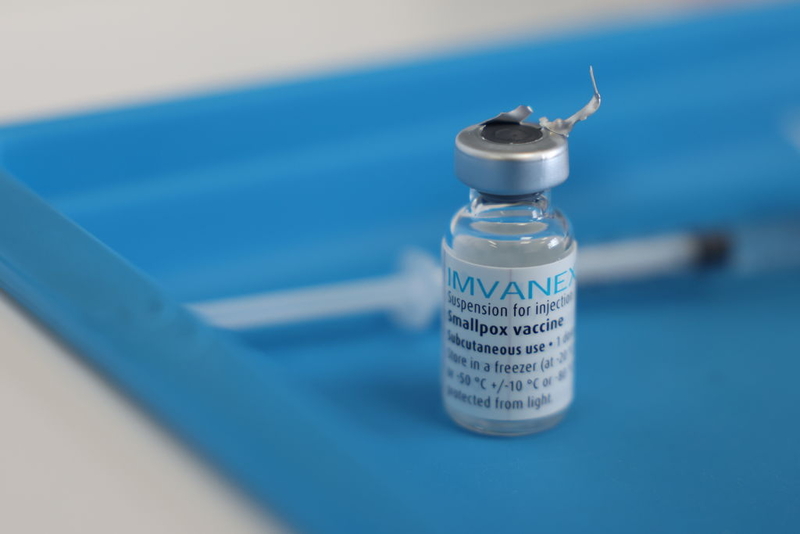
The JYNNEOS vaccine, approved by the Food and Drug Administration in 2019, guards against both clades of mpox, as well as smallpox, a disease that historically killed much of the world’s population but is now considered to have been eradicated.
The vaccine, which is administered in two doses, is available through the Anchorage Health Department and other health providers.
It is recommended for certain groups of people considered to be at higher risk for infections. Those include men who have sex with other men, anyone with exposure to another person suspected of having mpox, people who are traveling to parts of the world with mpox outbreaks and medical workers, such as those employed in labs or healthcare facilities, whose jobs put them at risk of being exposed to this and other pathogens.
The vaccine is effective even for people already infected with the virus, reducing risks even for those who might develop the disease, Rollins said.
For anyone who has been exposed, “it’s recommended that you get that vaccine within 4 days of exposure,” she said. While that time window is ideal, “you can get it up to about 14 days and still see effectiveness at reducing disease severity,” she said.
State immunization records show that since 2022, 851 people in Alaska have received a first dose of the JYNNEOS vaccine and 604 receiving a second dose, Rollins said.
New borealpox cases reported
While healthcare providers are being advised to watch for the resurgence of mpox, there is news about a rarer type of pox disease: borealpox.
Two cases of borealpox, formerly known as Alaskapox, have been diagnosed this year, Rollins and McLaughlin said.
That brings the world’s total number of diagnosed borealpox cases to nine.
The disease, related to mpox, smallpox and other poxes, was first identified in 2015 in Fairbanks. The first six cases were found in Fairbanks and were considered to be mild. Like other pox diseases, they were characterized by skin lesions and some flu-like symptoms.
However, in January of 2024, a Kenai Peninsula man died from borealpox after being infected by what scientists discovered was a genetically different strain of the virus. The patient was in his 60s and had an immune system weakened by treatment for cancer.
This year’s two borealpox cases, like the previous Fairbanks-area cases, were mild, Rollins said.
“It was the lesion that came to the attention of both patients, and they sought treatment for the lesion,” she said. “One patient did experience respiratory illness, fever, muscle aches, joint aches.”
Scientists say borealpox circulates among small mammals. So far, red-backed voles, which are plentiful across most of Alaska, have been identified as a major reservoir. Investigation of cases so far has focused on household pets that appear to have encountered infected voles or other small mammals.
Unlike the case with mpox, there is no vaccine for borealpox. But some scientists are working on developing one, and some are investigating the effectiveness of certain antiviral medicines to treat infections.
Juneau