Wisconsin Deflection Initiative aims to keep people out of the criminal justice system
Nov 06, 2026 | 4:00 am ET

Description
The Wisconsin Deflection Initiative offers peer support, job counseling and other services to help keep people from becoming entangled in the criminal justice system. (Getty Images)
School districts often identify students they call “at-risk” who might have a learning disability or low reading or math scores in order to provide them additional resources and attention to help them keep pace with their classmates and avoid dropping out.
In the Wisconsin Deflection Initiative, the “at-risk” people are in the community at large. They might have mental health or addiction issues, and the objective is to provide support to create stability and help them steer clear of the criminal justice system.
Eau Claire County is one of roughly 11 counties in the state that have a deflection program under the Wisconsin Deflection Initiative. The county started the program in 2024 under an opioid abatement efforts law enforcement grant that involves a partnership between the sheriff’s office, the public health department, human services, and criminal justice services.
“Deflection, in its truest form, is really to try to be a preventative program that we can intervene when people are having difficulties in their lives before a major kind of event happens,” said Brianna Marsden, recovery and justice service manager for the Eau Claire County Department of Human Services
It’s a voluntary program for people who are at least 18 years of age, live in the county, have completed an assessment, have agreed to case management, and have no warrants or pending felony charges.
The Eau Claire County’s deflection program website states that the program “prioritizes connecting people experiencing substance use and/or mental health challenges with the care and resources they need—particularly in low-level, non-violent situations—while promoting healthier outcomes for individuals, families, and communities.”
With so many jails and prisons in Wisconsin filled with people who also have addiction and mental health problems, the deflection program offers a proactive, preventive alternative to incarceration.
“We’re really trying to look at where there are the gaps in our system and how can we help that? How can we prevent these bigger things from happening in people’s lives?” said Marsden.
Those “bigger things” could be accruing a large financial debt or having felony charges, spending time in jail, losing a job or acquiring a social stigma that shadows one’s life.
Currently, Marsden said, there are about 30 people in the deflection program in Eau Claire County, and a total of 50-60 have been served since the program began.
It’s often law enforcement personnel responding to a crisis who make a referral to the deflection program.
“Law enforcement gets sent to many different calls throughout their day, and the vast majority aren’t criminal in nature,” said Eau Claire County Sheriff Dave Reiewestahl. “Whether it’s mental health, substance use, there’s a variety of reasons why we get called, and the hope is that we can pair that person up with somebody in peer support and a case manager, you know, walks alongside that person, so they don’t get involved in the criminal justice system.”
People can also apply for the program or self-report online.
“We get some of our people already connected to some resources in our community, like sober living, who could use a little bit more support, or they’re already connected with peer support from our jail, and community members can send in referrals for other community members,” Marsden said.
To promote the deflection program, the county has also produced informational videos airing at Kwik Trip gas pumps and ads on city buses and social media.
“It’s low-barrier, free services for individuals,” said Marsden. “You don’t have to have Medicaid. You don’t have to have insurance. We’re not charging you for anything. It’s really trying to be in that space to help people when they’re ready for help.”
After applicants fill out an online application, they receive a call within 72 hours to determine interest in the program. Then there is an intake meeting where participants sign an informed consent form and are connected to peer support specialists. The specialists often have struggled with the same kinds of problems facing their clients, but have received training to become mentors.
Marsden said the pillars of the deflection program are case management, helping to secure resources and peer support.
The concept of flagging “at-risk” students, she said, is very similar to the deflection program effort to help “at-risk” people in the community.
“We know something is going to likely happen if we don’t intervene,” she said, “so let’s just intervene so that nothing really big or significant happens.”
The power of peer support
Emily Nichols is a certified recovery coach and operations manager for At the Roots LLC, which provides services through certified peer support specialists and certified recovery coaches.
“The provider often helps with practical things,” she said. “That might include rides. It might be setting up or getting to appointments. It might be completing paperwork or following up on leads for things like housing. Because we know those are the barriers that often derail somebody’s recovery, and once that recovery is derailed, they’re definitely at risk for becoming involved in the legal system.”
Nichols said it makes a huge difference that the peer support and recovery coaches working with clients know first hand what their clients are going through.
“Even if somebody is maybe wary of the system, oftentimes peer support or recovery coaching is an easier way for them to kind of get the help and support that they need without feeling like they’ve kind of been sucked into the system,” she said. “I think it’s easier for people to talk to folks who have been where they are and have actually been successful, to kind of keep that hope alive.”
Her agency does a brief screening with potential clients and asks such basic questions as: “Are you going to answer the phone when we try and get hold of you?”
The agency matches the participant with someone who has a similar demographic and life experience, and they meet once a week.
“Oftentimes we’re meeting with individuals before they’ve done their intake into deflection because we’re trying to get them help as quickly as we can,” she said. “We do some goal setting with the person, kind of figure out if they have any basic needs they need met, and then kind of get talking about recovery capital and what they have going on in life.”
Help can mean different things to different people, from processing past trauma to working on communication skills to getting their most basic needs for food and housing met, she said.
The goal is to help clients manage their lives and not live in a constant state of crisis, but there are times when additional help is needed. Mentors have given clients rides to appointments, helped them deal with the social service bureaucracy and apply for benefits.
“We have people who have said they truly have just never felt listened to before,” Nichols said. “So it was the first time they had somebody who would listen to them without judging or offering unsolicited advice. We’ve had individuals who came to us unemployed and with engagement from the cops, and after six months of the program, some of them have done things like enroll at the technical school. We’ve had people get jobs.”
Some clients, she added, worked on interview skills through the program and were successful in finding employment. Others began attending recovery meetings, “which, while that sounds like a small thing, it’s helping them build a healthy community, which replaces some of the relationships that maybe they need to leave behind them.”
“I think the biggest thing from our perspective is if we can reduce the level of harm that people are facing, whether that’s with the legal system, or it’s by stopping or reducing drug use,” Nichols said.
“We’ve extended people’s opportunity to survive and exist … you cannot put a price on that,” she said.
Nichols thinks the most important thing the deflection program offers clients is community connection, helping them feel secure and participating and living in the community, and confidently exploring interests without falling back into destructive habits.
“Oftentimes, the people that end up in the deflection program just don’t have anyone else who is supportive of them in that way, and we do very little advice giving, and a lot of guided listening,” she said.
‘This has helped me the most’
Mae is a young woman who has struggled with addiction. She had recently been released from jail when she learned about deflection. At first she was skeptical and asked, “What’s the catch?”
But then Mae, who meets with a therapist, sat down with her peer support specialist and liked the fact that the woman helping her had similar experiences.
“It was great because I was able to relate to her on different things during our meetings, like domestic violence things, recovery-related things, mental health and substance abuse,” she said. “It didn’t feel clinical. Out of everything that I’ve tried, that’s like recovery-related oriented stuff, this has helped me the most and I feel the most supported and the most seen and understood.”
Mae meets one hour a week with her peer specialist, and they talk about how her week has gone. They work on positive self-talk and learning coping skills to support Mae’s recovery and also address her anger.
The peer specialist doesn’t just find resources for Mae; she shows her how to research and look for resources herself.
“She shows me, and we do it together so that I don’t feel like I don’t know how to look and find resources on my own when we are done meeting,” Mae said.
In two months, Mae will leave the deflection program and transfer to Comprehensive Community Support (CCS), a voluntary Medicaid-funded community-based psychosocial rehabilitation program, where she will keep her peer specialist and have a team to support her as she pursues recovery.
“I would not have known about it (CCS) if it wasn’t for being in the deflection program,” she said.
Mae knows another person in deflection, also struggling with addiction, who was referred to by a law enforcement officer, and she says that person is doing well.
“And I hear people talk about it (deflection) in support groups or recovery groups like NA (Narcotics Anonymous) or AA (Alcoholic Anonymous), and they also speak highly of it,” she said.
Just being able to talk about her pursuing recovery, she said, is growth because in the past she’s always pretended not to have a problem.
“I’m getting more comfortable talking about it,” Mae said. “I think that’s part of just accepting what I’m going through and being okay with it and coming out on the other side, because I haven’t been this far yet in my mental health and substance use recovery. It’s like coming through on the other side and being OK to talk about it and accepting myself and what I’m going through and giving myself grace.”
Mae has been so inspired by her growth and working with her peer support specialist that she envisions herself one day being a certified peer specialist herself.
Sheriff support
Sheriff Dave Riewestahl is very supportive of the deflection program.
“Historically, law enforcement has really three options when responding to the needs of the community,” he said. “We can leave that person there. We can arrest that person if they’ve committed a crime, or if they’re having a medical or mental health emergency, they get to go to the hospital,” he said.
“Deflection gives our staff a fourth option. Yes, that person remains in the community, but we don’t just walk away. We’re able to get them linked up with DHS, with a case manager, and start working on that individual’s needs.” Peer support, he said, seems to be the … “secret sauce”: “They have a greater rapport, a greater ability to affect that person than somebody with a badge.”
Riewestahl said that when the case manager in his office talks with Marsden about people in the deflection program and he hears names he knows from previous interactions with law enforcement, it reassures him that those people have someone in their lives who can make a positive difference.
“Nobody wakes up and says, you know, I want to be homeless, or I want to be a criminal,” he said. “There are a multitude of reasons why somebody ends up in the criminal justice system — underlying traumas, historical trauma, family trauma, mental health, AODA, you name it. The hope is that we can work with that person sooner when the problems and the issues are maybe easier to fix. Because once somebody gets incarcerated and has a criminal record, the barriers just get bigger and harder to overcome.”
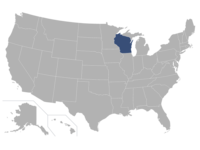
Madison, WI