Democrats won big on Tuesday. What’s next for American democracy?
An enormous blue wave crashed over all levels of government this midterm cycle. Congressional seats, governor’s mansions and state legislatures flipped from Republican to Democrat, some in surprising fashion. Democrats claimed “trifecta” power in some state capitals, broke supermajorities in others and won other influential statewide offices.
For months, the Trump administration tried to assert federal control over the election process to bolster Republicans’ chances of maintaining power. President Donald Trump pushed GOP-led states to gerrymander their congressional districts, demanded state voter rolls through legal challenges and threatened to send armed federal agents to the polls.
Despite fears about possible interference or intimidation heading into Election Day, voters turned out en masse and have shifted the course of policymaking over the next several years in their states and on Capitol Hill.






In Episode 53, we’re reflecting on the state of American democracy, election integrity and what Tuesday’s results could mean for policymaking in reshaped statehouses.
States Newsroom democracy reporter Jonathan Shorman and Evening Wrap newsletter writer Danielle Gaines will chat about the major trends from this election, what surprised them and what could be next.
Episode produced and edited by Mallory Cheng. Music for Stories From The States composed by David Singer.
Got questions? An episode idea? Email us at [email protected].
Subscribe to Stories From The States on Apple Podcasts, Spotify or YouTube.
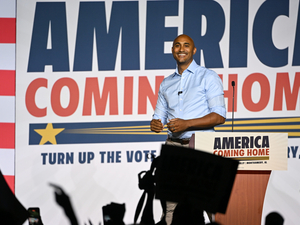
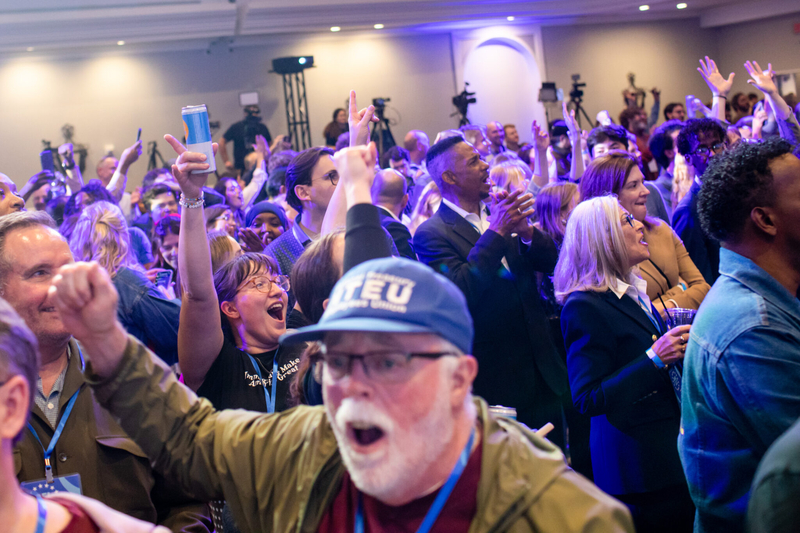
Photo: Attendees celebrate as results roll in at the Democratic-Farmer-Labor (DFL) Party’s watch party, Tuesday, Nov. 3, 2026 in St. Paul, Minnesota. Every Minnesota House district voted more blue than in 2024, leading to a DFL trifecta in the state government. (Photo by Nicole Neri/Minnesota Reformer)
Stories From The States is a production of States Newsroom, the nation’s largest state-focused nonprofit news organization, with reporting from every capital. At this pivotal moment in American democracy, our veteran journalists from all 50 states are reporting the consequences of government decision-making. By zooming in on one story each week, Stories From The States contextualizes and gives a human voice to what is happening now.
Transcript was created using an automated software.
Chris Fitzsimon
This is Stories From The States. I'm Chris Fitzsimon. Thanks for being here. There is certainly a lot to catch up on this week after this past Election Day. Democrats had major wins across the country at all levels of government this midterm cycle. Congressional seats, governors' mansions, and state legislatures flipped from Repub...
Transcript was created using an automated software.
Chris Fitzsimon
This is Stories From The States. I'm Chris Fitzsimon. Thanks for being here. There is certainly a lot to catch up on this week after this past Election Day. Democrats had major wins across the country at all levels of government this midterm cycle. Congressional seats, governors' mansions, and state legislatures flipped from Republican to Democrat, some in rather surprising fashion. Democrats claimed trifecta power in some capitals, broke supermajorities in others, and won many other influential statewide offices. For months, the Trump administration tried to assert federal control over the election process to bolster Republicans' chances of maintaining power, but voters turned out in mass and have shifted the course of policy making over the next several years in their states and on Capitol Hill. So, what does it all mean? Where could that lead us? What's next for our democracy? To help us chew on all that, is States Newsrooms democracy reporter Jonathan Shorman and States Newsroom newsletter author Danielle Gaines. Hi, Danielle and Jonathan, how are you guys? I hope you caught up on your sleep finally.
Jonathan Shorman
Well, there's not enough coffee in the world, Chris, but I'm doing what I can.
Danielle Gaines
Yeah, getting there.
Chris Fitzsimon
Well, there's so many things to get into. I wondered if we should just start this conversation with an overall, and we'll get into many specifics on these various topics. But if I had to ask you all, was there a surprise for you on election night? What what what was surprising?
Danielle Gaines
For me, it was just the scale and the pace and the you know I don't know that I was expecting so many 8pm. race calls, and you know I was prepared to look at a few dozen toss up races, and then it was like things coming from the the far columns, the unattainable columns, getting called pretty early.
Chris Fitzsimon
Yeah. What about you, Jonathan?
Jonathan Shorman
You know, I would say what was surprising to me actually was you know around maybe kind of midnight Eastern time to start to see Trump giving these interviews where he was saying, "I accept the election results," and I'm sure we'll get into that, but that was surprising to me as someone who's who's covered this extensively and was really, you know, quite geared up for possibly days of you know contesting things and statements about stolen elections and and just the kind of rhetoric that we've seen previously. It was, it was honestly, it was, it was surprising to just not see that happen this time.
Chris Fitzsimon
Yeah, I was going to talk about some specific races, and I want to focus as much as we can on the state level. But obviously, this was a national election and a national wave. Jonathan, you've written a lot about before the election about efforts by the Trump administration to either interfere with, or slow down, or challenge the elections before the election, and maybe possibly what could happen after. I wondered if you were surprised that there weren't more reports of that after the Supreme Court obviously ruled against their efforts in California. There was a lot of talk of observers. Was there? It just didn't feel like that the the fears materialized.
Jonathan Shorman
Right. And I think there's kind of I would put this into two different buckets, and one is in terms of the fears of what might have happened on election day and then the days after. Basically, so far we've seen essentially nothing happen, and I think that's you know I'm not going to get into the the psychology of what's happening in the White House, but clearly the the results were just so overwhelming in so many places that I think you know it's there's basically no realistic way to to claim fraud. Maybe if we had had you know close races in a couple states, maybe things would have been different, but then there's this other bucket, which is efforts to influence or control or or kind of otherwise place pressure on election officials before and leading up to election day, and that very much did happen. You know, there was a number of court cases. You mentioned the the the case over the ballot counting in California, and really over the last year, there was there was quite extensive efforts to by the Trump administration to kind of open up a greater federal role in the running of elections. Even though under the U.S. Constitution, you know, states have have the responsibility to administer elections. So, you know, if you talk to to voting rights advocates and people that watch the space, they'll say, you know, the interference was unsuccessful, but but the efforts were in in the pre-election space, just not not on or or after election day.
Chris Fitzsimon
Danielle, you keep up more than anybody I know with what happens in all the states because it's your job to figure this out and and explain it all to us. I know a lot of our editors and reporters. For a while, months ago, there were rumors that ICE agents or federal agents would be at the polls. Did that happen? Didn't seem like much.
Danielle Gaines
I think we saw very limited incidents at the polls, as Jonathan was explaining. In Michigan, there was a moment where some Michigan. Election officials reached out about some federal observers at one site, and they reached out to the Justice Department and said they had violated the terms of their agreement to be there. I also saw some stories on election day of places that had been alerted that federal election monitors would be coming, and the leadership, the local leadership there, said that they were unaware that they had ever arrived. So if they did, they were so unobstructive that their presence was not known. So that was kind of interesting.
Chris Fitzsimon
Yeah. One more question, sort of in this vein, I guess for you, Jonathan, is it feels difficult for folks to claim that the election was somehow fraudulent or there was misconduct on two accounts. You mentioned the margins, but a lot of the most contested elections were in states run by Republican governors, Republican election officials.
Jonathan Shorman
Right, and that's always been kind of the the interesting wrinkle here is within kind of the voter fraud, stolen election conversation is the kind of the paradox, if you will, of being put in a position of having to claim that there was some kind of fraud or interference in a state where Republicans control the voting process, and you know that's always been kind of a weird position for these Republican officials to be in, which is why you know a lot of times in the past, you'll have Republican secretaries of state say, "Well, you know, I don't know. Maybe there was fraud in Pennsylvania or or Michigan or some other sitting state, but but in our state, you know, we know that elections are secure because of X, Y, Z, and so they kind of, you know, Trump made it easy for them this time. He didn't put them in that kind of rhetorical box and force them to respond, so they kind of had an out. But but yeah, that's always been kind of the the paradox inherent here when when we have these kind of voter fraud, you know, conspiracy theory type conversations.
Danielle Gaines
Well, I don't I don't want to jump ahead, but one of the things that struck me when I was going through election results was you know that this was this election where we were geared up for mistrust and election integrity and all of these questions, and Democrats actually ended up winning some of those offices. So Democrats have gained power not only in governorships and Congress and legislatures, but in the Secretary of State's offices. And so I think it was three states where Democrats have now won Secretary of State, flipping that from a Republican position. There are two states still uncalled, and two states where a Democratic governor now will have the power to pick that administrator. And that's just kind of shows the scale of of what happened, and just kind of how how different it is than maybe some people were expecting heading in.
Chris Fitzsimon
Yeah, I want to. You mentioned governors to jump in with one note, and a lot of people have talked about it. We have now five, I believe, elected Black governors in the United States. I think that's more than we've elected in our history total.
Danielle Gaines
Yes.
Chris Fitzsimon
Which is pretty shocking. And we have the first Indigenous governor in New Mexico. There are a lot of. It feels like the the country looks a lot different in terms of state leadership now, or will in January.
Danielle Gaines
Yeah, I mean, in Georgia, Keisha Lance Bottoms is the first ever Black woman governor, and then you have first Black governors in several states: Florida, Nevada, Wisconsin. In addition to...
Chris Fitzsimon
Your home governor.
Danielle Gaines
Yeah, my home governor. He got reelected, Wes Moore. And then you have Deb Haaland elected as the first Native American woman governor in New Mexico. Peggy Flanagan is going to be the first Native American woman to serve in the U.S. Senate. Chris Pappas, first openly gay senator from New Hampshire. I'm going to miss some, but there are quite a few. We we we rounded all of them up at the end of Evening Wrap one day because there are just so many. And then that's like state level and federal level. But once you get into state legislatures, you have a lot of other people making grounds as well. So there was a transgender lawmaker elected in Alabama. Quite a few people making history in different ways this election season.
Chris Fitzsimon
I think an underreported story always, because we're all focused, understandably, on Trump or the Congress or whatever. Is but the effect on state legislative races or the state legislatures around the country and super majorities. It feels like there was a lot of shift towards at least either Democrats taking over state legislative bodies, states now that are completely controlled with the House, the Senate, and the governor, or at least super majorities broken.
Jonathan Shorman
Right, there were several Republican trifectas at the state level that were broken. I think we had a couple Democratic trifectas created, and then a number, maybe over 10, if I'm not mistaken, of but certainly a large number of legislative individual legislative chambers that flipped from Republican to Democratic control, including I believe in in Texas, which is kind of extraordinary.
Chris Fitzsimon
Amazing, Danielle. Why is this for folks who don't follow this every day? Like we all do, what does that mean in terms of legislative? Even breaking a supermajority is a big, is a significant thing in a state.
Danielle Gaines
Yeah, I think you know there's a lot of talk about the trifectas, just because it's like it's big and bold, and obviously consolidated control to one party affords you many things. In Pennsylvania, they're already talking about their top priorities now that they have a unified government, but one of the things that I was looking out at was the breaking of supermajorities because obviously when you hear that a supermajority is broken, the first thing your mind goes to is like the governor's veto power is now in check, right? But there are so many other things that a supermajority affords lawmakers of a certain party, so they can cut off debate early. They can, they have the votes if they're working in unity with one another. You know, they can thwart hearings, change rules. You know, get nominees through who might have serious objections, cut off debate. All these things, and so having that supermajority in check will really give minority parties more say in the state government, even if they're still operating at a significant minority. There were supermajorities broken in several states in at least one chamber, so states that you might not expect also, so like Florida, Indiana, Kansas, Missouri, which obviously used its supermajority power to push several things onto the ballot this election season, Ohio, South Carolina, and I think there's still some that could be called. So.
Jonathan Shorman
Yeah, I mean, generally, the the smaller your majority is in a chamber, the more influence any single member of your caucus has. And so, if you have you know Republican-controlled chambers, but you have maybe a handful of moderate Republicans in there, they are more influential. Or to the extent that you're having control or difficulty corralling your caucus to vote a certain way, you know the other party kind of gains leverage there. If you have to to turn to the other party for votes on occasion.
Chris Fitzsimon
I know we're jumping around a little bit, but I was I was thinking more about Congress in my head about the Jonathan. You've written a lot about redistricting. There, that was sort of the story for a while when President Trump called on Texas to redraw the districts in an in an off year, and then there was a scramble of Democratic and Republican states sort of fighting. How did all that shake out, and how do we assess that now, looking back at it?
Jonathan Shorman
Right. So, I mean, it's very clear that the Republican redistricting gerrymandering project failed. I think you know not every race is called, but I mean, right now we're on track for essentially Republicans that have no net gain in the states where they they redrew districts, and very very few of the targeted districts will have flipped from Democrat to Republican. So not only did they not gain anything, which could you know, just be attributed to the size of the wave, but they also didn't pick up the seats that they specifically redrew to be more favorable. I think probably that your starkest example is going to be in North Carolina, where they targeted a Republican seat, and I think Democrats are on track to maybe gain six members in in their House delegation. Just a you know a massive kind of repudiation of that effort. And on the flip side, Democrat even though you know there was a lot of nervousness among Democrats about how few states on the Democratic side were able to respond successfully and gerrymander their own states. It was actually the the Democratic gerrymandering efforts were successful. You know, California gerrymandered after voters approved a measure there, and and so they Democrats want to get additional seats in California, and then also in terms of the future, voters in Maryland approved a measure on Tuesday that will kind of pave the way, and I'm sure Danielle can talk to this, pave the way for possible gerrymandering there. And I think Governor Moore indicated he he wanted to pursue that.
Chris Fitzsimon
Danielle, that was a giant fight in the Maryland legislature.
Danielle Gaines
Oh, it's been such a long fight in Maryland. It goes back to when Maryland, you know, surprisingly to some, had a two-term Republican governor who tried to, you know, move the state to an independent redistricting process, which results in a, by the way, seven to one Democratic majority in the state, or six to seven one, depending on you know how it gets drawn. So this is a real big fight over one possible seat in the state. My my favorite part about all the gerrymandering debate in the past few days is that I learned the word dummymander, which was not something that I knew, despite covering the gerrymander fight in Maryland for six years.
Chris Fitzsimon
And what is I've heard that too. So dummy mandering is redistricting that backfired. Is that what we
Danielle Gaines
Basically. I mean, it means that if you, it's when you break a district to try to create more seats for your party, but you broke it poorly or you just diluted too much the power, and then in a certain in a wave election, especially, it backfires.
Jonathan Shorman
North Carolina is probably the example.
Danielle Gaines
Yeah.
Chris Fitzsimon
Right. Yeah, I live in North Carolina, as you know, and the delegation here was 10-4 Republican. And if the results hold after some maybe recounts, it'll be 10-4 the other way, which is really astonishing. But interestingly, there are now advocates, people, you know, the big battle over independent redistricting and good government folks who who don't want politics to influence that there are some people who oppose independent redistricting who are using this wave election now to say why do we need redistricting why do we need independent redistricting it's possible even with gerrymandered lines that the that the party out of power can win I
Jonathan Shorman
mean yes, but I think the other side would say that what it took was a post Watergate 1974 style election to offset that, and so the the chances that I mean I don't I can't predict the future, but but we're looking at essentially kind of a once every 50 years half a century type election, and so...
Chris Fitzsimon
Haley's comment election, right.
Jonathan Shorman
Right. So I mean, barring that kind of massive swing in in public and sentiment, gerrymandering can certainly be effective.
Danielle Gaines
Right. I do wonder how strong the districts will be in another two years, four years, six years. Then, you know, it's not necessarily that the gerrymandering effort failed. It's that it failed in this particular election.
Chris Fitzsimon
And and will the Democrats who took over chambers go try to redraw the maps themselves now? I mean, where does it all end if they if they're worried that in a non wave election they won't win? I mean, it really does. It just goes on and on. Another question I think is really interesting is Annie Andrews in South Carolina, I think surprised a lot of people by winning in that state. But what I thought was really interesting is Georgia, Texas, other places. Not only did the top of the ticket win, but almost every statewide office in Texas and Georgia. I mean, the the the wave went all the way down in some states. Other states like South Carolina, it just sort of was at the top of the ticket.
Danielle Gaines
Yeah, I talked about the Secretary of State's races being really interesting to me. I think also wins by the Democrats at the Attorney General level are really interesting. So in Georgia, Iowa, and Texas, that flipped from Republicans to Democrats, and I think Jonathan more than anybody, might be able to talk about just how pivotal attorneys general, state attorneys general, have been in this Trump administration. They have filed the lawsuits, filed the cases that have thwarted, delayed, amended policies that that Trump administration has put forward as quickly as they have put them forward. I mean, it's like new policy lawsuit, and so some of those Democratic AGs, you know, have to be getting tired. So now there's new blood to kind of fill in the ranks, and I think it will really color, you know, the final two years of the Trump administration for sure.
Jonathan Shorman
Right. The the the geography in a weird way, of and I at some point I need to do a story on this, but the geography of the state AGs is actually really interesting in terms of where you have Republican and Democratic AGs, what federal circuit courts they are located in. This helps determine where lawsuits are filed. So that's why you see Republicans constantly filing litigation in Texas, and specifically in a certain you know U.S. district court in Texas, where they have you know a good chance of getting a favorable favorable decision that gets up to you know a favorable circuit and possibly the Supreme Court. So now, when you're looking at a Democratic AG in Texas, suddenly the Texas path is cut off. So you will not see kind of Republican-led lawsuits, at least from AGs filed in Texas. They will have to to find some other state and kind of find a new map, you know, to kind of get their cases up through the appellate level and hopefully up to the Supreme Court.
Chris Fitzsimon
Well, am I right that in after the 2020 election, wasn't it Paxton in Texas that filed one of the lawsuits challenging the results that a lot of the other AGs signed onto? I think as an example.
Jonathan Shorman
Yes. Yeah, there was a few lawsuits, but yeah, I think there was the Texas lawsuit which Missouri signed onto, and I think there was a couple others. But I mean, they didn't go anywhere, obviously. But yeah, that's an example of the kind of litigation that that can be important.
Chris Fitzsimon
Yeah, the other question I wondered about, both in legislative races, and we sort of touched on this about redistricting. Some of these districts are heavily Republican, heavily. Republican that Democrats won, and it was a wave year. So, are we expecting, or do is there a natural course selection where we're sort of returned to the mean? I mean, there were people in some states who barely campaigned, barely had any money, who won election over people with big big war chests, and you have to wonder: are those are there? You know, is it a is it a realignment or is it as you mentioned sort of a a 50 year event?
Jonathan Shorman
I mean, I tend to think it's it's the from what I see from the results, this is more of a repudiation of Republicans than in kind of a realignment toward Democrats. So I think a lot of these races are not necessarily going to be secure in two or four years when they, or six years when they are back on the ballot, which isn't to say obviously you always want to be the incumbent. Incumbency has a lot of advantages, but you know I would it would probably be a mistake for for Democrats to see this as some kind of you know new generational embrace for their party. I don't think that's really borne out in the exit polls and kind of what we know of what was on voters' minds.
Chris Fitzsimon
It also felt like getting again back to sort of the statewide officials, Danielle. The Midwest was really a focus. Those felt like there were a lot of big races there. That I think if we would have been talking a couple years ago and somebody would have suggested that Iowa, Kansas, that the that they were the even Ohio were the were the places where we were watching everything so closely. People would have been surprised.
Danielle Gaines
Yeah, I think I think it's really interesting. I think you know, of course, Iowa has that ability to make surprise moves. You know, Barack Obama, whatever, almost 20 years ago. My goodness. But and then you know, in Ohio, I think it was really interesting. I think in Ohio, it also was really Vivek Ramaswamy certainly did party no favors, and I think that ad infuriated a number of voters who turned out and then apparently you know voted a whole ballot, and I think in you know Minnesota probably energized a lot of folks in the Midwest. The Trump administration's moves there. I have a lot of family in Minnesota. I never kind of expected some folks who I saw posting about Operation Metro Surge in the way that they were, and so I think there were various things that kind of galvanized various parts of the electorate in in the Midwest in some some surprising ways.
Chris Fitzsimon
Yeah, and actually, I guess the election is not over. In in many, there are a lot of some local races that haven't been decided. There are two big Senate races that are still out there. Jonathan, one of them is in Alaska, where I think a lot of people who don't live in Alaska and follow it closely are confused. Can you help us understand what's happening there?
Jonathan Shorman
Right. So I think, as most people know by this point, there is the the two I call them the Dan's Sullivan up there. You know, Senator Republican Senator Dan Sullivan, the incumbent running against Democrat Mary Peltola, who was previously served in Congress, and then you have Dan J. Sullivan, who is the what you know has been kind of seen in Alaska by a number of people as a spoiler candidate. He drew very little support, but as they're counting the votes in Alaska, it takes a long time because yes, they have election day voting, but but you know it's very much of the state is very remote and and take it literally just takes a long time for some of these ballots to to kind of arrive and get counted. So if under Alaska has ranked choice voting, so if at the end of ranked choice voting one of the candidates is above 50%, 50 plus one, that that's the winner of the race. But if any of those candidate, if no candidate achieves an outright majority, then they'll go through the ranked choice voting process, where you know votes cast for voters who who who voted for one of the you know the the lesser candidates will be reallocated until they get to someone with a majority. Please don't ask me to explain that any more further, but it can take weeks to go through this go through this kind of ranked choice process. So we potentially won't know for several weeks who the actual victor is in Alaska. The good news for all of us following this, maybe not good news for Alaska voters, but the good news for the rest of us is this does not decide the control of the Senate, but it does affect the margin. So this is something we we might be watching for a while.
Chris Fitzsimon
And the Trump administration, and you've reported on this as have our folks at the Alaska Beacon tried sued to try to. Stop the certification of the election if Dan Sullivan didn't win. That was that has been defeated in court. Is that suit still alive, or are we just is are we waiting to see what happens?
Jonathan Shorman
It was dismissed by a district court judge. I think there's maybe some possibility that it could be kind of revived at the appeals court level, but so far we haven't seen that move forward. It is, according to legal experts I've spoken to, I mean it is even less of a less of a strong case than the California case was. So I think there's basically zero expectation from election law experts that this case would would go anywhere that it would get a favorable decision at the appellate level. So maybe it will eventually get appealed up to the Supreme Court. But I think there's it's widely seen as basically a lawsuit that's going nowhere.
Chris Fitzsimon
Danielle, we'll give you the last word. What are your final your final thoughts about this insane election season?
Danielle Gaines
Well, I think one of the conversations I looking at that I think is really interesting right now is what's the Democratic strategy will be going forward. So you talked about like what's the durability of the results from this election, and so you have people talking about different strategies, like is it to focus on accountability or impeachment or other things at you know the state and the federal level, or is it you know passing policy, doing it quickly, trying to do all the things that everyone says need to be done, lowering costs, all of this sort of thing. And it'll be interesting to watch what kind of balance they try to strike and moving forward with that power.
Chris Fitzsimon
And in case people are aren't tired of politics, the presidential season will be upon us, or basically already is. So for the 2028 election, so we'll have to have you guys back. Thank you very much for both your time.
Jonathan Shorman
Thanks, Chris. It's good to be here.
Danielle Gaines
Thank you. Thanks.
Chris Fitzsimon
And that's our show for this week. Thanks for listening to Stories From The States. I'm Chris Fitzsimon. Mallory Cheng produces and edits the podcast. David Singer produced our theme music. To stay up to date on all the latest episodes, subscribe now to Stories From The States, a podcast from States Newsroom, available wherever you listen to podcasts, you can read the latest news from across the country about what's happening in state capitals and the election results by visiting newsfromthestates.com. Thanks for listening. We'll talk to you next week.