North Dakota’s historically low voter turnout attributed to lack of competitive races
Nov 04, 2026 | 6:26 pm ET
Description
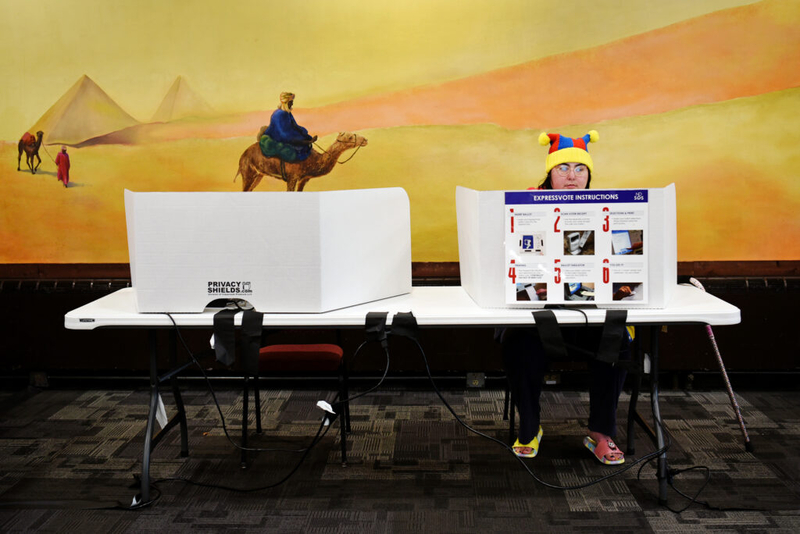
Jamie Macias votes during the national midterm election at the El Zagal Shrine Hall in Fargo, North Dakota, on Nov. 3, 2026. (Photo by Dan Koeck/For the North Dakota Monitor)
Voter turnout in North Dakota’s general election sagged to a low point of just under 40%, a dismal showing political observers connect to uninspiring races, voters’ busy lives and enough political fatigue for some to sit this one out.
About 39.8% of eligible voters cast ballots, the lowest general election turnout in the last 50 years, according to Secretary of State Michael Howe’s office.
“There’s no sugar-coating it: 40% turnout is not something that we want. We want to figure out anything we can to get that number higher,” Gov. Kelly Armstrong said Wednesday.
Voters defeat free school meal ballot measure in North Dakota
The ballot had no real competitive elections or compelling candidates, said Mark Jendrysik, professor of political science and public administration at the University of North Dakota. Even the two ballot measures weren’t enough, he said.
Measure 1, to require 60% voter support to change the state constitution, was somewhat technical, and Measure 2, for free K-12 school meals, just didn’t capture people’s imaginations, Jendrysik said.
Ballot measures don’t drive turnout the way candidates do, said Armstrong, a former state GOP chair.
Howe attributed the low voter turnout to a lack of passion for any particular statewide candidate or competition on the ballot. He said he thought turnout might reach 46%.
“I did not think it would be this low,” Howe said.
People in other states were passionate about candidates and issues leading to high turnout often motivated by fear, anger and frustration, Howe said. Those are emotions he said he did not sense among constituents about North Dakota state officials while he was campaigning.
Voters approve North Dakota governor’s first appointees, reelect all Republican incumbents
It was clear Republicans would sweep statewide offices, and their Democratic challengers just didn’t have compelling personalities or the resources to compete, Jendrysik said.
“When you have a one-party state like this, you just reduce the incentive for people to come out to vote, and I think that’s what happened,” Jendrysik said. Democrats struggle to compete and even recruit candidates in rural areas, he said.
Former Democratic lawmaker Josh Boschee’s mayoral win in Fargo in June might be the Democrats’ highlight of the year, but Fargo is growing and becoming different from North Dakota in that Democrats have more appeal there, Jendrysik said.
Democrats are closing the gap on Republicans in North Dakota based on Tuesday’s results, said Bismarck-Mandan Democratic-NPL Director Bob Valeu. Though the national trend favored Democrats, North Dakota remains a tough landscape due to legislative redistricting “extremely” favoring Republicans and a decades-long GOP “lockdown on governance in the state as a political party,” he said.
“I believe politics is a marathon, not a sprint, and when things start to really change in North Dakota from an economic reality and it hits home with working families, I think voters are going to recognize that the Democratic Party has something to really offer them,” Valeu said.
Barely 40% voter turnout is awful, former Republican Gov. Ed Schafer said.
“It worries me because we’re supposed to be a government by the people, and people can’t bring themselves to vote before they go to work or vote at 7:30 at night or after dinner. They just don’t do it, and I’m very disappointed. I’m not sure what the answer is,” Schafer said.
Perhaps loyal Republican voters fed up with the Trump administration simply stayed home, he said. Maybe the ultraconservative takeover of some GOP legislative districts led some Republicans to sit it out because of intraparty disagreements or “participation fatigue,” he said.
New faces, new leaders and a few more Democrats will shape North Dakota’s next Legislature
North Dakota keeps electing Republicans, probably because there is “no reason to vote for a change in political philosophy at leading the state,” Schafer said. North Dakota’s economy is good, unemployment is low, the state is putting money into property tax breaks and social services, he said.
In some ways, North Dakotans don’t have many excuses not to vote, said Cody Schuler, advocacy manager for the American Civil Liberties Union of North Dakota. Voting is made to be easy in North Dakota, which doesn’t have voter registration and allows voters to bring updated address information for outdated IDs to the polls, he said.
But people also are busy with their own lives, and unless they are passionate about an issue or a candidate, it’s easy to forget to vote, Schuler said. He pointed out that North Dakota’s ballot had no U.S. Senate race, leaving the state’s sole House seat at the top of the ticket in a year that also had no presidential or gubernatorial race.
“Unless there is something that sparked you to go, it can be easy to put it on the back burner, to forget,” Schuler said.
Howe said his office will continue its civic engagement initiative to educate the public about voting and elections in North Dakota, such as visiting schools and other organizations.
“We want to assist any way we can in getting the word out about how to vote, when to vote, why to vote, all of it,” Howe said.
The June primary – a decisive election for Republicans who often go on to win the general election – saw just under 21% turnout.
North Dakota Monitor reporter Michael Achterling contributed to this report.
Reach Monitor reporter Jack Dura at [email protected].
Bismarck, ND