Democrats poised to take all five NH Executive Council seats after dramatic election night
Nov 04, 2026 | 2:55 pm ET
Description
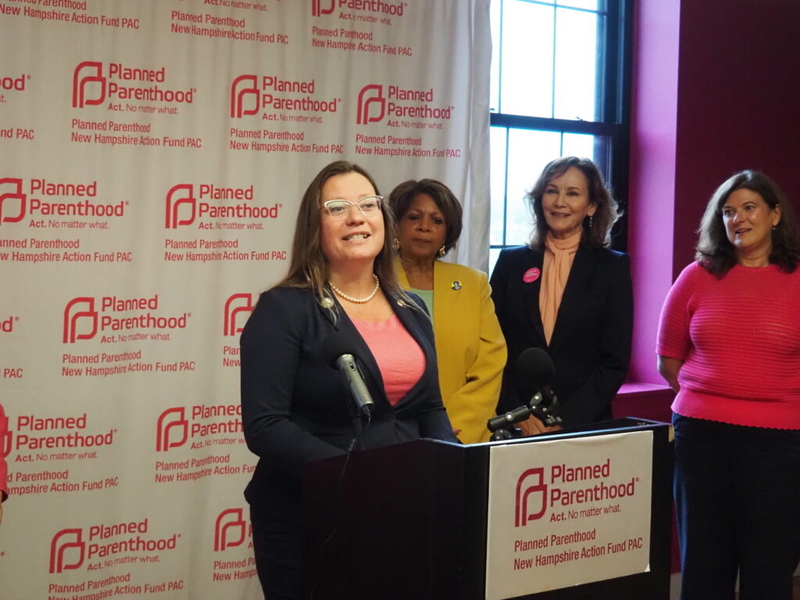
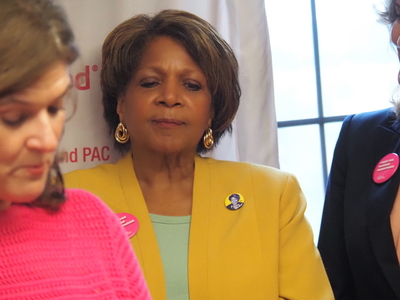
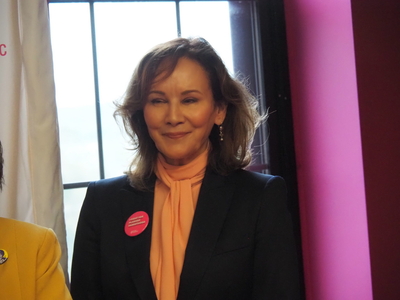
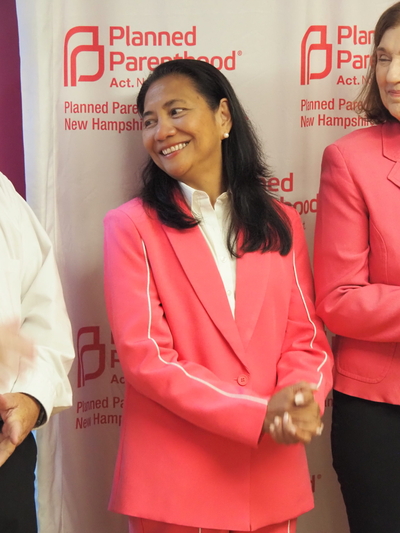
Executive Councilor Karen Liot Hill speaks during a Sept. 3, 2026, event at Planned Parenthood of Northern New England in Concord. (Photo by William Skipworth/New Hampshire Bulletin)
For years, New Hampshire’s Executive Council has been controlled by Republicans with a 4-1 majority, election after election.
However, that changed Tuesday. The “blue wave” that brought Democrats big wins in Congress and the state Legislature also flowed to the Executive Council.
That 4-1 Republican majority council is set to become a 5-0 Democratically controlled council next year after a shocking election result.
As of midday Wednesday:
- Luz Bay, a two-term state representative and Dover scientist, was beating incumbent District 1 Councilor Joe Kenney 52% to 48%, with 80% of precincts reporting.
- Karen Liot Hill, previously the only Democrat on the council and the former mayor of Lebanon, beat out her Republican challenger Tobin Menard 65% to 35%, with 87% of District 2 precincts reporting.
- Lisa Kennedy Sheldon, a Portsmouth nurse, earned roughly 52% of the vote in District 3 to incumbent Janet Stevens’ 48%, with 96% of precincts reporting.
- Jim O’Connell, a former Manchester School Board member, earned roughly 54% of the vote as opposed to incumbent John Stephen’s 46%, with 97% of precincts reporting in District 4.
- Melanie Levesque, a former state senator and representative of Brookline, earned roughly 54% of the District 5 vote to incumbent David Wheeler’s 46%, with 89% of precincts reporting.
The Executive Council is an elected body unique to New Hampshire. It serves as a check on the governor, approving or rejecting state contracts and vetting the governor’s nominees, including for the state Supreme Court and agency commissioners. It’s a little-known arm of government that holds immense power in the state.
Asked what a Democratically controlled council looks like, Liot Hill said “it looks like a Supreme Court that is going to have justices on it who are highly qualified and not embroiled in these ethical scandals that are plaguing the Supreme Court right now.”
There is currently a vacancy on the state’s highest court. The former chief justice, Gordon MacDonald, resigned after reporting from NHPR and an investigation from the judicial branch discovered a highly unusual personnel move he orchestrated to allow a close ally to collect nearly $50,000 in state funding. Gov. Kelly Ayotte, a Republican who weathered the blue wave Tuesday to win reelection, has yet to nominate his successor, though she may nominate someone before the new councilors are sworn in in January.
Another state Supreme Court justice, Anna Barbara Hantz Marconi, was convicted late last year of criminal solicitation connected to a conversation with then-Gov. Chris Sununu about an investigation into her husband, Geno Marconi. Prosecutors said she attempted to wield her influence as a justice to induce Sununu to intervene in a criminal investigation into whether her husband, the state port authority director, had illegally shared confidential records.
“I think that there’s going to be an appetite for true accountability on the Supreme Court and at all levels of government,” Liot Hill said Tuesday night. I think that the people of the nation and of our state are showing that they want real accountability.”
Liot Hill stressed that the new council wouldn’t say no to federal funds “because of ideological agendas.” She said the council will likely approve contracts that Republicans on the council have recently rejected, including several Planned Parenthood contracts for services like cancer screenings, STD treatment, and contraception, and a childcare-related contract with Pyramid Model Consortium to provide early education for children with disabilities under the Granite Steps for Quality program. She also said the new council will be “holding the governor accountable.”
Bay said Tuesday night her first priority would be funding Planned Parenthood. Over the past five years, the Executive Council has repeatedly rejected contracts with the reproductive health organization and similar healthcare organizations. In addition to the cancer screenings, STD treatment and contraception that the organizations would’ve provided under the contracts, they also provided abortions. And although the contracts weren’t related to abortion, the conservatives didn’t want to do business with them. They argued that providing funds would help keep the lights on and pay other bills in buildings that provide abortions, even if the state funding wasn’t spent directly on abortions. The contracts, which were supported by then-Gov. Chris Sununu, also a Republican, became among the most contentious issues for the council. The Democratic candidates have signaled their desire to return to the topic.
Bay also suggested the council would take its duty as a check on the governor seriously.
“There is no rubber stamp for the governor,” she said. “It doesn’t really matter whether it’s Kelly or Cinde (Warmington, Ayotte’s campaign foe, who ultimately lost Tuesday). No rubber stamping. I’m gonna do the due diligence for every contract, for every appointment, for everything that goes through the council, there’s nothing that’s going to get rubber stamped.”
Bay and Levesque both also brought up judicial nominees and agency commissioner vetting.
“Good governance is a first priority to appoint judges and commissioners who are qualified, who are experienced, that follow the rule of law,” Levesque said. “That’s mostly with judges, but with commissioners, people that are experienced in their field, that are well respected by their peers, and have a history of making good judgments and good policy.”
Bay said the “baseline” for Supreme Court appointments is that “they should have bench experience.” Ayotte’s first appointment to the Supreme Court — Bryan Gould — was an attorney with deep GOP connections with no judicial experience when he was nominated. Her second, Daniel Will, was a superior court judge.
Concord, NH