Kansas lawmaker accuses governor’s administration of stealing funds intended for I/DD waiver
Nov 25, 2026 | 8:50 am ET

Description
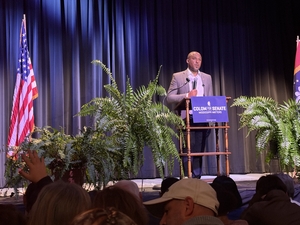
Rep. Sean Tarwater, R-Stilwell, watches the action on the House floor on March 18, 2026, in Topeka. (Photo by Anna Kaminski/Kansas Reflector)
TOPEKA — A Kansas lawmaker accused outgoing Democratic Gov. Laura Kelly’s administration of stealing money out from underneath Kansans with intellectual and developmental disabilities during a legislative hearing over the decision to shift $24 million from one disability services program to another.
Another lawmaker said at the Monday hearing the administration disregarded legislative intent when funds were reappropriated from a program meant for Kansans with intellectual and developmental disabilities.
“What bothers me is that the Legislature, who our No. 1 responsibility is to produce a budget — that is constitutionally our role, and it was dismissed,” said Rep. Kristey Williams, an Augusta Republican and chair of the House government oversight committee.
Andrew Brown, the deputy secretary of programs at the agency that oversees the disability waiver program, maintained the $24 million transfer was allowed.
Williams and other lawmakers don’t see it that way.
“You knew the intent of the Legislature with any remaining money. It was specified,” Williams said.
She said the Legislature intended for the money to remain tied to the intellectual and developmental disability, or I/DD, waiver program in an effort to reduce its waitlist of more than 5,000 people. In the past two budgets, the Legislature added earmarks for I/DD waiver waitlist reductions. Brown said the funds were not initially appropriated to any particular waiver.
Williams told Brown the Legislature will now have to make its appropriations bill 100 pages longer to ensure there isn’t any further “misinterpretation.”
Rep. Sean Tarwater, a Stilwell Republican who recently lost reelection, said the Kelly administration “stole these funds.”
“She also — this governor — has never made them a priority,” he said.
He followed his claims with questions for Kelly:
“Why has this governor and this administration never once included these people in her budget?”
“What do you have against these individuals? What did they do to you?”
Keira Beatty, a spokesperson for the governor’s office, rejected Tarwater’s characterizations.
“Throughout her administration, Gov. Kelly has remained committed to meeting the needs of intellectually and/or developmentally disabled (I/DD) Kansans to ensure they can receive the care they need, when they need it, and within their communities,” Beatty said in a statement. “To suggest Gov. Kelly has not included investments in her budget proposals to address the I/DD waitlist is wholly inaccurate.”
In the two most recent fiscal years 2027, Kelly did not recommend in her budget proposals direct state funding allocations to the I/DD waiver, instead favoring funding for the community support waiver program, which acts as an alternative to the I/DD waiver meant for those who may not require the full swatch of services offered under the I/DD waiver. She did not recommend direct funding for the I/DD waiver program.
In fiscal year 2025, however, Kelly did recommend funding for 250 slots on the I/DD waiver.
Monday’s hearing was the third time the $24 million has been brought up for discussion in the Statehouse since it was realized in August.
“We seem to be going over and over again,” said Rep. Barbara Ballard, a Lawrence Democrat. “The money is spent.”
Some say the transfer to another waiver program for frail and elderly individuals was authorized, and some say it wasn’t, Ballard said.
In August and September, two other legislative committees reviewed the appropriation and what can be done to prioritize reductions in wait times for people waiting for I/DD waivers.
Williams said the committee’s purpose Monday was to determine “whether state agencies are carrying out their duties with transparency, fidelity to legislative direction and careful stewardship of taxpayer resources.”
The waiver program, which resides within the Kansas Department for Aging and Disabilities and is funded through Medicaid, allows federal Medicaid eligibility requirements to be waived so Kansans who typically wouldn’t qualify for public health insurance can receive specific services for their conditions. The I/DD waiver program has been plagued by 10-year-long wait times and frustration with the agency that oversees the waitlist.
Steven Anderson, the state inspector general, presented preliminary audit findings to the committee that showed 92% of I/DD waiver cases contain insufficient information, including lacking proper forms and records of assessment.
The Legislature mandated the I/DD waitlist rise no higher than 4,000 people. It now sits at more than 5,300, as of October. Lawmakers argue that if the $24 million hadn’t been moved from the I/DD waitlist, it could have prevented such a continued rise.
Topeka, KS