30 federal observers expected in Pawtucket for Election Day
Nov 02, 2026 | 4:35 pm ET
Description
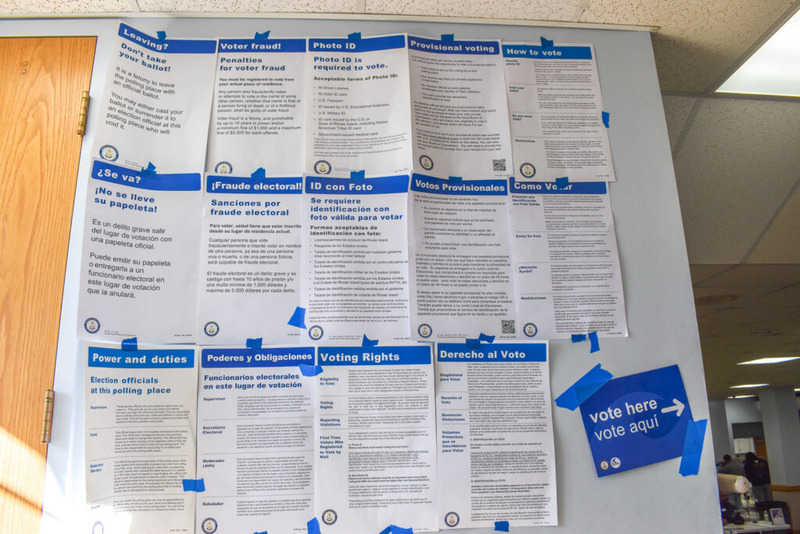
Signs in English and Spanish alert voters how to cast their ballots at St. Theresa's Church in Pawtucket during the 2024 general election. (Photo by Christopher Shea/Rhode Island Current)
Thirty federal observers are expected to be in Pawtucket Tuesday to ensure each of its polling precincts comply with a Biden-era consent order to assist Spanish-speaking voters, according to the city’s top election official.
“They’re arriving here today and tomorrow, that’s all we know,” Pawtucket city registrar Ken McGill said in an interview Monday.
A spokesperson for the U.S. Department of Justice did not immediately confirm the deployment Monday. The DOJ previously told States Newsroom it would not disclose the full list of monitored locations until Election Day, Nov. 3.
Trump’s DOJ sends 1,000 election monitors to 50 states; locations not yet disclosed
The May 2024 consent agreement between the city of Pawtucket and the federal government required local election officials to provide Spanish-speaking voters with election assistance and materials in Spanish. The agreement resolved a voting rights lawsuit brought by the Biden administration.
McGill said the city learned during a call with federal officials ahead of the Sept. 9 primary that the nearly three dozen observers would be coming to Pawtucket. The city has about 300 poll workers spread across its 28 precincts to ensure voters have access to Spanish-language material, he added.
“We’re ready to go,” McGill said.
Pawtucket is one of three jurisdictions where federal observers remain authorized under court orders stemming from voting rights cases. The others are Union County, New Jersey, where a 2023 consent decree addressed Spanish-language election assistance and voters’ right to assistance, and St. Landry Parish, Louisiana, which has been under a federal court order since 1979.
The incoming deployment to Pawtucket comes as the Trump administration prepares to send roughly 1,000 federal election monitors to polling places in all 50 states — the largest such effort in the DOJ’s history. Department officials said the monitors will observe voting and report potential violations of federal law.
But the expanded effort has drawn concern from voting rights advocates who have questioned the department’s role in local elections under the Trump administration.
“This is something we normally don’t worry about,” John Marion, executive director of Common Cause Rhode Island, said. “But given this administration, they don’t get the benefit of the doubt.”
Which is why Marion said Common Cause plans to have about 80 volunteers monitoring polling places around the state and will mark any known issues. That includes Pawtucket where he said the volunteers will keep tabs on the federal observers to make sure they do not overstep their authority.
The DOJ has sent personnel to monitor elections around the country for decades, including in communities not covered by a consent decree. For the Sept. 5, 2023, special congressional primary, the department sent observers to polling places in Central Falls, Pawtucket, Providence and Woonsocket.
DOJ staff monitors are generally limited to observing polling places from outside unless state or local officials give them permission to enter, according to the Brennan Center for Justice. They document what they see and report potential violations of federal voting rights laws, but cannot interfere with voting or direct election officials.
Under a court order, federal observers are authorized under the Voting Rights Act to enter polling places and observe election procedures, including how voters are assisted.
Pawtucket will be the only municipality to be under federal observation or monitoring in 2026, Rhode Island Board of Elections spokesperson Chris Hunter confirmed in a text message.
Election observers were also present in the city during the Sept. 9 primary, where McGill said federal officials found no problems with the city’s compliance with the consent order — a conclusion echoed by Marion after the primary.
Marion said he expects the city’s compliance to remain the same for Tuesday’s general election.
“Generally speaking, the problems in Rhode Island are hard to predict,” he said. “Problems seem to kind of be distributed randomly.”
For instance, staffing shortages contributed to delayed openings at several Providence polling places during the Sept. 9 primary. The capital city saw an unusually high rate of poll worker no-shows, with some polling places opening more than an hour late.
State election officials told reporters before early voting began in October that they have since worked with universities, state agencies and local election officials to recruit additional poll workers to cover any last minute absences should they happen Tuesday.
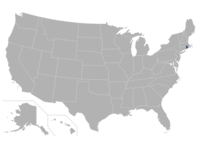
Providence, RI