Idled WA coal power plant generates a natural gas fight
Oct 29, 2026 | 4:41 pm ET
Description
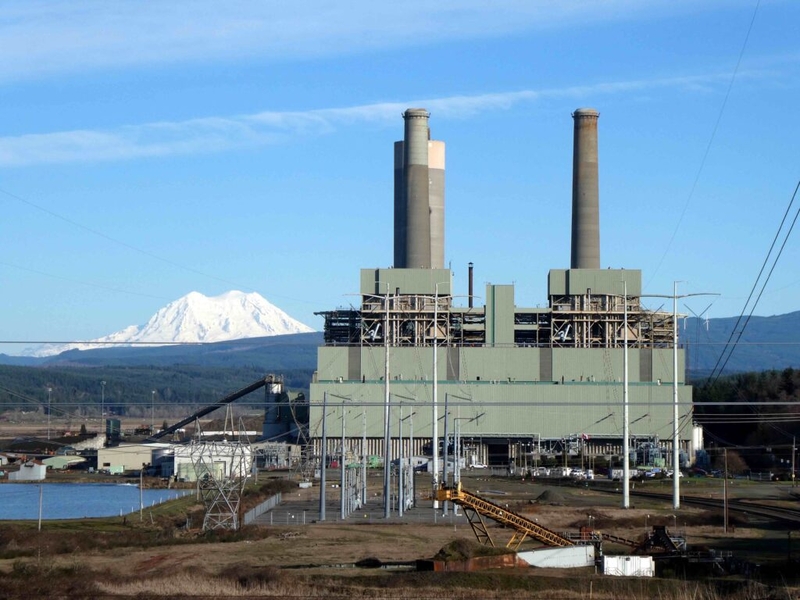
The steam plume from the TransAlta coal power plant outside Centralia, Wash. could formerly be seen from 30 miles away on cold, clear days. But it’s been absent since mid-December when the plant shut down for conversion to natural gas. (Photo by Tom Banse)
The owner of the only remaining coal power plant in the Pacific Northwest is doggedly proceeding with a plan to extend its life by converting to natural gas fuel over the next two years. TransAlta Corporation got political support, signed a utility to take the electricity and is accumulating the necessary permits to remodel the currently idled power station near Centralia.
But the coal-to-natural gas conversion is coming into question after a coalition of environmental groups challenged the energy production contract. Now the future of the hulking Centralia coal plant – a generous employer in Lewis County – is wrapped up in a contentious Puget Sound Energy rate increase case. It will be dissected beginning Tuesday, Nov. 3, with expert testimony and cross-examination in front of the Washington Utilities and Transportation Commission in Lacey.
The saga of the big power station matters far beyond Centralia because it encapsulates many themes bedeviling policymakers, ordinary ratepayers and utility managers these days: How to control rising electricity rates; where to get the juice to serve a growing population and attract new industry; and, does natural gas belong on the menu anymore?
TransAlta and its utility customer Puget Sound Energy assert that their contract for natural gas-fired generation is necessary to meet surging electricity demand and fill resource gaps. But the environmental coalition contends the 17-year power deal flies in the face of Washington’s goals to move beyond fossil fuels.
“There are far more less expensive, more efficient and cleaner resources to meet the demand that PSE is anticipating that they have written off,” Earthjustice Senior Attorney Victor Zertuche said in an interview.
Zertuche didn’t name specific alternative projects, but spoke about renewables being cheaper. Besides solar, wind and large-scale battery storage, the green groups also favor giving customers incentives to cut back during times of peak demand. PSE already does this to a degree.
Zertuche represents five groups in this case: Washington Conservation Action, NW Energy Coalition, Sierra Club, Front and Centered and Climate Solutions. Together, the challengers want state utility regulators to throw out PSE’s proposed contract for gas-fired electric generation.
The argument for conversion
Puget Sound Energy’s argument to state utility regulators reiterates that it needs to rapidly address forecasted shortfalls in electricity supplies. The utility said it is aggressively pursuing new clean energy projects, but that is not enough to assemble a balanced portfolio of resources.
PSE said that local electric demand is surging from wider adoption of air conditioning, heat pumps, and especially electric vehicle charging. At the same time, the utility said it is facing increasing competition from data center developers when it seeks to put new wind and solar farms under contract to meet the forecast demand.
PSE is Washington’s largest utility, with 1.2 million electric customers and nearly 900,000 natural gas customers. PSE’s rates and generation asset selection have to pass scrutiny from state regulators since it is a private company with a monopoly in its service territory. During the current rate case, legions of upset customers demanded that the state utilities commission comb through PSE’s books to reduce proposed rate increases.
PSE Senior Vice President (and Chief Development Officer) Craig Pospisil told the regulatory panel that restarting the Centralia power station with natural gas would provide a vital and dependable backstop during periods of high demand such as summer heat waves and winter cold snaps. He said the remodeled plant would not run continuously.
“Its value lies in providing necessary firm capacity using existing infrastructure, avoiding greenfield development risk, and supporting reliability during periods when renewable resources and storage may not be sufficient,” Pospisil said in written testimony.
PSE’s long-term deal with TransAlta runs from 2028 to the end of 2044. Then it’s curtains for the Centralia power station. That’s because beginning in 2045, Washington’s power grid is supposed to be 100% non-polluting under the state’s energy transition law.
A three-member independent panel will decide whether the coal-to-gas conversion is a prudent investment. Those state utility commissioners gave no indication of their leanings during two public hearings a month ago. The commissioners were variously appointed by Govs. Jay Inslee or Bob Ferguson and subsequently confirmed with bipartisan votes of the state Senate.
The Washington Utilities and Transportation Commission is expected to make a final decision in January to accept, reject or modify PSE’s proposed rates and generation plans.
Opinions and analysis aplenty
A staff analysis of the competing arguments concluded with a recommendation that the commissioners disallow the PSE plan to buy natural-gas fired electricity from TransAlta. If the commissioners don’t want to go that far, the staff suggested they at least demand more proof from PSE that natural gas generation was the lowest reasonable cost option available.
After reviewing the testimony of PSE critics, the Public Counsel inside the Office of the State Attorney General recently came around to the same position of recommending the commission reject the Centralia power contract.
Adding to the pile-on, a trade association for large commercial and industrial electricity users filed skeptical testimony. The Alliance of Western Energy Consumers cited its own consultant’s analysis that power to be supplied from the converted Centralia generating plant ”does not appear to be cost-effective.”
PSE filed rebuttal testimony with confidential financial data that it said showed gas-fired generation was cost-effective once the reliability value of the resource was factored in.
No one testified in favor of the Centralia plant’s coal-to-gas conversion during more than seven hours of spoken comments the utilities commission accepted over two nights in late September/early October.
“It is absurd that anyone would be trying to add fossil fuel capacity now when the early effects of climate change are already apparent and will continue getting worse,” said electric ratepayer Eddy Donofrio of Thurston County when it was his turn to speak at the commission hearing.
A broader range of opinions in favor and against appears in the public comment file of the state Department of Ecology. That state agency accepted comments separately as it prepares to finalize an environmental permit for natural gas-fired power generation by TransAlta.
The Centralia-Chehalis Chamber of Commerce said the planned coal plant conversion would preserve jobs and economic activity, “rather than prematurely abandoning a major piece of existing regional infrastructure.”
“We know we are short on generation. The natural gas plant would help make up for the shortage until sources of clean energy come on line for the grid,” retired IBEW Local 77 lobbyist Bob Guenther added in his comment to the Ecology Department.
TransAlta has generally kept a low public profile in Washington state this year as other parties vigorously debate the future of its coal plant.
“We’re continuing to work through the permitting and regulatory approval processes required for the conversion project to move forward,” a spokesperson for the Canadian company said in an emailed response to questions.
In a September presentation to stock market investors, Calgary-based TransAlta reported that it had completed the preliminary engineering and cost estimating for the Centralia project. The company’s board is holding off on making a final investment decision until sometime in early 2027.
The 730-megawatt Centralia plant hasn’t operated since last December, in accordance with a long-standing agreement with Washington state to phase out coal power. But the big facility is required by order of the Trump Administration to remain on standby in case of extreme power demand.
TransAlta’s Centralia operation is one of at least six coal-burning power plants around the nation that the Trump administration is trying to keep open past their planned retirement dates. However, the thrice-renewed emergency orders to TransAlta are being challenged as unjustified by the Washington State Attorney General and allied environmental groups.
The most recent order issued to TransAlta by Energy Secretary Chris Wright indicated the department is aware of the plan to convert the coal plant. Wright’s order directed the company to provide his department written notice when it receives the required permits to transition to natural gas. Pospisil said TransAlta informed PSE that it did not expect the series of Energy Department orders to delay the planned plant conversion.
The saga of the aging coal plant has become something akin to a three-ring circus for people interested in tracking the outcome, such as Earthjustice’s Victor Zertuche.
“With the rate case and the permits that are involved, there are just so many angles related to this,” he said.
“As we’re getting closer and closer, there is much more suspense,” Zertuche said. “Optimism, a lot of that as well. We’ll see.”
Olympia, WA