Yes, she did: Remembering Dolores Huerta, the force who proved the doubters wrong
Oct 29, 2026 | 12:19 pm ET
Description
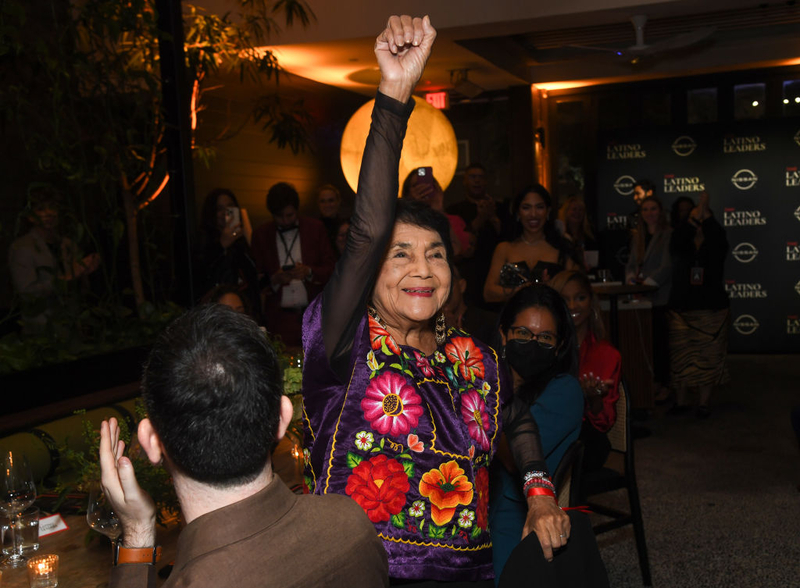
Dolores Huerta attends the TIME Latino Leaders Event at Soulmate on Nov. 29, 2023, in West Hollywood, California. (Photo by Alberto E. Rodriguez/Getty Images for TIME)
As a veteran journalist and a Mexican-American, whenever a momentous event involving Latinos happens, I have a habit of turning to major news outlets to gauge — and, yes, judge — how long it takes them to notice and how prominently they play the story.
It’s one of my ways of asking, on behalf of the wider Latino community, how far we’ve come — and how much we matter to our fellow Americans.
In the wake of Wednesday’s news about the death of civil rights icon Dolores Huerta, I think we’re making headway, but still have a long way to go. The BBC, headquartered in London, for instance, played the story in its hourly news roundup ahead of Washington, D.C.-based National Public Radio, and while the New York Times included the story on its homepage in very short order, it was placed, alas, conspicuously down-page of a story about the election-related branding woes of the Cheesecake Factory.
Dolores Huerta deserves better.
For the uninitiated, Huerta has been an immutable force in the civil rights movement since the early 1960s. She died at 96.
When Huerta spoke, anyone in earshot couldn’t help but pay attention to the strength, efficacy and cutting sagacity of what she had to say. She rarely wasted words and was a fearless and lifelong advocate of social justice.
What Martin Luther King Jr. and a handful of other Black leaders meant to the African American community, Huerta and fellow United Farm Workers of America co-founder Cesar Chavez meant to Mexican Americans and other Latinos — though Chavez’s stature was greatly (and rightly) reduced by news reports earlier this year that he capitalized on his fame and power to sexually assault women and underage girls. In the same painstakingly reported exposé by the New York Times, Huerta alleged Chavez once pressured her to have sex with him and raped her in a separate incident.
The Chavez scandal notwithstanding, before Huerta and Chavez’s ascent, few in this country believed that Mexican-Americans, much less impoverished farm workers, were capable of organizing to fight for their right to be treated with respect. But under the leadership of Huerta, Chavez and others who helped build the movement, they not only fought but won. At the peak of their success in the 1970s, the UFW had forced some of the richest and most powerful growers in California and nationwide to the bargaining table to sign hundreds of contracts that demonstrably improved labor and living conditions for a population of people whom most regarded as powerless to alter their fate.
While history and popular opinion have long cast Chavez as the unrelenting genius behind the UFW’s gains, students of the movement eventually came to understand that Huerta deserved far more credit than she had earned despite a patriarchal disregard for the role women have played in many of global society’s most monumental gains. Layer on top of that the machismo common in the Mexican-American community, and it’s no wonder that Huerta was given short shrift for her achievements for far too long.
Though her climb as an activist didn’t start that way, Huerta would come to be known as an avid feminist. Her first forays into community organizing began in the 1950s, well before the heights of the Women’s Rights Movement of the 1960s and 1970s. The mother of 14 children, Huerta was born to a traditional, Catholic family in Depression-era New Mexico, though she was later raised in Stockton, California. As a younger woman, she opposed abortion and the use of contraception. But in time, she would publicly embrace her own power and feminism, becoming a strong proponent of reproductive rights, equal pay for women, and the need for more women in elected office and other positions of power.
In 2012, President Barack Obama awarded her the Presidential Medal of Freedom — the highest civilian honor in the United States. And In 2017, in a rebuke to President Trump, she served as a co-chair of the Women’s March.
A vocal Democrat, Huerta’s death came only days ahead of what polls widely predict will be the election of former Health and Human Services Secretary and California Attorney General Xavier Becerra as California’s first Latino governor. If Becerra wins, it will be in part because of the doors that Huerta helped kick open for Latinos beginning in the early 1960s.
You see, among Huerta countless and extraordinary achievements was her ability to make Mexican-Americans and other Latinos, like me, believe we have a right to demand our piece of the often elusive American Dream.
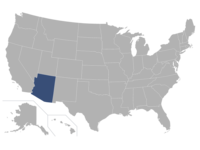
In 1972, during a 25-day fast led by Cesar Chavez, Huerta famously coined the iconic slogan, ¡Sí, se puede!, or Yes, we can!, in response to claims by naysayers in Arizona that farmworkers here could not be organized.
Not only did Huerta help prove them wrong, but along the way over the course of her 96 years on earth, she helped me and millions of my Latino hermanos y hermanas believe que ¡Sí, se puede!
Gracias, Dolores; que descanses en paz.
Phoenix, AZ