Memphis immigrant food pantry says need remains high a year after federal task force entered city
Oct 29, 2026 | 6:00 am ET
Description
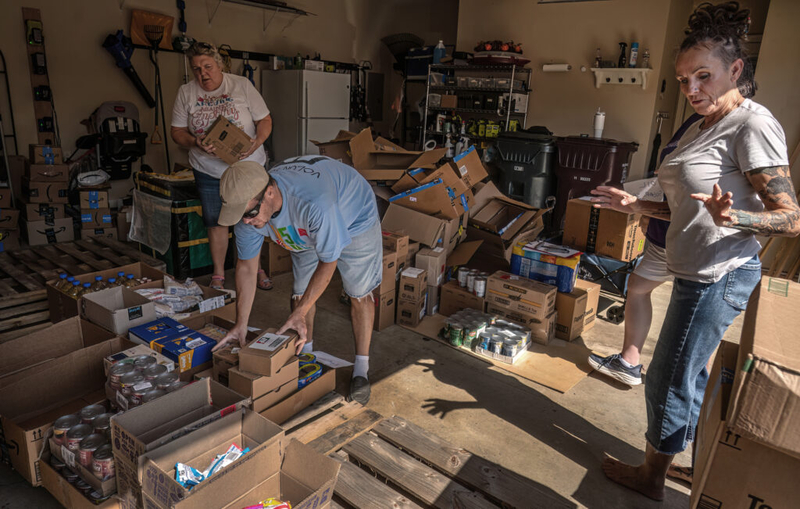
The Collective Good Immigrant Pantry, a project of Indivisible Memphis, has seen a spike in requests for food since a federal law enforcement task force arrived in the city. (Photo: John Partipilo/Tennessee Lookout)
After her two adult daughters were arrested while working at a Memphis nightclub during a sweeping U.S. Immigration and Customs Enforcement raid in late August, a grandmother suddenly found herself responsible for the care of her eight grandchildren.
It’s families like this that The Collective Good Immigrant Pantry — a food pantry run by volunteers out of garages and spare rooms — has provided with food and necessities for more than a year as immigration enforcement surged with the deployment of the Trump administration’s “Memphis Safe Task Force.”
On Aug. 30, ICE arrested 121 people from El Corralón night club, marking one of the agency’s largest raids since President Donald Trump began his second term in office. Five of those people had criminal convictions or charges, according to a U.S. Department of Homeland Security news release. It’s not clear if the other 116 people arrested had criminal histories.
“It’s easy to think about the individuals as a number, but every one of those people had a life outside of that club,” said Jessica Miller, co-founder of The Collective Good. “Some had children, spouses, and parents who depend on them, and the impact didn’t end with the people that were taken into custody. It ripples throughout the entire community and their families.”
Since the pantry started in July 2025, volunteers have made more than 3,200 deliveries to families in need, including those experiencing financial distress after a primary provider was detained or deported, or immigrant families who are afraid to leave their homes to get groceries, Miller said.
The average household they help has at least five people, including adults and children. Diapers, baby formula and snacks for children continue to be among the pantry’s most pressing needs.
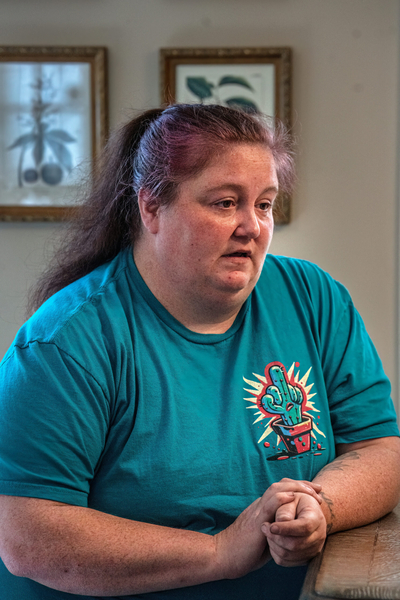
Miller said the pantry’s 1-year anniversary was a somber one. Need for the pantry had decreased over the summer before spiking in September after the nightclub raid. In the weeks that followed, weekly delivery counts ballooned from 23 households to 74. The week of Oct. 11, pantry volunteers made 57 deliveries.
In the pantry’s early days, many of the families they helped were first-time recipients. Now, the pantry helps some families consistently. On an anonymous message board, volunteers post short accounts of their deliveries and interactions with recipients. They describe children overjoyed to receive small toys, books and craft supplies — extra gifts from volunteers — and tight hugs and tears from grateful parents.
“When we started the pantry, we were doing crisis response,” Miller said. “What we didn’t know was that we were building an emergency response system that families were still going to desperately need more than a year later, and the crisis didn’t end when the headlines stopped. For those families, there’s been no return to normal.”
The Memphis Safe Task Force, a multi-agency law enforcement operation, has made 13,825 arrests between its start in September 2025 and Oct. 22 of this year, according to the U.S. Marshals Service. Of those, 848 were ICE-related administrative arrests made as part of the task force’s activity. Administrative ICE warrants are not criminal warrants and are not signed by a judge or magistrate. They only indicate that an ICE official determined a person is “removable from the United States,” according to federal law enforcement training materials.
Federal data shows ICE made 1,575 arrests between Sept. 29, 2025 and Aug. 5 of this year, and nearly 60% of those arrested had no criminal conviction and no pending criminal charges, according to a recent analysis from The Institute for Public Service Reporting in Memphis. Of those 1,575 arrests, 249 people had criminal convictions, and only 10 (0.6%) arrestees had been convicted of violent felonies including rape, aggravated assault, robbery and homicide.
The Institute for Public Service Reporting analyzed national ICE arrest data provided by the agency after the Deportation Data Project filed a Freedom of Information Act lawsuit. The data runs through Aug. 5, 2026. Arrests at El Corralón were not included in the data set.
“It’s so easy for people to say, ‘oh, well, they need to do it the right way, and they need to go back to their country,’” Miller said. But the people that the pantry serves are experiencing a wide variety of situations.
Some are families with children that lost their sole providers, Miller said. Some people have been detained and released with ankle monitors, and have limits on what they can and can’t do. Some people have Deferred Action for Childhood Arrivals, or DACA, status, meaning they were brought to the United States without legal status as children and have a permit from the federal government to live and work in the United States.
Tennessee recently began rejecting driver’s license applications and renewals for immigrants with work permits, which until now, had been accepted as sufficient proof that an individual is authorized by the federal government to live and work in the United States for the purpose of obtaining a Tennessee license. Among those expected to be impacted are the state’s 6,000 DACA residents.
Without valid driver’s licenses, immigrants who are legally allowed to live and work in the United States risk arrest, detention and deportation if they drive anywhere, including to work, school, or the grocery store, Miller said.
When we started the pantry, we were doing crisis response. What we didn’t know was that we were building an emergency response system that families were still going to desperately need more than a year later, and the crisis didn’t end when the headlines stopped.
The pantry collects donations of nonperishable food and hygiene items like shampoo and deodorant through its Amazon wishlist. The Collective Good also accepts cash donations, which are used to purchase fresh dairy, meat and produce for deliveries and fill in for shortages in nonperishable items.
The rising cost of groceries is hurting the pantry’s supply, too, as donations decline and prices for basics increase, Miller said. Vegetable oil was just over $2 when Miller first added it to the pantry’s Amazon wishlist. Now, it’s more than $4. Choosing how to allocate funds when nonperishable donations wane has become a challenging balancing act.
But, she said, the existence of The Collective Good is proof that similar pantries can be started anywhere. None of the pantry’s founders had professional experience in this work, and its more than 100 volunteers are community members who took it upon themselves to help.
Above all, Miller said she hopes that people do not “become accustomed to suffering.”
“Back when we first started sharing the stories, people were shocked,” Miller said. “But a year later, I’m afraid some people have started to accept this as normal, and there’s nothing normal about families being afraid to leave their homes to buy food.”
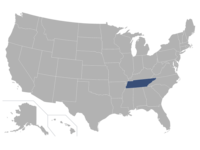
Nashville, TN