Oklahoma lawmakers consider strategies to counter student absenteeism
Oct 28, 2026 | 5:46 pm ET
Description
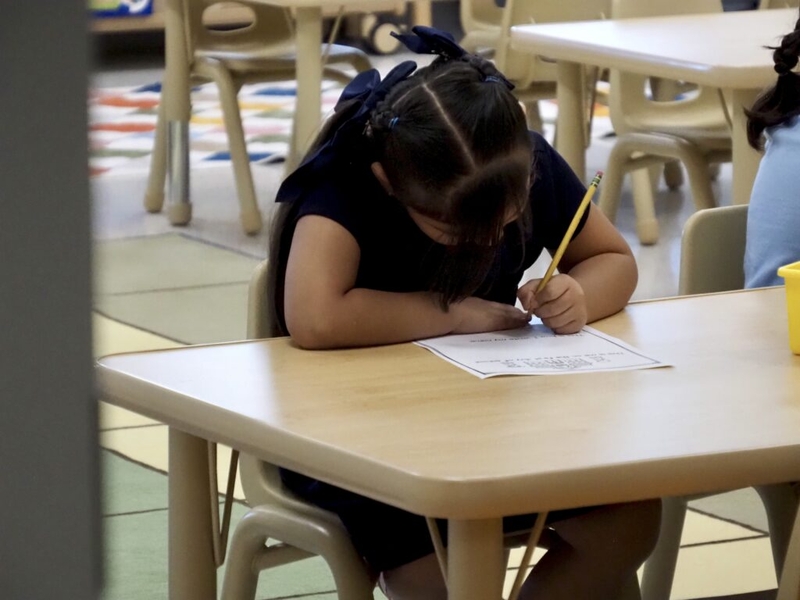
A student writes on a worksheet at Adelaide Lee Elementary in Oklahoma City on Aug. 11. (Photo by Nuria Martinez-Keel/Oklahoma Voice)
OKLAHOMA CITY — Addressing student absenteeism will take two things, school district and court officials said Wednesday: money and manpower.
Speakers at an interim study at the state Capitol agreed Oklahoma could help improve school attendance by funding more full-time staff dedicated to meeting with families and connecting them to resources, overseeing court diversion programs and prosecuting truancy cases.
Oklahoma House lawmakers held the study to examine how certain schools, district attorneys and court systems tackle truancy and chronic absenteeism amid a rise in rates nationwide.
“We cannot legislate good parenting,” said Charity Eakens, of Ada City Schools. “We cannot force families to value education, but we can create systems that provide meaningful support, remove barriers and hold people accountable. And we have to stop expecting schools alone to carry that responsibility.”
Students can’t learn if they’re not in school, she said, but getting them to attend consistently is “anything but simple.”
The Ada district, which sits within the Chickasaw Nation and where almost half of all students are Native American, handles many of its truancy cases in partnership with tribal nations and their court systems, said Eakens, the district’s director of First American programs.
Over the past three years, Ada schools have referred more than 250 students with five or more absences to the Chickasaw Nation’s family advocacy program, and the vast majority of these cases reached a positive resolution, she said. About 7% ended up in tribal court.
But, court is not the first step, Eakens said. First is a meeting that brings a family, school and tribal nation together to discuss the cause of a student’s absences.
In many cases, the underlying issue is homelessness or poverty, and the family is connected with tribal or community services, Eakens said. Other families simply need guidance on ways to get their children to school regularly.
She said Oklahoma should implement similar restorative attendance support programs statewide. Doing so would take more staffing across the state.
“Even in a small district, it takes someone who can do that full time,” Eakens said.
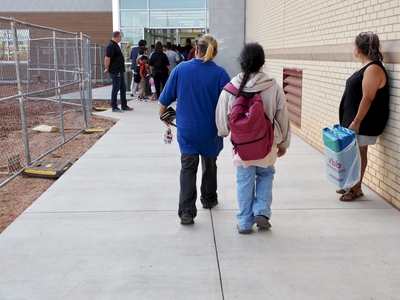
Buchanan Elementary in Oklahoma City takes a committee approach. Its front office staff meets weekly to review which children had absences, Principal Monserrat Randolph said.
School staff call these students’ families to check in and then send a letter home after the child’s fourth absence.
The next step is a text message from the principal. Randolph said she makes sure to include in her message the text of a state law requiring parents to ensure their children attend school.
“That’s what actually pushes them to (realize), ‘Oh, this is a real thing. It’s a big issue. It’s the law,’” Randolph said.
The situation sometimes progresses to an in-person meeting to discuss with parents what resources they might need. If the absences continue, the school refers the matter to the Oklahoma Department of Human Services, which she said is “the end of the line for us.”
Buchanan has improved from a D grade for absenteeism in the 2022-23 school year to a B the past two years on state evaluations, Randolph said.
The Oklahoma State Report Cards, which evaluate the performance of each public school, gave the state as a whole a D for chronic absenteeism, with just under 81% of students in good attendance. Chronic absenteeism is defined as missing 10% or more of the school year for any reason.
Elevated absenteeism rates have been a persistent issue nationwide since the COVID-19 pandemic, national data shows.
Chronically absent students have a 77.8% high school graduation rate, said Dennis Williams, senior director of accountability at the Oklahoma State Department of Education. Those who aren’t have a graduation rate of 94.4%, he said during the interim study.
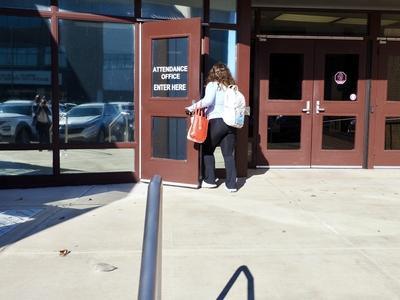
While acknowledging student attendance isn’t entirely within a school’s control, the Oklahoma Legislature passed a bill in 2025 to change the state report cards, shifting chronic absenteeism to an opportunity for bonus points toward a school’s grade rather than counting against it. The state is still waiting on final approval from the U.S. Department of Education to make the report card change, Williams said.
Absenteeism begins to worsen in sixth grade and reaches its peak at the high school level, Oklahoma City Public Schools administrators told lawmakers. Some Oklahoma City high schools have half of their students who are chronically absent.
“What we’ve seen again and again is that the reasons are so broad and so complex that as a district, this is not going to be a problem that we’re going to be able to solve alone,” said Alisha Suffield, the district’s chief of schools. “We recognize that attendance will not improve through a single initiative or by asking schools to work harder without support. It requires intentional investment and, bigger than that, a shared responsibility.”
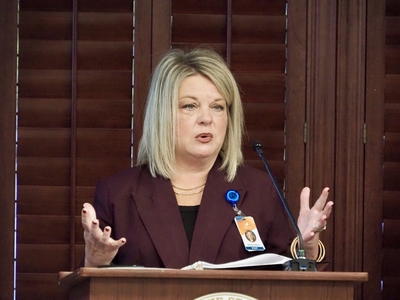
Every district attorney’s office in the state should have a truancy program, said Erik Johnson, the district attorney for Pontotoc, Hughes and Seminole counties. That requires “the want-to and the availability of manpower to make it happen,” he said.
Students with 10 absences are referred to Johnson’s office, which prosecutes parents who refuse to take the issue seriously, he said. Anyone found guilty of state truancy laws could be subject to a fine or imprisonment in a county jail.
Johnson said his office tries a different tactic for high school students refusing to attend school. These students are encouraged to earn their high school diploma through the General Education Development (GED) test and to enroll in a job skill program at a local career technology center.
“We put them through welding programs, (commercial driver’s license) programs, cosmetology programs and demonstrate a pathway to these kids so that they can see, ‘Well, you know, I don’t have to just be a screw-up the rest of my life,’” he said.
Grady County District Judge Kory Kirkland encouraged more courts to implement “graduated sanctions,” which allows students to complete agreed-upon terms to avoid juvenile charges for truancy or other offenses. That could involve the completion of a drug treatment program or other requirements.
Kirkland said he’s seen this approach succeed in his courtroom, but it’s time-consuming. It would take funding for a full-time program coordinator and a prosecutor dedicating half of each week to these cases, he said.
Finding a solution to student absenteeism “is something we’ve got to do,” said Rep. Dick Lowe, R-Amber, as the study concluded.
“We’ve got to figure it out,” said Lowe, the head of the House Common Education Committee.
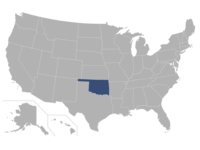
Oklahoma City, OK