Chris Jones says his unconventional campaign is a ‘referendum on water’
Oct 27, 2026 | 4:39 pm ET

Description
Democratic candidate for Iowa secretary of agriculture Chris Jones speaks at the Greater Des Moines Partnership Oct. 27, 2026. (Photo by Cami Koons/Iowa Capital Dispatch)
Chris Jones, the Democrat running for Iowa secretary of agriculture, said Tuesday that his campaign, which has largely focused on water quality, has shown a “different way” of running for office.
Jones spoke at the Greater Des Moines Partnership candidate forum Tuesday morning and said he knows he is a “peculiar” candidate that doesn’t “fit the mold.”
Jones, who is running against incumbent Republican Mike Naig, said he has not run television ads, or “begged” people to donate to his campaign, but has instead relied on social media marketing and a message of “inspiration.”
“We’re trying to inspire people,” Jones said. “I’m trying to show candidates there’s a different way of doing this. You can compete here if you have an inspiring message, and you have at least a little bit of money.”
Candidates on the Nov. 3 ballot have raised millions of dollars for their campaigns. Iowa’s gubernatorial race between Democrat Rob Sand and Republican Zach Lahn raised a combined record breaking amount of $81 million.
Jones said the amount of money in a campaign has almost become a “self-fulfilling prophecy” where candidates who win, and raised a lot of money, attribute it to the funds and those who lose feel their fate was tied to not raising enough.
“I think the campaign is demonstrating how to effectively do something different here and still be competitive,” Jones said.
Naig is scheduled to speak at the forum Thursday morning.
Jones, who has called his candidacy a referendum on Iowa’s water quality, joked that the “experiment about a candidate running on water and winning has been ruined” because water quality has become a top issue for many candidates on the Nov. 3 ballot.
Jones has called for changes to Iowa’s dominant agricultural systems, with policy proposals to fund “off ramps” for producers who want to stop growing things like corn and soybeans and instead move to other, more diversified crops.
He suggested this method, and a more diversified agricultural system would boost Iowa’s economic vitality, especially in rural farming communities.
“We need to diversify our farming system,” Jones said. “That’s how we bring jobs to rural Iowa.”
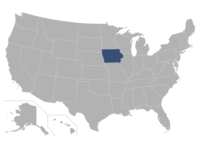
Des Moines, IA