Want to end redistricting wars? Start by uncapping the US House.
Oct 27, 2026 | 6:45 am ET
Description
The U.S. Capitol on April 9 (Ashley Murray/States Newsroom).
Missouri’s congressional redistricting battle has taken voters on a dizzying tour of the court system leading up to the midterms. After trips to the Missouri Supreme Court and federal district court resulted in different rulings, the state took not one but two trips to the U.S. Supreme Court, which held – twice – that the state should use its 2022 congressional map for the November 2026 election. Voters will decide the fate of the new map through Proposition A.
The legal question that dominated these disputes was about whether Missouri could use a newly drawn map despite a valid referendum petition. But the process invokes a larger and more important question about our representation: why has control of a single congressional seat become so consequential that politicians are willing to fight over it in multiple court rooms instead of trusting voters to decide?
One way voters can take matters into their own hands is to support uncapping the U.S. House of Representatives. From our nation’s founding until the passage of the Permanent Apportionment Act of 1929, the House grew alongside the national population. The cap at 435 members created an artificial scarcityaround representation, and that scarcity is one of the drivers fueling the current gerrymandering wars, in Missouri and beyond.
With the same number of House seats representing a population that has more than tripled since 1929, each individual district has become larger, and political control of each one has become more consequential.
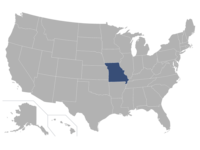
Missouri’s congressional delegation provides a particularly striking example. When the House was capped in 1929, Missouri had 16 seats in the House, representing a population of 3.6 million residents, or approximately 225,000 constituents per representative. By contrast, today Missouri has only eight House seats, representing a population of nearly 6.3 million, meaning that each representative has approximately 783,000 constituents. In other words, Missouri’s population has nearly doubled yet its House delegation has been cut in half.
The average Missourian now experiences a much lower quality of representation as a result, because even the most conscientious representatives struggle to serve such large districts. For example, Missouri’s 6thCongressional District, spanning all of northern Missouri from the Kansas border to the Mississippi River, includes 39 counties and is so large that it covers more square miles than nine U.S. states.
To be clear, uncapping the House is not a panacea for partisan gerrymandering. The process will always be political, and the parties will always compete to control the process. But expanding the House would reduce the artificial scarcity problem that has made each individual seat such an extraordinarily valuable political asset. More representation is also consistent with what the Founders intended – in Federalist No. 55, Madison warned against making the House too small, arguing that it must be large enough to secure “a full knowledge of the interest of its constituents,” and ensure “that its members are not lifted too far aloft from the mass of the citizens.”
Smaller districts would also mean more opportunities for voters to elect someone responsive to their communities and less political power concentrated in each individual seat.
And that is where Missouri’s recent redistricting battle intersects with the debate over the size of the House. We should be asking not only how to stop politicians from manipulating district lines, or which court is most likely to stop them when they do. We should also be asking why control of a single congressional seat has become so consequential in the first place.
Instead of endlessly searching for another favorable courtroom or a more clever way to control the limited number or seats, maybe the way out of our redistricting wars is simply more seats at the table.
Jefferson City, MO