A tale of a law, a lawsuit and many missed opportunities for Kentucky children
Oct 27, 2026 | 5:30 am ET
Description
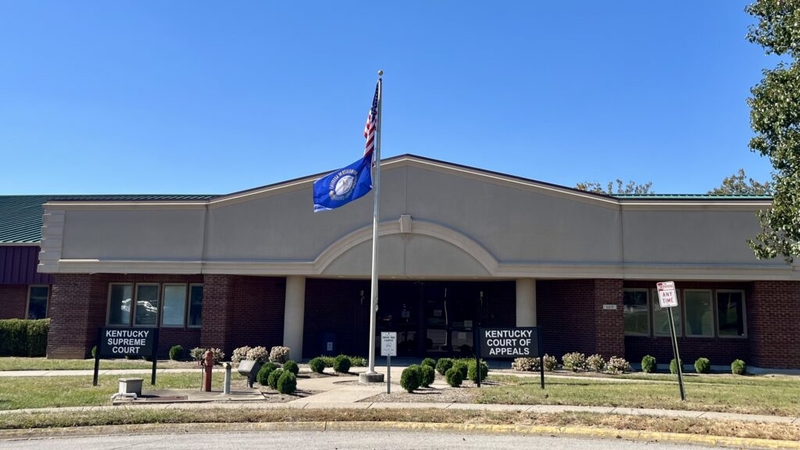
The Kentucky Court of Appeals in Frankfort, Kentucky, on Oct. 23, 2026. (Kentucky Lantern photo by Sarah Ladd)
At 2:30 Saturday morning, I woke up troubled by the October 23 hearing in the Kentucky Court of Appeals that I had attended.
One thought kept returning: We shouldn’t have been in that courtroom at all.
I had listened as attorneys debated subpoenas, funding, the State Auditor’s authority and whether the dispute was moot. How had a kinship care law intended to protect vulnerable children brought us to this point?
My thoughts returned to a conversation with a grandmother in 2019.
When her grandson was removed from his home, she took him in. She signed paperwork without fully understanding how that decision could affect financial assistance for his care.
She later realized she had potentially waived access to thousands of dollars of assistance.
I shared her concerns with a senior Cabinet for Health and Family Services official, who acknowledged communication could improve, but maintained the process was legal.
In my view, communication fell short. And something can be legal and still need to change.
That experience helped lead to Senate Bill (SB) 151, unanimously passed by Kentucky’s General Assembly in 2024 and signed by Governor Andy Beshear.
The law established a 120-day window for relatives and fictive kin to understand their options and pursue approval as kinship foster parents. It allowed caregivers experiencing qualifying events to seek reconsideration for foster care approval—potentially keeping children in the same home with support.
It also strengthened opportunities for children to identify relatives or trusted adults they wanted considered for placement.
The administration cited Fletcher v. Commonwealth, a Kentucky Supreme Court decision concerning legislative appropriations, to justify waiting for additional funding.
CHFS initially estimated implementation at $20 million, later revising that figure to $14.6 million annually. Both estimates relied entirely on state General Fund dollars, despite SB 151’s direction to maximize available federal funding.
I believed Kentucky had other funding options and that portions of the law could have moved forward while financial questions were resolved.
Instead, families waited.
That’s why I asked State Auditor Allison Ball in 2024 to independently examine the funding assumptions behind the delay.
What followed was a legal battle over the Auditor’s authority to obtain information.
Ball sued Governor Beshear and CHFS. The Cabinet maintained it had cooperated with her investigation; Ball argued she lacked information necessary to complete it.
Franklin Circuit Court Judge Thomas Wingate dismissed the lawsuit as premature, citing, in part, the Auditor’s failure to use subpoenas.
On appeal, Ball argued that routinely requiring subpoenas could undermine independent oversight. She cited KRS 43.080, requiring agencies to permit access to records upon the Auditor’s request.
After nearly 30 years in government, I understand what may feel like burdensome information requests. But genuine cooperation means providing what you can and establishing reasonable timelines—avoiding the appearance of a standoff.
If agencies decide what information is sufficient for an independent audit, how independent is that oversight?
Ball warned that without meaningful access to information, her office could become an “empty shell.” There are implications far beyond SB 151.
In July 2026, CHFS began implementing SB 151 after the General Assembly appropriated $12 million over two years.
The Cabinet now argues that implementation makes the appeal moot.
Really? Moot to whom?
Beginning implementation two years later doesn’t answer whether the original funding estimates were accurate, whether federal funding opportunities and alternative approaches were adequately explored, or whether portions of the law could have been implemented sooner.
Nor does it restore opportunities lost by families in 2024 and 2025.
These are questions, not accusations, but answers matter—especially when the full implementation of a law intended to protect vulnerable children was delayed for two years.
In March 2026, a proposed administrative regulation was found deficient following legislative review. I testified, raising concerns about the approach and absence of federal funding.
Then HB 500, the 2026 budget legislation, incorporated language from the proposed regulation, and CHFS proceeded through internal policy.
Questions remain about whether that approach fulfills SB 151’s intent and whether state funding is sustainable. To my knowledge, there is still no approved implementing regulation. I continue working with legislators, CHFS and the Auditor’s office to seek answers.
Meanwhile, children still need their voices heard.
Days before the appeal, I advocated for a teenage foster youth who was in three homes in five days. Although his social worker reportedly had arranged his latest placement days earlier, I was told he learned about the last move when transportation arrived after football practice to take him there.
SB 151 was intended to strengthen children’s voices in placement decisions.
Was that promise moot to him?
We cannot always change what brings children into the child welfare system. But we can change how government responds.
And that brings me back to the courtroom.
There I sat, a kinship caregiver and advocate, watching State Auditor Allison Ball herself stand at the podium, defending her authority to obtain information.
Our fight began with children and families who deserved better. But it had grown beyond SB 151. The independence of an office responsible for government oversight was now at stake.
The court will decide the legal questions. But the consequences of government decisions don’t disappear when a lawsuit ends.
We don’t need empty shells. We need laws that deliver on all their promises and independent oversight to ensure accountability.
Frankfort