Six West Virginia state house races to watch next week
Oct 27, 2026 | 6:00 am ET
Description
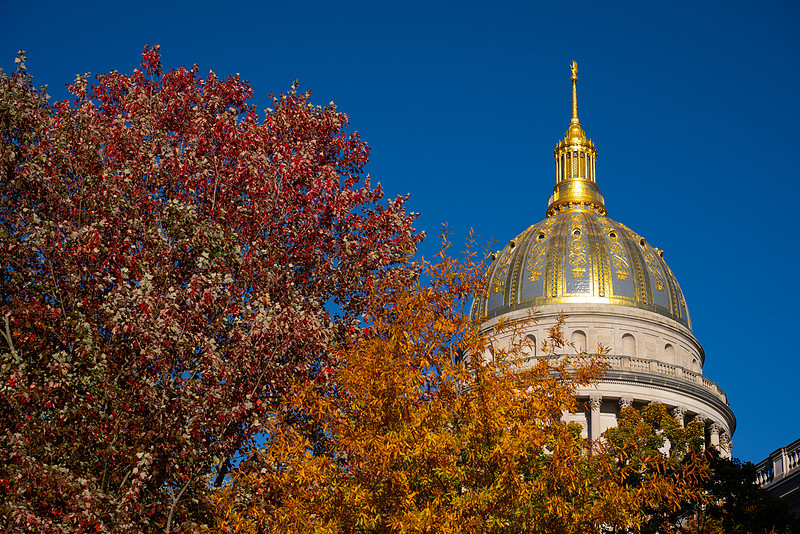
The West Virginia State Capitol in Charleston, West Virginia. (West Virginia Legislative Photography)
With polling heavily in Democrats’ favor throughout the nation, even ruby red West Virginia is seeing some healthy competition in the 2026 midterm election.
While Democrats and Republicans aren’t known for agreement, their respective party chairs both believe there are at least six races to keep an eye on in the election on Nov. 3.
With 91% of the state Legislature controlled by Republicans, West Virginia has one of the most solid GOP supermajorities in the country. But this year, Democrats aren’t taking it laying down — they’ve fielded their largest slate of candidates since 2020.
Democratic Party State Chair Mike Pushkin said he thinks if trends seen in the spring primary — where Democratic votes outnumbered Republican votes in some counties — hold, it could bode well for his party.
“We defeated Patrick Morrissey’s handpicked Supreme Court justices and elected a dyed-in-the-wool Democrat in Jim Douglas in a statewide race to the Intermediate Court of Appeals,” Pushkin said. “We’re feeling cautiously optimistic.”
Republican Party State Chair Josh Holstein said 80 out of the 91 seats held by the GOP in the House of Delegates are safe, as are 29 out of the 32 seats held in the state senate.
“We don’t expect to lose the majority of the remainder. We feel like we’re in a very good spot,” Holstein said.
Holstein said the GOP’s gains in party registration and past elections show his party’s track record is resonating with voters.
“We’ve done the vast majority of what we said we would do, and we’re still working to accomplish the rest of it,” Holstein said. “ On the economic front, we’ve been able to cut taxes over and over and over on a bunch of different things: Social Security, income tax, motor vehicles.”
Pushkin said the West Virginia Democratic Party is keying in on issues that have energized voters, like data centers and inflation.
“They are upset with the Republicans for taking away local control in regards to regulating these big AI data centers. People are suspicious of Flock cameras. They value their right to privacy,” Pushkin said. “But most importantly, the biggest issue is the cost of living is incredibly high, and the Republicans who control every aspect of our government here in West Virginia have done absolutely nothing to address rising gas prices, rising grocery prices and out-of-control utility bills.”
Here are the six races both Pushkin and Holstein said people should watch on election night.
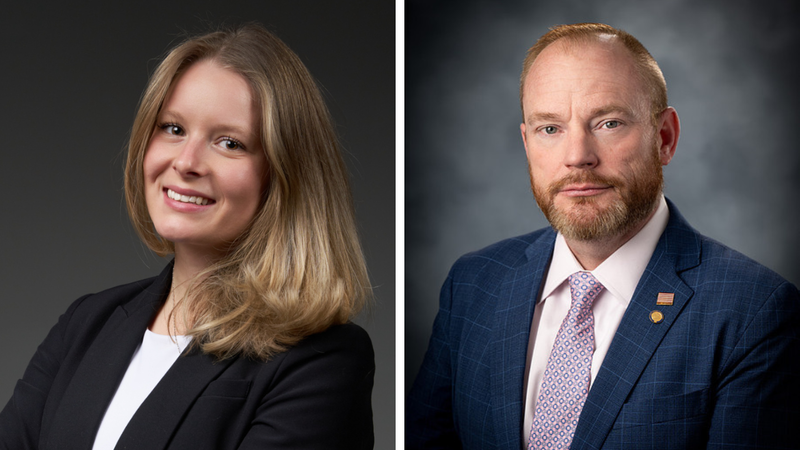
House of Delegates District 97 (Berkeley and Jefferson counties):
In a rematch from the 2024 election, Democrat Lucia Valentine is challenging incumbent Republican Chris Anders for a delegate seat in the growing and bustling Eastern Panhandle. In the 2024 election, despite outraising Anders in campaign donations, she lost the district by 700 votes.
This election season, she’s done it again, raising double what Anders did. Both are out knocking on doors and campaigning hard in the final stretch — Valentine estimates her campaign has knocked on 4,000 doors, while Anders said his campaign has been to 3,800 homes.
Valentine is running on a message of affordability and focusing on infrastructure in the Eastern Panhandle, where the growth in population is outstripping the roads and schools.
“I think part of that is having a strong delegate in Charleston advocating for our region and bringing those infrastructure dollars and our tax dollars back home to work on the projects that we need to keep up with with our pace of growth,” she said.
Anders is the chair of the Freedom Caucus in the House of Delegates and has advocated for outlawing county rain taxes — a tax on landowners for runoff from storms most notably used in Berkeley County — eliminating property tax and expanding gun rights.
“I’ve been in communication with my constituents since I’ve been elected,” Anders said. “They’ve been receiving letters and mail from me nonstop because I work for them and the Constitution. That’s the two responsibilities that I have.”
House Bill 2014, the controversial law that strips counties and towns of any say in a high-impact data center project, could also play a role in the election, where the Penzance data center is being built just on the border of the district.
Both candidates have said they want to restore local control over data centers in the future. In the 2026 legislative session, Anders backed an amendment that would’ve put those projects up to a vote.
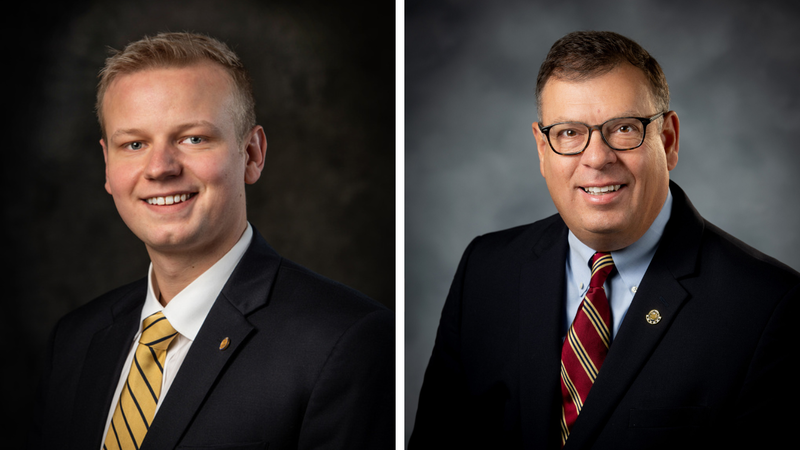
Senate District 13 (Monongalia and Marion counties):
The 13th Senate District is seeing a showdown between two seasoned politicians, and a libertarian candidate, in one of West Virginia’s last Democratic strongholds.
Sen. Mike Oliverio, R-Monogalia, is defending his seat against Del. John Williams, D-Monongalia. Oliverio has served in the House and Senate on and off since the 1990s, while Williams was first elected to the House of Delegates in 2016.
Oliverio said his long record of getting legislation passed will return to the state senate in January, invoking the wisdom of a long-serving speaker of the U.S. House.
“Tip O’Neil taught everybody that ever served in public office that all politics are local, and when people look at Mike Oliverio, they know they have someone who they can trust, who has been a champion for West Virginia University, Fairmont State, WM Medicine, Vandalia, our economic development efforts here in the area are roads, our bridges, and I think that’s what will be most important to people,” Oliverio said.
Williams said he represents a change up, citing data centers and inflation as the top concerns he’s hearing from voters.
“The electorate and I have kind of been in tune with one another in terms of what we think needs to happen in Charleston,” he said. “And typically, when there’s that synergy between voters and candidate, it can lead to a big win.”
Both Oliverio and Williams have been raising big dollars in the final stretch, with more than $200,000 spent between the two.
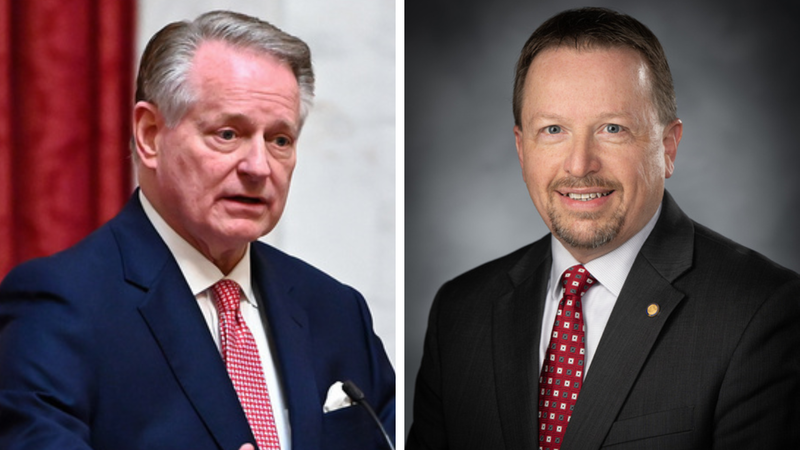
House of Delegates District 24 (Cabell County)
In district 24, which includes parts of Huntington and outlying areas, Steve Williams is challenging two-term Republican incumbent Patrick Lucas for his House of Delegates seat.
Williams, a Democrat, served several terms in the House of Delegates in the 1980s and 1990s, before being elected Mayor of Huntington in 2012. After serving an unprecedented three terms as the mayor of the state’s second-largest city, he ran and lost against Patrick Morrisey for governor in 2024.
Williams said if he is elected, he wants to focus on economic issues in his district.
“I am going to use a four-letter word, and it’s going to define everything that we’re trying to do,” Williams said. “J-O-B-S Jobs. Creating jobs, taking advantage of what we have right here in Cabell County.”
Lucas, a local relator, said he’s heard a litany of issues on the campaign trail.
“I’ve heard questions about energy, questions about potable water and also a little bit about data centers,” he said. “And that’s really about it. And of course, all those are things that we are working on and have more work to do in the upcoming session.”
Both men said their performance in the race is part of a larger picture for the way politics is heading in the state.
“If I and all the other delegates that are currently in the house survive this year, then that’ll say something about the landscape,” Lucas said. “ That will tell you that not only has the state over the last 10, 15 years moved substantially to the right, but that they’re going to come out and make their voice heard in every election, no matter when that election happened.”
“The big question is going to be how many will be how many of the Democrats will come in with me,” Williams said. “It’s going to send a message that folks aren’t happy with the way the administration is going.”
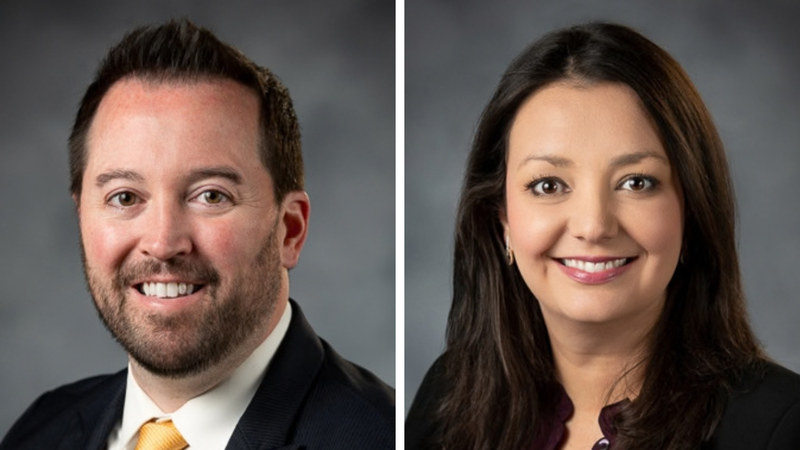
Senate District 1 (Hancock, Brooke, Ohio, Marshall)
State Sen. Laura Chapman, R-Ohio, is being challenged by Del. Shawn Fluharty, D-Ohio, in what is becoming one of the most expensive races this year.
This is Chapman’s first reelection campaign for her seat. So far, she’s raised about $145,000. Mountaineer Conservative Action, an independent political action committee with ties to state Senate President Randy Smith, has spent nearly $200,000 to attack Fluhuarty.
Fluharty has raised about $165,000, taking the race to a grand total of almost $510,000 so far.
Chapman said the big numbers are nothing unusual for a state senate race.
“I’ve never seen a political race where there wasn’t (outside spending)” she said. “Of course, in the state senate there’s more money involved because there are fewer seats.”
Fluharty said the big spending against him shows he’s working hard for the seat.
“They’re spending more against me than anyone else in the state,” he said. “I wear that as a badge of honor.”
Chapman said during her time in office, she supported legislation to freeze power rates, expand testing for COVID and flu at pharmacies and help improve access to childcare. If reelected, she wants to keep working on issues surrounding energy costs and flooding.
“I am the only person in this race who is effective,” Chapman said.
Elected to the House of Delegates in 2014, Fluharty is now the House minority whip. During his time in the House, he has become well-known for championing Raylee’s law, regulating sports betting and his bombastic antics on the chamber floor.
He said his campaign is focusing on the economy.
“People don’t care about the manufactured outrage you hear from leadership in Charleston. They care about real issues, and that issue is the economy,” he said. “Under the current leadership, West Virginia is dead last in economic development.”
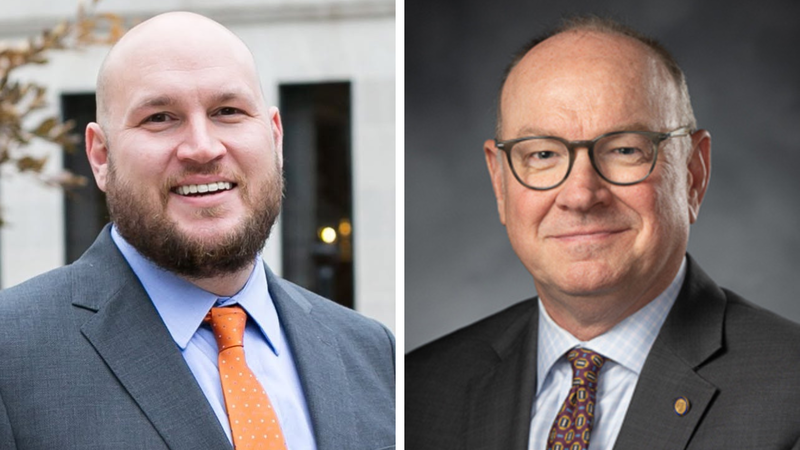
House District 82 (Monongalia County)
Del. David McCormick, R-Monongalia, is facing his first reelection bid after winning the seat in one of the closer contests two years ago.
McCormick won the seat by less than 700 votes in 2024. This year, McCormick said he’s not going to rest on his laurels.
“I’m expecting a close race, and not taking anything for granted,” he said. “We’re working hard and getting our message out.”
McCormick faces Democrat Eddie Wagoner, who dipped his toe into politics about a decade ago when ran for the House as a Libertarian. He too anticipates a narrow margin.
“I’m not going to prognosticate,” he said. “ It’ll be a close race. That’s why you’re calling me.”
McCormick said the two issues he hears coming up the most in his district are roads and trash.
“The number one thing is that trash service all over the state is terrible, and talking with other delegates, that it’s not something that’s exclusive to Mon County, but these trash haulers are not being held accountable for poor service,” he said. “This is a basic service to citizens in West Virginia, and it may take some legislation to fix it-that’s one thing.”
Wagoner said he’s hearing concerns about data centers, even though there’s not one currently slated for his district.
“I think the bill they had, (House Bill) 2014 a couple years ago, was a bad bill,” Wagoner said. “One, I don’t think we need to roll out the red carpet for these things. Two, the control that they shouldn’t strip the counties of any control over them. And then the biggest one, the one that irritates me the most, is the sending the bulk of the tax money down to Charleston.”
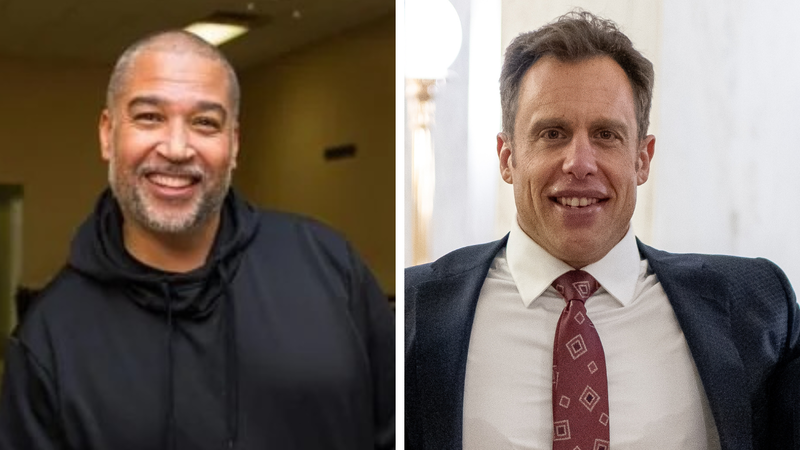
Senate District 5 (Cabell and Wayne counties):
Senate District 5, which includes Huntington and parts of northern Wayne County, became an open seat this year after long-serving state Sen. Mike Woefel, a Democrat, declined to run again.
Now two men are vying for the seat, Chris Miller and DuRon Jackson.
Miller, a Republican, is the son of U.S. Rep. Carol Miller, and ran an acrimonious campaign against Gov. Patrick Morrisey in the 2024 gubernatorial primary.
So far, he’s raised nearly $100,000 for his bid. Jackson, on the other hand, has reported raising $2,500 — enough for a clunker on Facebook Marketplace.
Jackson is a former Huntington City Councilman and owns a restaurant and catering business.
Miller said he wants to focus on energy, harnessing West Virginia’s current energy for the betterment of the state if elected.
“I think the absolute best play to grow West Virginia’s economy is to turn our state into a battery, and literally become the battery of the East Coast, and export all of our power, and then create a sovereign wealth fund similar to what Alaska did, and put a portion of all those proceeds into a sovereign wealth fund to dramatically wipe down our power costs and become the state in the country with the cheapest power,” he said.
Jackson did not respond to multiple requests for comment.
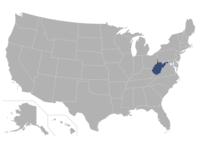
Charleston, WV