New Mexico guarded its drivers’ data. Border Patrol is watching anyway.
Oct 26, 2026 | 2:36 pm ET
Description
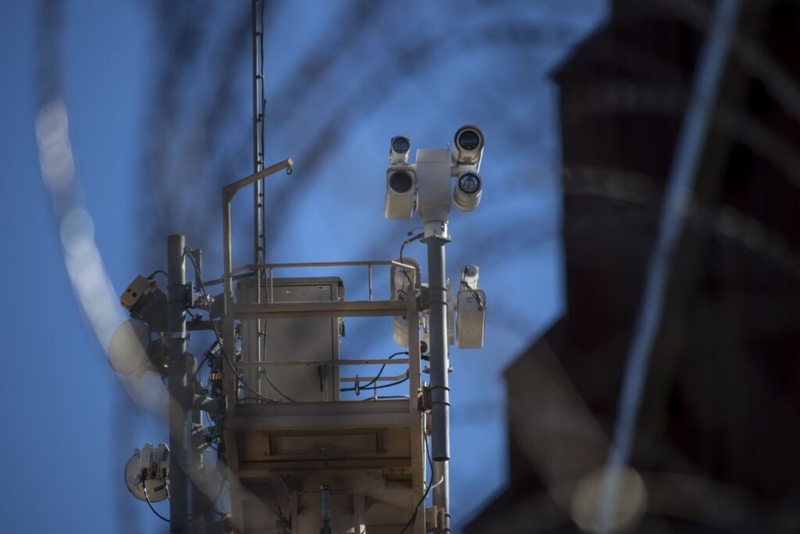
Surveillance equipment on the border wall between the United States and Mexico in Nogales, Arizona. (Photo by Jerod MacDonald-Evoy/Arizona Mirror)
Last week, the New York Times documented what a Border Patrol surveillance tower can see from a hillside in Sunland Park. It sees children on an elementary school playground, neighbors entering and leaving their homes, and cars on the town’s main road. At least 10 such AI-powered towers ring the city, and no one in New Mexico agreed to them.
New Mexicans should weigh these towers against the Driver Privacy and Safety Act, Senate Bill 40, which took effect July 1. It bars police and others from sharing license plate reader data when they reasonably believe it will be used for immigration enforcement, investigating reproductive or gender-affirming care, or punishing protected speech. Lawmakers acted after reporting showed out-of-state agencies searching New Mexico camera networks for immigration cases.
The law matters, but the new federal AI towers expose the state law’s own limits. New Mexico can tell the Las Cruces police what to do with their cameras. It cannot tell U.S. Customs and Border Protection (CBP), Border Patrol’s parent agency, what to do with its towers.
That limit is not a drafting error. Federal law is supreme, and states may not directly regulate federal operations. SB 40 binds New Mexico agencies and their vendors. It cannot bind the federal agency that watches Sunland Park around the clock.
The gap runs deeper. SB 40 controls data leaving New Mexico agencies, not data flowing in. CBP told the Times that tower footage can be shared with local, state and federal police, and even foreign governments. So a local department barred from feeding license plate hits to immigration agents may still receive federal video of residents’ front doors, their license plates, or of parents picking up their children from school.
Scale matters too. The administration has secured more than $1 billion for 1,500 new towers. The Times found that more than a million people on both sides of the border already live within the network’s view. Most residents the Times interviewed thought the towers were cell towers. CBP concedes that people near the border cannot opt out.
Defenders will say the border is different. In part, it is. Courts give federal agents wide latitude at the border, particularly when inspecting people at an airport or land port of entry. But Sunland Park is not a port of entry. It is a town with schools, churches and backyards.
Courts have eroded some constitutional protections near the border, such as allowing Mexican ancestry to be used as a factor in roving patrol stops. But federal agents remain bound by the Fourth Amendment’s bar on unreasonable searches, even near the border. In 2018, the Supreme Court required a warrant for long-term cellphone location records because they reveal “the privacies of life.” A federal appeals court later held that Baltimore’s persistent aerial surveillance program violated the Fourth Amendment. A camera that watches the same homes every day raises the same concern.
What can New Mexico do? More than it might think.
First, the Legislature could close the inbound gap. It can bar state and local agencies from using federal surveillance footage for purposes SB 40 already forbids and require them to report when they receive such footage.
Second, New Mexico’s federal congressional delegation can demand transparency. CBP should disclose where each tower stands, what it sees, how long it keeps footage and who receives it. SB 40 already requires New Mexico agencies to report yearly how many cameras they run and who can access the data. Federal agencies watching New Mexicans should meet at least that standard.
Third, state and local officials can carry residents’ concerns to Washington. Communities across the state have begun to question surveillance cameras. The Bernalillo County Sheriff’s Office ended its Flock contracts. Cibola County scheduled its cameras for removal. Sunland Park residents deserve a say over cameras aimed at their homes.
As an ACLU lawyer, I litigated in federal court and worked on Border Patrol accountability. I have watched enforcement tools built for the border move inland. Technology tested on border towns rarely stays there.
New Mexico drew a line this year: Its data will not become a pipeline for immigration enforcement. That line means little if the federal government can build its own pipeline, mount it on a hillside, and point it at a playground.
Santa Fe, NM