Recruitment efforts bring mixed results for state law enforcement agencies
Oct 26, 2026 | 5:15 am ET

Description
A Division of Sheriffs recruitment billboard in Providence’s Jewelry District in July 2025, part of a $56,278 advertising campaign for the academy that graduated 11 recruits in April 2026. (Photo by Christopher Shea/Rhode Island Current)
The Rhode Island Division of Sheriffs spent less on a recruitment advertising campaign to address staffing shortages than the Rhode Island State Police did and ended up with more applicants.
That gave Rhode Island’s top sheriff some bragging rights since the sheriffs division had fewer training spots, resulting in a much more competitive selection process.
“I’ve busted a little bit of their chops,” Chief Sheriff Paul Martellini said.
State police received nearly 300 applications by the Sept. 30 deadline for 23 spots in its 22-week academy scheduled to begin next March, its lowest total in years.
But 342 applications were received for the Sheriffs Division’s February academy for deputies who provide security inside Rhode Island’s courts following a two-month ad campaign. Eleven deputies graduated in April. Another 300 applications were received for the 13 spots in an eight-week training academy which began Oct. 19.
The sheriffs’ applicant pool has fluctuated in recent years, but the division has made headway in filling vacancies through a broader recruitment push, Martellini said
“I knew it was going to be an uphill battle,” he said. “But we’ve made strides.”
The sheriffs division, along with state police and Rhode Island Capitol Police, are housed under the Department of Public Safety. The department’s proposed fiscal year 2028 budget lists a total of 57 vacancies in sworn positions between the three agencies as of Sept. 21. There were 24 in the state police, 22 in the sheriffs division and 11 Capitol Police officers.
In a cover letter accompanying the budget, Col. Darnell Weaver, who serves as the department’s director and state police superintendent, called staffing shortages his “greatest concern moving forward.” But Weaver noted “tremendous progress” within the sheriffs division.
Martellini inherited 47 deputy vacancies when he took over the sheriffs division in October 2024. There are now 22 vacancies. A $689,245 request under salary and benefits seeks to bring the division to 174 deputies, leaving just five vacancies by the end of fiscal 2028.
For years, deputy shortages left some courtrooms without enough security for judges to take the bench. In 2025, the Rhode Island Bar Association urged Gov. Dan McKee in a letter to prioritize courthouse security funding, warning that understaffing would only cause further delays and disruptions at the judiciary.
Bar Association President Dana Horton said in a statement to Rhode Island Current that court administrators now report the lowest number of deputy vacancies in the sheriffs division in some time. But gaps in hallway security and courtroom coverage remain, she added.
“We hope continued recruitment and retention efforts will translate into sustained improvements for attorneys, litigants, and others who rely on the courts,” Horton said.
Combined recruitment campaigns cost over $175K
Martellini credited the sheriffs division’s progress to a combination of advertising, expanded recruitment and a push to bring in experienced hires. Figures provided by the Department of Public safety shows the sheriffs division spent a total of $75,243 advertising its two 2026 academies, using buses, billboards, radio, newspapers and social media.
The first campaign ran in June and July 2025 and cost $56,278. A second campaign, which ran in May 2026, cost $18,965.
“We’ve done a full-court press,” he said.
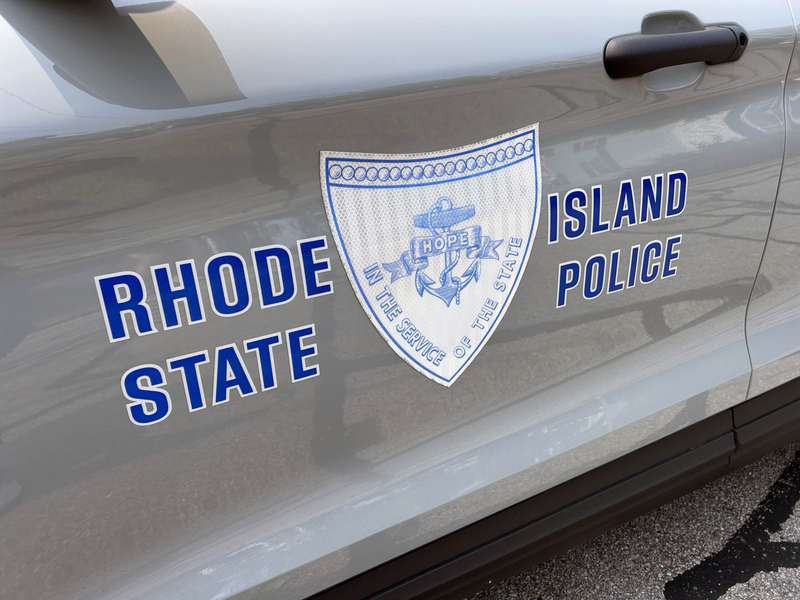
So has the Rhode Island State Police, which launched a $100,000 ad campaign between July and September 2026 consisting of billboards along the state’s highways and digital commercials featuring troopers patrolling highways, piloting drones, conducting scuba operations, working with K-9s and processing crime scenes.
The campaign managed by Cromwell Public Affairs drew 296 applications by the Sept. 30 deadline, state police spokesperson Lt. Col. Erik Yanyar confirmed in an email to Rhode Island Current.
That continues a multiyear decline in applications, which fell from 629 in 2023 to 456 in 2024 and 323 in 2025.
R.I. State Police trooper applications fall despite new recruitment campaign
Yanyar acknowledged the declining numbers were concerning, but said the state police remains focused on attracting qualified candidates rather than maximizing applications.
“Our standards have always been high, and the selection process remains competitive,” he wrote. “We believe that is what the public should expect from their law enforcement officers.”
The Rhode Island State Police budgeted $551,448 to train the 23 recruits who will be accepted for its 2027 academy. For fiscal 2028, the agency is requesting $492,880 to train 12 recruits.
Capitol Police, the smallest agency within the Department of Public Safety, received 90 applications for its 2026 academy, with six recruits currently in training, Yanyar wrote.
Because of its size, Yanyar noted the agency does not pay for advertising. Instead, Capitol Police promote openings on social media and by posting flyers in state buildings where its officers screen visitors and employees and provide security at entrances.
Senate Majority Whip David Tikoian, a Smithfield Democrat who served for 23 years in the state police, said he wasn’t surprised by the ongoing recruitment challenges, pointing to the lengthy hiring process and changing career landscape.
Becoming a state trooper means committing to 22 weeks of classroom lessons, physical conditioning and hands-on training at the state police academy in Foster. Recruits are allowed to leave campus only on weekends, according to the agency’s website.
“A lot of jobs today, you have an interview and follow-up interview — you’re in, you’re out,” Tikoian told Rhode Island Current.
Even so, Tikoian expects the state police will eventually get over its staffing recruitment woes. He said law enforcement offers a wider range of career paths than when he joined the agency in 1990, including cybercrime investigations and assignments with federal task forces.
“The advance of law enforcement has really broadened the opportunities,” he said. “I think you’re going to see an uptick in recruitment.”
Newly hired Rhode Island State Police troopers earn a starting annual salary of $81,579. Starting pay for Capitol Police officers is $59,683 a year, while deputy sheriffs earn $65,475 upon appointment.
Providence, RI