AI isn’t going to erase low-wage jobs. It’s going to split them
Oct 26, 2026 | 5:00 am ET
Description
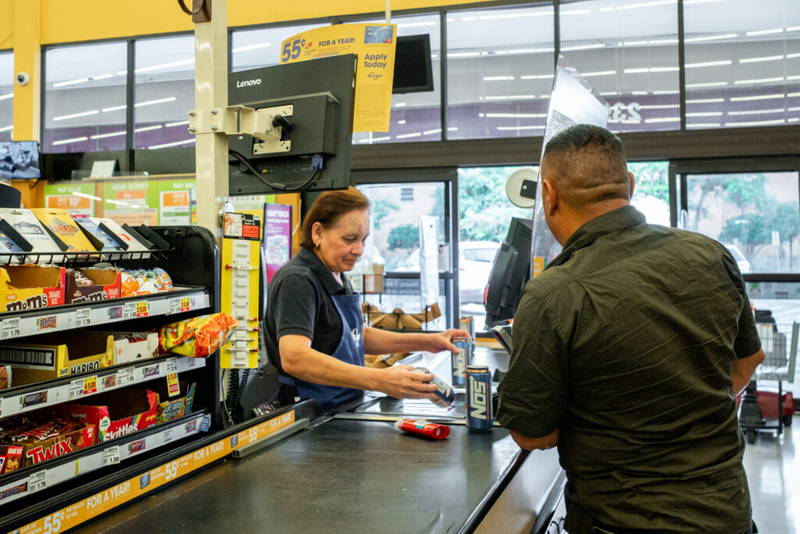
Indiana job postings in occupations most exposed to artificial intelligence have fallen 41% since 2022. (Photo by Brandon Bell/Getty Images)
Most of the talk about artificial intelligence and work asks how many jobs will disappear. For the families United Way works with, a better question is which jobs, and what the ones left behind pay.
Start with who is exposed. Nationally, about 54.5 million households, 41%, don’t earn enough to cover a basic household budget. Sixteen million of them are in poverty. Another 38 million are ALICE households: Asset Limited, Income Constrained, Employed. They work, and they earn too much to count as poor, but not enough to cover rent, childcare, food, transportation and healthcare. These are the households with the least room to absorb a bad month, let alone a changing labor market.
The jobs many of them hold are heading in two directions at once. Federal projections for 2025 to 2035 show cashier jobs falling 6%, bank teller jobs 13% and customer service jobs 5%. The Bureau of Labor Statistics ties those declines to technology: self-checkout, mobile banking, automated customer service. Over the same decade it expects home health and personal care aide jobs to grow 18%. Those jobs are in demand and hard to automate, and they pay a median of about $35,800 a year.
So, the pattern isn’t a wave of unemployment. It’s a narrowing of the opportunities available to everyone in the job market. The easiest jobs to automate shrink, and the work that grows is steady but often pays too little to get a family ahead.
Indiana shows how easy this is to miss. On paper the state looks healthy: labor force participation of 63.2%, above the national 61.8%, and unemployment of 3.3%. Underneath, there are signs of change. Indiana job postings in occupations most exposed to AI have fallen 41% since 2022, compared with 35% for less exposed occupations. Postings aren’t layoffs, and the gap between the two groups is modest, so it is too early to read it as a verdict. But it is the kind of early signal worth watching.
The larger issue is pay. In the first quarter of 2026, Indiana’s average weekly wage was $1,356, about 82% of the national figure, and it grew 2.7% over the year compared with 3.9% nationally. A state can have plenty of jobs and still leave families short if wages keep falling behind. That gap, more than any single technology, is what pushes working households into ALICE territory.
There is a practical way to respond without waiting for the technology to settle. It starts with a plain test for every training program, apprenticeship and hiring push in the state: does it raise what people earn?
That means tracking results beyond placement. Finishing a program and landing a job is good, but the number that matters is what a worker earns a few years later. Indiana employers already report wages to the state every quarter, which makes that kind of follow up possible. When employers, colleges, workforce boards and funders can see which paths lead to real raises, money and attention can move toward them and away from the ones that don’t.
It also means building ladders inside the jobs that are growing. Home health and personal care work will add jobs, but a job that stays at the same pay for years only deepens the problem. Employers and training providers can make it easier for an aide to move into a better-paid role, with tuition help, flexible schedules and credentials that count toward the next step. Next Level Jobs and Indiana’s apprenticeship system have already shown that training aligned with in-demand careers can work. The task now is to point that same approach at the places where wages are lowest.
AI will change work in ways nobody can fully predict. The families most at risk aren’t waiting on a forecast. They’re making decisions now about rent, child care and whether a second job is worth the hours. If we want AI to leave them better off, the measure that matters isn’t how many jobs exist. It’s whether the jobs that remain pay enough to build a life on.
Indianapolis, IN