Iowa nursing homes lead the nation in short-staffing violations
Oct 22, 2026 | 6:24 pm ET
Description
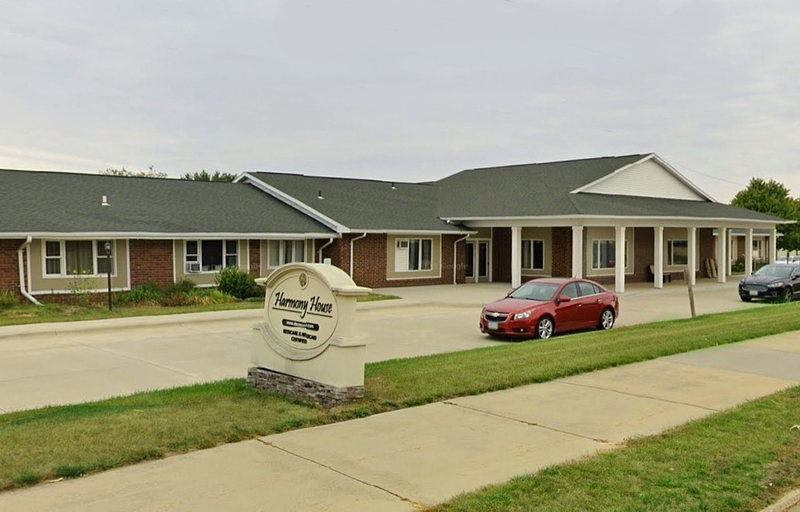
Harmony House Health Care Center in Waterloo is one of seven Iowa nursing homes cited three times for insufficient nursing staff during fiscal year 2026. (Photo via Google Earth)
Iowa’s nursing home inspectors issued more citations for insufficient staffing last year than regulators in any other state in the nation, an Iowa Capital Dispatch review of federal data shows.
The Center for Medicare and Medicaid Services data show that 66 Iowa nursing homes were cited at least once for insufficient nursing staff during fiscal year 2026. With seven Iowa homes cited for the violation three times, and seven more cited twice, the total number of insufficient staffing citations issued in the state was 87, the data show.
That places Iowa — which has far fewer nursing homes than more populous states — at the top of the rankings for insufficient-staffing citations.
Lack of adequate staffing has long been considered the single biggest contributor to poor quality resident care in nursing homes. Attempts to impose more stringent federal requirements on nursing home staffing have been opposed by the Trump administration, Iowa Gov. Kim Reynolds, and Iowa Attorney General Brenna Bird.
The CMS data shows that the 10 states with the most nursing home citations for insufficient staffing in fiscal year 2026 were:
Iowa: 87 citations in a state with 393 nursing facilities.
Illinois: 85 citations in a state with 669 nursing facilities.
California: 59 citations in a state with 1,169 nursing facilities.
Michigan: 49 citations in a state with 424 nursing facilities.
Pennsylvania: 51 citations in a state with 657 nursing facilities.
New York: 42 citations in a state with 597 nursing facilities.
Ohio: 31 citations in a state with 926 nursing facilities.
Missouri: 23 citations in a state with 489 nursing facilities.
Minnesota: 16 citations in a state with 339 nursing facilities.
Wisconsin: 11 citations in a state with 323 nursing facilities.
The data show that Iowa also ranks high in the number of citations related to a more specific staffing requirement that calls for nursing homes to have at least one registered nurse on duty for at least eight hours each day.
Iowa nursing homes were cited 16 times for that nurse-specific violation. Only the states of Texas, Illinois, Ohio, California, Missouri and Oklahoma had more citations for violating the registered-nurse requirement.
The seven Iowa homes that were each cited three times during the year for insufficient staffing are Accura Healthcare of Carroll; Pinnacle Specialty Care in Cedar Falls; Ravenwood Specialty Care in Waterloo; Foxglove Wellness and Rehabilitation Center, aka Stone Cottage Care Center, in Sigourney; Harmony House Health Care Center in Waterloo; Iowa City Rehab & Health Care Center, and Southfield Wellness Community in Webster City.
The seven Iowa homes that were each cited twice times during the year for insufficient staffing are Hallmar Village in Cedar Rapids, Harmony Cedar Rapids; Bishop Drumm Retirement Center in Johnston, Exira Care Center, Garden View Care Center in Shenandoah, Parkridge Specialty Care in Pleasant Hill and Pine Acres Rehabilitation and Care Center in West Des Moines.
Typically, violations for short-staffing do not result in fines or any other financial penalties in Iowa, although short-staffing can contribute to issues of safety and neglect that do result in fines.
Trump, Bird fight staffing mandates
In March 2026, an Iowa Capital Dispatch review of the CMS data showed that in 2025, 60 of Iowa’s 397 nursing homes — 15% of all the homes in the state — were cited for insufficient staffing. That represented a rate of staffing-level violations that was two to five times higher than most other nearby states.
In fiscal year 2023, 14% of Iowa’s 422 nursing facilities were cited for insufficient staffing, which was more than double the 5.9% national average at that time. At that time, only five other states had a worse record of compliance with the sufficient-staffing requirement.
Nationally, a 2026 report from the Long-Term Care Community Coalition indicates that in the third quarter of 2025, almost 9 in 10 nursing homes fell below their expected their staffing levels, with the average facility under-staffed by 24% on a daily basis. The report is based on federal data derived from the homes’ self-reported payroll information and assessment of residents’ needs.
In 2023, the Biden administration sought to impose new staffing requirements on all nursing homes that collect taxpayer money through Medicare and Medicaid. The new requirements, which would have allowed rural homes facing workforce shortages to receive a waiver exempting them from the mandate, would have required homes to have a nurse on staff 24 hours per day.
In November 2023, Reynolds and 14 other Republican governors sent Biden a letter objecting to the new rule and predicting it would “force over 80% of facilities nationwide to hire more staff,” which would result in many of them closing.
In 2024, Bird, along with other Republican attorneys general and industry representatives, sued the Biden administration to block implementation of the rule, with Bird calling it an “attack on senior care that will force nursing homes out of business, increase costs for families, and remove access to senior care altogether.”
The Trump administration eventually dropped the federal government’s legal defense of the rule, effectively killing most of its requirements.
‘Help me, help me!’
Among the specific staffing violations cited by state inspectors this past year — none of which resulted in fines or penalties — at Iowa nursing homes:
Accura Healthcare of Carroll: In October 2025, inspectors noted that the staff took as long as 39 minutes to answer call lights and the facility had no call-light policy in place.
In December 2025, inspectors found there still was no policy in place, and wait times still extended to 39 minutes. The administrator allegedly explained the facility was following “the state standard” which says call lights are “expected” to be answered within 15 minutes.
In April 26, 2026, inspectors noted the issues remained unresolved, with wait times of up to 39 minutes and no call-light policy in place.
Pinnacle Specialty Care in Cedar Falls: In November 2025, inspectors watched as nurses and aides walked past, without entering, rooms where residents’ call lights were activated. Some residents complained of waiting 60 to 90 minutes for their call lights to be answered.
In June 2026, residents reported waiting up to two hours, and the director of nursing acknowledged the home’s policy didn’t include a “targeted time” for responding to a call light.
In September 2026, inspectors reported interviewing seven residents, all of whom expressed concern with staffing levels or waiting up to two hours for a call-light response while missing medications or being left to lie in urine.
Ravenwood Specialty Care in Waterloo: In October 2025, an inspector reported watching as a female resident sat for 55 minutes in her wheelchair, wearing clothing recently soiled with fecal matter, near the nurses’ station, waiting for assistance. Throughout the hour, the inspector reported, employees sat at the nurses’ station doing charting or watching the hallways, while offering no assistance to the woman. One resident complained of waiting up to an hour for a call light to be answered.
In May 2026, one resident complained of waiting four hours for a call-light response, while another said he didn’t bother with the call lights since the staff takes too long to respond. One resident complained of being forgotten and left on the toilet, saying she eventually grew physically numb. No penalties were imposed, although fines were proposed for violations related to untreated injuries and resident assessments.
In August 2026, a resident reported she had her call light on from 3 a.m. to 6:45 a.m., at which point she got out her cellphone and called the facility to inform the staff she needed assistance in her room. The facility staff told inspectors the resident’s call light was switched on at 5:21 a.m., not 3 a.m., but acknowledged the staff didn’t respond until 6:45 a.m. when the phone call was made.
Foxglove Wellness and Rehabilitation Center, aka Stone Cottage Care Center, in Sigourney: In December 2025, a resident reported he repeatedly had to use his cell phone to contact the staff after they failed to respond to his call light. A registered nurse at the home reported she was concerned with staffing levels due to the high acuity levels of residents who were totally dependent on the staff or had behavioral issues.
In May 2026, residents complained of waiting up to four and a half hours for assistance. A quadriplegic resident said he sometimes had to use Siri to activate his cell phone and call the facility’s front desk to reach a staff member. When he needed assistance, he said, it could take more than 30 minutes for the staff to respond. The delays, he alleged, resulted in several instances in which he wasn’t repositioned for more than two hours – putting him at risk of pressure sores.
In September 2026, inspectors reviewed the care of 16 residents and found that in all 16 cases, the home had failed to provide sufficient staffing to ensure timely assistance with medications, showers and daily activities. One resident reported waiting up to three hours for a call-light response.
Harmony House Health Care Center in Waterloo: In March 2026, inspectors reported that the staff failed to answer residents’ calls for assistance in a timely manner, with logged wait times sometimes extending to 90 minutes or more. “The failure persisted despite residents reporting concerns through interviews and the facility’s own grievance logs and after staff were reportedly re-educated,” inspectors stated. “Staff, including the director of nursing, failed to respond to a prolonged audible alarm indicating an issue with a resident’s essential feeding-tube pump, and the facility did not have a written policy to ensure timely call-light response.”
In June 2026, residents told inspector wait times were sometimes close to an hour and complained that workers would sometimes enter their room, shut off the lights so the electronic monitoring system would indicate a staff response, and then leave the room, not returning to provide any assistance for up to 45 minutes. According to inspectors, the home’s written policy authorized that sort of response to call lights in nonemergency cases.
In September 2026, the home was cited again for insufficient staffing, noting that in 24 instances over a 25-day period, one resident had to wait more than 15 minutes for a call-light response. Some of the responses were logged as taking 40 minutes, 51 minutes, 58 minutes and two hours and 16 minutes.
Iowa City Rehab & Health Care Center: In December 2025, inspectors alleged the home failed to have sufficient staff to meet residents’ needs, with employees taking up to an hour to answer call lights.
In August 2026, the facility was cited for the same violation with the director of nursing telling inspectors the facility was “aways working on staffing.”
A few week later, in September 2026, the facility was cited again, with inspectors stating the home “failed to have an adequate number of staff to assist residents” with daily activities such as bathing or to answer call lights. At the time, the call-light system wasn’t working so residents were given bells to summon the staff.
While one inspector watched, a resident’s bell rang at 9:26 a.m. At 9:31 a.m. the bell continued to sound and the resident began yelling, “Help me!” At 9:34 a.m., the resident could be heard yelling, “Help me, help me!” One minute later, with the bell still ringing, the same resident was yelling for help in a louder voice. At 9:37 a.m., the inspector reported, a certified nursing assistant “walked down the hall as (the resident) yelled, “Help me!” According to the inspector a registered nurse later explained that the home needed more staff, saying it was hard to care for 53 residents with only one nurse working.
One worker reportedly told inspectors that with the call lights not working, the staff was “supposed to check on residents that are paralyzed and not able to yell for help.” When asked how she would know whether a resident rang their bell, the worker stated if she heard a bell, she’d walk the halls and find out who had rung it. “When asked how staffing was at the facility, she stated, ‘It’s horrible,’” the inspector reported.
A quadriplegic resident said he was left on the toilet for about three hours because the staff couldn’t hear his bell ringing. The home’s administrator told inspectors the home was not short-staffed. When told what inspectors had observed, the administrator said she’d “look into it.”
Southfield Wellness Community in Webster City: In November 2025, the facility was cited for taking up to 22 minutes to respond to call lights.
In July 2026, residents complained of waiting an hour or more for assistance. While an inspector watched, one resident was in bed with their call light activated at 7:46 a.m. and was yelling for help. At 8 a.m. and the call light remained activated, and the resident continued to shout for help. At 8:21 a.m., more than a half-hour after the initial call for help, a worker responded.
A certified medication aide complained that management was instructing the staff to answer the call lights due to the inspectors’ presence in the building, adding that she felt responses should happen even without the inspectors being there.
In August 2026, inspectors again cited the home for failing to provide sufficient to meet residents’ needs. One of the home’s licensed practical nurses told inspectors she ran call-light reports periodically to check on response times and had spoken to management about residents’ long waits for assistance. No penalties were imposed.
Des Moines, IA