The percentage of people without health insurance is growing
Oct 22, 2026 | 6:07 pm ET
Description
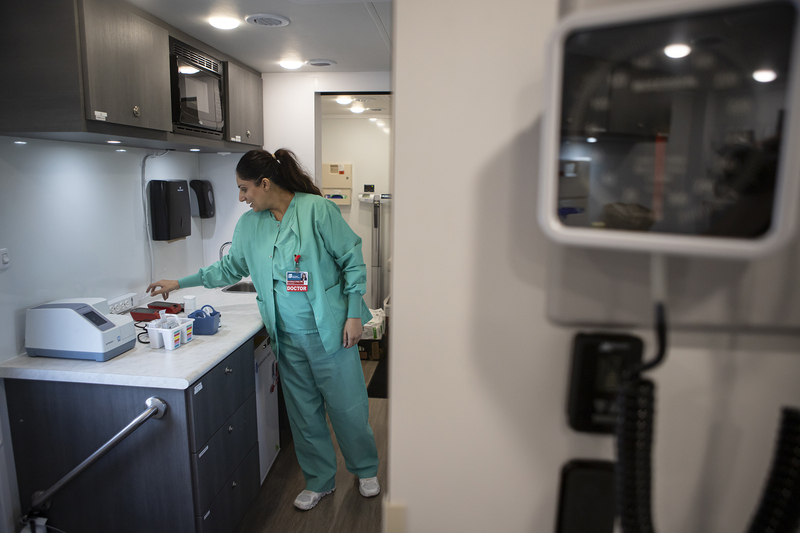
Dr. Navdeep Lehga sets up equipment in the exam room of a mobile clinic in Mendota, California in 2025. The percentage of working-age adults without health insurance has grown in the past two years, according to a new report. (Photo by Larry Valenzuela, CalMatters/CatchLight Local)
The percentage of working-age adults without health insurance has increased in the past two years, largely because many people can no longer afford Obamacare coverage after Congress allowed federal subsidies to expire at the end of last year.
The uninsured rate for adults ages 19-64 rose to 11.2% this year, up from 8.9% in 2024, according to a new analysis by the Commonwealth Fund, a health policy and philanthropic nonprofit.
Nearly half of the 7,362 working-age adults who participated in the group’s biennial health insurance survey said they were uninsured, underinsured, or experienced a gap in coverage this year. Half said they delayed or avoided getting medical care because of the cost, compared with 46% in 2022.
The subsidies significantly lowered the cost of Obamacare coverage — making it free or nearly free for some people with low incomes. But the aid was designed as a temporary pandemic-era measure, and Congress allowed it to expire at the end of last year.
As a result, the percentage of working-age adults with health insurance from the marketplaces created under Obamacare, officially known as the Affordable Care Act, declined to 6% this year, from 8% in 2024.
The percentage of working-age adults enrolled in Medicaid also declined, to 13% this year from 16% in 2022, as many states removed people from the rolls at the conclusion of the COVID-19 pandemic.
The increase in the uninsured rate almost certainly will accelerate in January, when the Republican tax and spending law known as the One Big Beautiful Bill Act takes effect. That law will require many Medicaid recipients to prove they are working or engaging in approved community service activities for at least 80 hours a month.
The law also mandates that states verify enrollees’ Medicaid eligibility every six months.
Another factor in the growing percentage of people without coverage is the rising cost of healthcare, which is pushing up premiums for private insurance.
“It’s affecting people’s ability to pay off bills right away, and it’s having an effect on health plans,” said Sara Collins, a senior scholar at the Commonwealth Fund and the lead author of the report.
Almost a third of the survey respondents, whether insured and uninsured, said they currently had medical or dental bills or were paying off medical debt. And more than 70% of uninsured adults said they had cost-related problems getting care.
“I think it’s very concerning,” Collins said. “We know from our survey data that not going to get care isn’t and just generally is not good for people’s health over the long run.”
The rise in the uninsured rate comes after a long period of progress: Between 2010 and 2025, the overall uninsured rate in the United States fell by half, to 8% from nearly 16%, largely because of the Affordable Care Act.
Stateline reporter Shalina Chatlani can be reached at [email protected].