We need more long-shot candidacies
Oct 22, 2026 | 11:27 am ET
Description
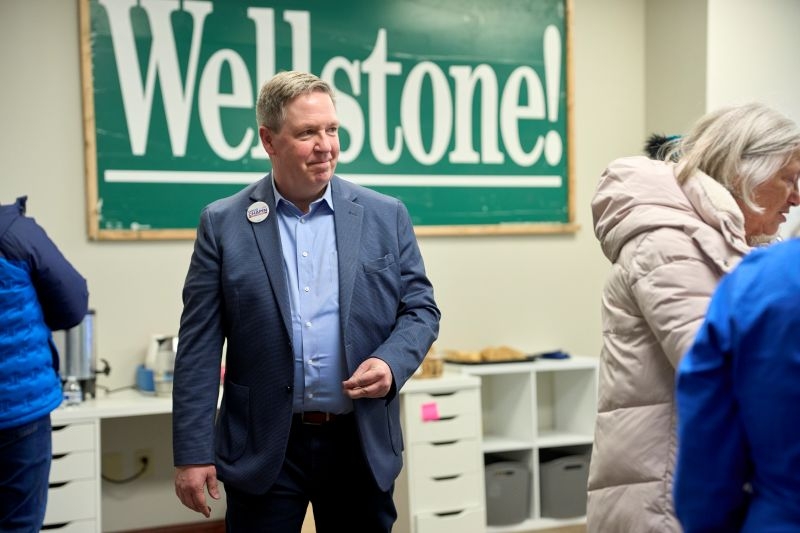
Doug Chapin is running against powerful U.S. Rep. Tom Emmer in a heavily GOP district. (Courtesy photo)
Doug Chapin says he had an epiphany on the first day of President Donald Trump’s second term.
“He pardoned the Jan. 6 rioters, and I thought, ‘You know, I need to do something about this,’” Chapin told me recently.
The D.C.-based firm where he did research for the U.S. Election Assistance Commission was hit hard by DOGE cuts, so he was suddenly ready to take on something new. He’d spent his career studying and working on election administration for places like The Pew Charitable Trusts, where he successfully lobbied for military and overseas voting reform in Congress and legislatures.
His next choice was counterintuitive: He decided to run against U.S. House Majority Whip Tom Emmer, one of the most powerful men in the Republican-controlled Congress, in a district that voted for Trump over Kamala Harris by nearly 20 percentage points in 2024.
Chapin, a widower whose late wife is a Minnesotan but only moved here a few years ago, has a theory: The 6th Congressional District, which curls around the metro from Andover down to Waconia and north and west to St. Cloud, is fast growing, suburbanizing and transforming into a recognizable region. He likens it to the formerly Republican 3rd District encompassing the west metro, which has become solidly blue in the past decade.
“If it were stock, it would be a value play,” he said, meaning there’s hidden potential for Democrats in the 6th.
I don’t necessarily buy Chapin’s optimism, and as a nonprofit news outlet we don’t endorse candidates. But here’s what I do endorse: running in seemingly un-winnable races.
America has sorted itself into ideological silos, so that most of us live in regions that are so thoroughly owned by one party that the minority party often doesn’t bother running candidates anymore. (To their credit, the Democratic-Farmer-Labor Party is running a candidate in all 201 legislative districts this year.)
So we lose some of the self-correcting mechanism of democracy, which comes from competition. Incumbents only have to concern themselves with avoiding a primary challenge from a more extreme ideologue and placating the local machine, which is often primarily — and perversely — focused on national rather than local issues.
The Cook Political Report says 185 U.S. House seats are safely Democratic this year, and 171 are safely Republican. That’s 356 out of 435 seats — 82%— where the incumbent faces only nominal competition.
The impact of this trend is significant. As free speech attorney and conservative New York Times columnist David French recently pointed out, partisans tend to polarize each other, ratcheting up the most extreme views. Partisans are also unlikely to call out their fellow travelers when they see corruption and poor judgment, let alone bad policy, because they fear accusations of impurity and disloyalty.
When we tell the 40% of voters who live in the 6th District — or 25% of voters in the heavily Democratic 5th District — that their participation is meaningless to the point of being unnecessary, we lose a lot of potentially good ideas and effective people, to say nothing of a sense of belonging and investment in the community.
Big cities would benefit from a Republican accountant on their councils, just as rural areas could use a Democratic environmental scientist who advocates for clean water.
There’s some reason to believe these one-party deserts are getting some civic rain. Democrats are tired of their long losing streaks in red states and are running some different kinds of candidates, at least rhetorically. Voters are responding, mostly out of disgust with Trump, but also as local problems like water quality in Iowa and overall quality of life in Texas continue to fester.
Trump made significant inroads with Black, Latino and other people of color in the 2024 election, which was probably spurred on in part by the failed governance of one-party cities. Trump and Republicans have since torched that accomplishment through their violent immigration crackdown and costly war in Iran driving up the cost of living.
Chapin, who has been campaigning vigorously around the district, told me he’s blown away by the reception he receives from 6th District Democrats.
“I‘m going to sound like Trump, here, but people literally cry, and they’re like, ‘Oh my God, I’ve never felt this hope,’” he said.
A significant obstacle to gaining any traction, he told me, is that the media doesn’t take long-shot candidates seriously and gives them no coverage. He’s right about that.
Chapin also says that no matter what, he’ll be running again in 2028.

Saint Paul, MN